
Imagine you're a new vet tech, and your first appointment is a wriggling puppy with a vaccination schedule that looks like a calculus problem. Don't panic—this cheat sheet breaks down vaccinations and parasitology into bite-sized, practical tips you can use right away. By the end, you'll handle these topics with confidence and maybe even a smile.
Advertisements1
- Core vaccines are essential for all pets; non-core are based on lifestyle—know the difference to tailor recommendations.
- Parasite prevention should be year-round, even for indoor pets, because vectors like mosquitoes and fleas can come inside.
- Vaccines are fragile: store at 2-8°C, never freeze, and use immediately after drawing up.
- Fecal flotation with centrifugation is the gold standard for parasite detection; one negative fecal doesn't rule out infection.
- Client communication is key: use analogies and focus on benefits to improve compliance.
- Be prepared for anaphylaxis: keep epinephrine handy and know the dose (0.01 mg/kg IM).
Vaccination Basics: Core vs. Non-Core
Think of vaccines like a bouncer at a club—core vaccines are the VIP list that every pet needs, while non-core are the optional guests depending on lifestyle. For dogs, core vaccines include rabies, distemper, parvovirus, and adenovirus-2. For cats, core vaccines are rabies, feline herpesvirus-1, calicivirus, and panleukopenia. Non-core vaccines, like Bordetella for dogs or FeLV for cats, are given based on risk factors such as boarding, travel, or multi-cat households. Knowing the difference helps you explain to clients why their indoor cat might not need FeLV but their dog going to daycare definitely needs Bordetella.
When discussing vaccines with clients, use the '3 R's': Risk, Recommendation, and Reassurance. Assess the pet's risk (lifestyle, environment), give a clear recommendation based onAAHA guidelines, and reassure them that vaccines are safe and effective. For example, a puppy at a dog park has a high risk of parvovirus, so core vaccines are non-negotiable. A senior cat living alone indoors has a low risk of FeLV, so you can skip it. Always document the conversation and the client's decision.
Remember that vaccine schedules aren't one-size-fits-all. Puppies need a series of shots every 3-4 weeks until 16 weeks of age, while adult dogs may need boosters every 1-3 years. Cats are similar. Use the AAHA vaccination guidelines as your bible, but tailor to the individual pet. And always check for adverse reactions—keep epinephrine handy and know the signs: vomiting, swelling, lethargy. Most reactions are mild, but it's better to be prepared.
Parasite Prevention: The Big Three
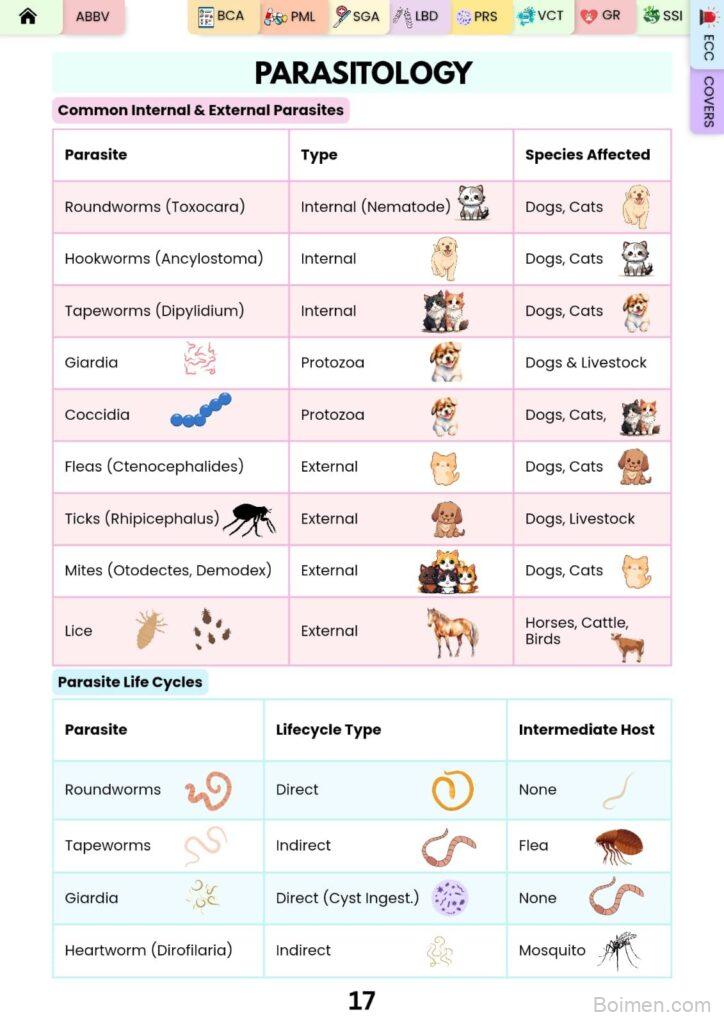
Parasites are like uninvited houseguests—they show up, eat your food, and leave a mess. The big three in veterinary medicine are fleas, ticks, and intestinal worms. Fleas cause itching and can transmit tapeworms; ticks carry Lyme disease and ehrlichiosis; intestinal worms like roundworms and hookworms can cause diarrhea and weight loss. Prevention is key, and it's easier than treatment. Use year-round preventatives, even in winter, because fleas and ticks can survive indoors.
When choosing a preventative, consider the pet's lifestyle and owner's compliance. Oral medications like fluralaner (Bravecto) last 12 weeks for fleas and ticks, while topical options like fipronil (Frontline) are monthly. For intestinal worms, monthly heartworm preventatives like ivermectin (Heartgard) also cover roundworms and hookworms. Always weigh the pet and use the correct dose—overdosing can cause neurological signs. And don't forget to educate clients about zoonotic risk: roundworms can infect children, so pick up feces promptly.
A common mistake is assuming indoor pets don't need prevention. Mosquitoes can come inside and transmit heartworm, and fleas can hitchhike on your clothes. So recommend prevention for all pets, and use the 'test and treat' approach: annual fecal exams and heartworm tests to catch infections early. If a pet tests positive for heartworm, treatment is expensive and risky, so prevention is truly the best medicine.
Vaccine Handling: The Cold Chain
Vaccines are divas—they need constant refrigeration between 2-8°C (35-46°F) or they throw a tantrum and become ineffective. Always store them in the middle of the fridge, not the door, and use a thermometer to monitor temperature. Never freeze vaccines; that destroys them. When drawing up a vaccine, use a new needle and syringe, and don't pre-fill syringes for later use—administer immediately. Also, avoid shaking vaccines; some are inactivated and shaking can damage them. Check expiration dates and never use a vaccine past its date.
If a vaccine is accidentally exposed to heat or cold, mark it as 'do not use' and discard it. Document any temperature excursions and report to the manufacturer if needed. Remember that modified-live vaccines (like distemper) are more fragile than killed vaccines (like rabies). So handle with care. A good rule: if in doubt, throw it out. It's better to waste a dose than to give an ineffective vaccine and leave a pet unprotected.
When administering vaccines, use the correct route: subcutaneous for most, intranasal for Bordetella, and intramuscular for rabies. Aspirate before injecting to avoid hitting a blood vessel. And always record the vaccine lot number and site of injection in the medical record—this helps track adverse reactions. If a client reports a reaction, you can check the lot and report to the manufacturer and USDA. It's all about accountability.
Fecal Exams: The Art of Finding Eggs
Fecal exams are like a treasure hunt—except the treasure is parasite eggs, and you're hoping to find none. Use the fecal flotation method: mix feces with a sugar or salt solution, strain, and centrifuge. The eggs float to the top and can be seen under a microscope. A direct smear is quicker but less sensitive. For best results, use a centrifugation flotation with Sheather's sugar solution, which is the gold standard. Examine at 10x and 40x magnification, and look for round, oval, or barrel-shaped eggs. Common finds: roundworm eggs (round, thick-shelled), hookworm eggs (thin-shelled, oval), whipworm eggs (barrel-shaped with bipolar plugs), and tapeworm segments (rice-like).
A common mistake is examining only one sample; parasites shed eggs intermittently, so a single negative fecal doesn't rule out infection. Collect a fresh sample (within 24 hours) and repeat if clinical signs persist. Also, don't forget to check for protozoa like Giardia and Coccidia—they're smaller and harder to see, so use a diff-quick stain or a specific antigen test. And always wear gloves and wash hands; some parasites are zoonotic.
To improve your technique, practice with known positive samples. Many diagnostic labs offer wet mounts or images for training. Also, keep a reference chart of common parasite eggs at your microscope station. Over time, you'll recognize them like old friends—though hopefully not too friendly. Remember, a good fecal exam can save a pet's life by catching infections early.
Client Communication: Translating Vet Speak
Clients aren't veterinarians—they don't know what 'leptospirosis' or 'coccidiosis' means. Use analogies: vaccines are like a security system; parasites are like burglars. For example, explain that a leptospirosis vaccine is like adding a lock to a window that raccoons might use. And parasitology: 'Fleas are like tiny vampires; ticks are like hitchhikers that can carry diseases.' This makes it memorable and less scary.
When recommending preventatives, focus on benefits, not just features. Instead of saying 'This product contains fluralaner,' say 'This chewable kills fleas and ticks for 12 weeks, so you don't have to remember monthly doses.' Address cost concerns by comparing prevention to treatment: 'Treating heartworm costs $1,000 and is risky; prevention is $10 a month.' Also, use visual aids: show pictures of parasites, or use a fecal sample under the microscope (if client is interested). And always provide written instructions—clients forget 80% of what they hear.
Be empathetic: some clients are squeamish about parasites or worried about vaccine reactions. Acknowledge their concerns and share success stories. For example, 'I've seen hundreds of puppies do great with vaccines—the risk of disease is far higher.' And follow up: a quick call after vaccination to check for reactions shows you care. Communication is key to compliance.
Emergency Protocols: Anaphylaxis and Adverse Reactions
Vaccines are safe, but rarely, a pet can have an anaphylactic reaction—within minutes of vaccination. Signs include vomiting, diarrhea, facial swelling, difficulty breathing, and collapse. Be prepared: keep a crash box with epinephrine, diphenhydramine, and corticosteroids. If you suspect anaphylaxis, administer epinephrine 0.01 mg/kg IM immediately and call the veterinarian. Monitor vital signs and provide supportive care. Document the reaction and report to the manufacturer and USDA. Most reactions are mild and self-limiting, but it's better to be safe.
For milder reactions like facial swelling or hives, give diphenhydramine 1 mg/kg IM or orally. For vomiting, withhold food for a few hours. Always inform the client and advise them to watch for signs at home. If a pet has a history of reactions, pre-medicate with antihistamines before future vaccines, and consider using a different vaccine brand or splitting vaccines. But never skip vaccines without a risk-benefit discussion; the diseases are worse than the reactions.
Parasite preventatives can also cause adverse reactions—especially ivermectin in Collies with MDR1 mutation. Always ask about breed and check for genetic sensitivity. If a pet shows neurological signs like tremors or ataxia after ivermectin, it could be toxicity. There's no antidote, but supportive care and time usually resolve it. So, know your breeds and drugs. A cheat sheet on MDR1 breeds is handy: Collies, Australian Shepherds, Shelties, and others.
How to Do It, Step by Step
- 1Assess the pet's lifestyle
Ask specific questions about boarding, travel, indoor/outdoor access, and multi-pet households. This determines core vs. non-core vaccines and parasite risk. For example, a dog that hikes in tick country needs tick prevention year-round. - 2Follow the AAHA guidelines
Use the AAHA vaccination guidelines as your framework, but individualize. Puppies need boosters every 3-4 weeks until 16 weeks; adults need boosters based on lifestyle. Cats: same logic. - 3Store vaccines properly
Keep vaccines refrigerated at 2-8°C (35-46°F), in the middle of the fridge, not the door. Use a thermometer and log temperatures daily. Discard any vaccine that has been exposed to improper temperatures. - 4Perform regular fecal exams
Use centrifugation flotation with Sheather's sugar solution for best sensitivity. Examine at 10x and 40x. Repeat if negative but clinical signs persist. Wear gloves and wash hands. - 5Choose parasite preventatives wisely
Match the product to the pet's risk and owner's compliance. Oral chewables last longer; topicals are monthly. Ensure the dose is accurate and check for breed sensitivities (e.g., MDR1). - 6Communicate with analogies
Explain vaccines as 'security systems' and parasites as 'burglars.' Use visual aids and written instructions. Address cost concerns by comparing prevention to treatment costs. - 7Prepare for adverse reactions
Keep a crash box with epinephrine and antihistamines. Know the signs of anaphylaxis and act fast. Document and report reactions to the manufacturer and USDA.
Vaccines and parasite preventatives are like insurance—you hope you never need them, but when you do, they save lives.
Frequently Asked Questions
How often should dogs get vaccinated?
Puppies need a series of vaccines every 3-4 weeks until 16 weeks of age, then boosters at 1 year, and every 1-3 years thereafter based on lifestyle and vaccine type.
Can indoor cats get parasites?
Yes, indoor cats can get parasites from mosquitoes (heartworm), fleas that hitchhike on clothing, or rodents. So year-round prevention is recommended.
What are the core vaccines for cats?
Core vaccines for cats are rabies, feline herpesvirus-1, calicivirus, and panleukopenia (FVRCP). FeLV is non-core and based on risk.
How do I perform a fecal flotation?
Mix feces with a flotation solution (like Sheather's sugar), strain, centrifuge, and examine the surface film under a microscope. Centrifugation is more sensitive than passive flotation.
What should I do if a pet has a vaccine reaction?
For mild reactions like swelling or hives, give diphenhydramine. For anaphylaxis (vomiting, collapse), administer epinephrine 0.01 mg/kg IM and seek veterinary help immediately.

Priya explores creative writing prompts and storytelling techniques for aspiring authors. She shares exercises to spark imagination and build narrative confidence, drawn from her own writing practice.


Leave a Comment