
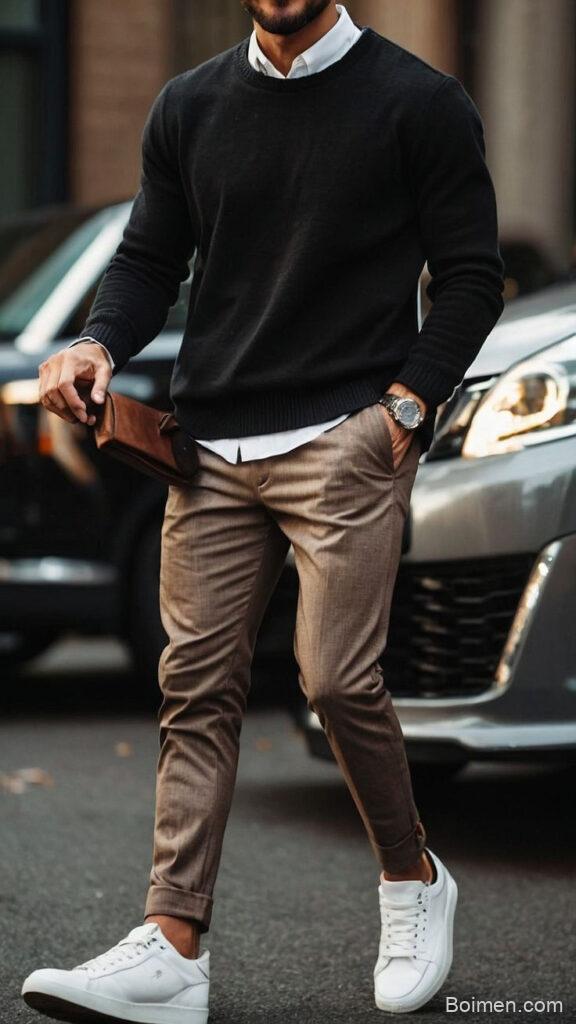
Think upgrading your style means a complete wardrobe overhaul and a fat credit card bill? Think again. These 15 small, practical tweaks—from fixing your sleeve roll to choosing the right sock length—will make you look more put-together by tomorrow, without buying a single new thing.
Advertisements1
- Fit is king: a $20 tailor beats a $200 shopping spree.
- The French tuck and master sleeve roll are instant polish.
- Sock length matters more than you think—match it to your pants.
- A 10-piece capsule saves time, money, and decision fatigue.
- One signature accessory beats a pile of cheap trends.
- The 60-30-10 color rule makes any outfit look intentional.
Start with Fit, Not Fashion
The single biggest style upgrade isn't a new jacket—it's getting the clothes you already own to fit right. A $20 tailor can take in a shirt's waist or shorten sleeves, and the difference is like hearing a song in stereo after years of mono. Shoulder seams should sit exactly at your shoulder bone, not droop down your arm. Pants should break once at the shoe, not puddle on the floor. If you're between sizes, always size down and tailor up—it's easier to let a seam out than to shrink a garment. I once bought a blazer two sizes too big 'for layering,' and I looked like a kid playing dress-up until I got it taken in.
Master the Art of the French Tuck
You've seen it on every Pinterest board: that effortless half-tuck. It's not just a trend—it's a proportions hack. Tucking in just the front of your shirt creates a visual break that lengthens your legs and adds structure to a loose top. The trick is to tuck only the front few inches, letting the sides and back hang loose. Use a belt to anchor the tuck, and don't pull it too tight—you want a soft, blousy drape. This works with tees, button-ups, and even sweaters, and it instantly makes you look more intentional, like you thought about your outfit (even if you threw it on in five minutes).
Roll Your Sleeves Like You Mean It
A sloppy sleeve roll is the style equivalent of a half-licked ice cream cone—messy and a little sad. The proper roll is called the 'master roll' or 'Italian roll': unbutton the cuff, pull the sleeve up to just below your elbow, then fold the cuff back over itself twice, creating a neat band. The result is a crisp, tailored look that shows off your forearms (a universally flattering move). Don't roll above the elbow unless you're at a beach party, and never let the roll bunch up like a scrunchie. It takes 10 seconds once you get the hang of it, and it's the difference between 'I just got here' and 'I own this room.'
Choose the Right Sock Length (Yes, Really)
Socks are the unsung heroes of an outfit. The golden rule: match your sock length to your pants. Wearing no-show socks with cropped trousers gives you that 'floating ankle' look that can be cool, but if you're wearing dress pants, you need over-the-calf socks so no skin shows when you cross your legs. For jeans, no-show or ankle socks work, but avoid white athletic socks with anything other than sneakers—that's a one-way ticket to middle-school-dance territory. When in doubt, go with a merino wool or cotton sock in a color that complements your trousers, not contrasts with them. Your ankles will thank you.
Create a Mini Capsule Wardrobe
You don't need a 100-piece wardrobe; you need 10 pieces that work together. Think of it as a recipe: a few high-quality basics (a white tee, a navy blazer, dark jeans, a versatile dress, a tailored coat) mixed with a couple of statement pieces (a printed shirt, a bold accessory). The magic is in the mixing—each piece should pair with at least three others. I created a capsule of 12 items for a month-long trip, and I never wore the same outfit twice. Start by pulling out your 10 most-worn items and see what gaps you have. You'll save money, time, and closet space, and you'll always have something to wear.
Use Accessories as Your Signature
Accessories are the punctuation marks of your outfit—they tell people where to look. A watch, a belt, a scarf, a hat, or even a good bag can transform a plain outfit into a statement. The trick is to choose one or two pieces that reflect your personality, not to pile on everything you own. I have a vintage watch my dad gave me, and it's my conversation starter. A leather belt that matches your shoes ties the whole look together (match metal tones too—silver with silver, gold with gold). And don't forget the power of a pocket square or a simple necklace—small details that show you care.
Color Me Happy: The 60-30-10 Rule
Ever see someone who looks like a walking rainbow? That's a color balance fail. The 60-30-10 rule is a designer's secret: 60% of your outfit should be a dominant color (like navy or beige), 30% a secondary color (like white or gray), and 10% an accent (like a red scarf or yellow shoes). This creates a harmonious, eye-pleasing look. For example, navy chinos (60%), a white shirt (30%), and a burgundy belt (10%). You don't need to be a color expert—just stick to one bold accent and let the rest be neutral. It's like a good song: a strong bassline (neutrals) with a catchy melody (accent).
How to Do It, Step by Step
- 1Audit your current wardrobe
Take everything out and try it on. Donate or sell anything that doesn't fit, is stained, or you haven't worn in a year. This gives you a clean slate and reveals what you actually need. - 2Get your key pieces tailored
Find a local tailor and spend $20-$50 on your most-worn items: take in shirt sides, shorten sleeves, taper pants. The fit improvement is instant and worth every penny. - 3Master the French tuck
Tuck only the front of your shirt into your pants, leaving the sides and back loose. Use a belt to anchor it, and adjust for a soft drape. Practice in front of a mirror until it looks effortless. - 4Learn the master sleeve roll
Unbutton the cuff, pull the sleeve to just below your elbow, then fold the cuff back over itself twice. Smooth it out for a neat, tailored roll. This works for any long-sleeve shirt. - 5Match your socks to your pants
For dress pants, wear over-the-calf socks in a color that matches your trousers. For jeans, opt for no-show or ankle socks. Avoid white athletic socks with anything but sneakers. - 6Build a 10-piece capsule
Choose 10 versatile items that all mix and match. Include 2-3 neutrals, 2-3 patterns, and 1-2 statement pieces. This simplifies your morning and ensures you always look put-together. - 7Add one signature accessory
Pick a watch, belt, scarf, or bag that reflects your style. Wear it consistently to make it yours. Keep other accessories minimal so your signature stands out. - 8Apply the 60-30-10 color rule
Plan outfits with 60% dominant color, 30% secondary, and 10% accent. For example, navy pants, white shirt, and a red pocket square. This creates visual interest without chaos.
Style is not about the clothes you own, but the confidence you wear them with.
Frequently Asked Questions
How can I upgrade my style without buying new clothes?
Focus on fit, tucking, and rolling—these cost nothing and transform your look instantly. Tailor what you have, and use accessories to refresh.
What is a capsule wardrobe and how do I start one?
A capsule wardrobe is a small set of versatile pieces that mix and match. Start by picking 10 items you love, then fill gaps with neutral basics.
What does the 60-30-10 rule mean in fashion?
It's a color balance guideline: 60% of your outfit is a dominant color, 30% a secondary, and 10% an accent. It creates a cohesive, pleasing look.
How do I know if my clothes fit properly?
Check the shoulder seams (they should sit at your shoulder bone), the waist (should not be tight or baggy), and the length (pants should break once, sleeves end at your wrist).
What are some easy ways to look more put-together?
Tuck in your shirt, roll your sleeves, match your socks, and add one accessory. These small details signal intentionality.

Kwame writes about technology and digital privacy for everyday users. He breaks down complex topics like data tracking and encryption into simple, relatable terms.


Leave a Comment