
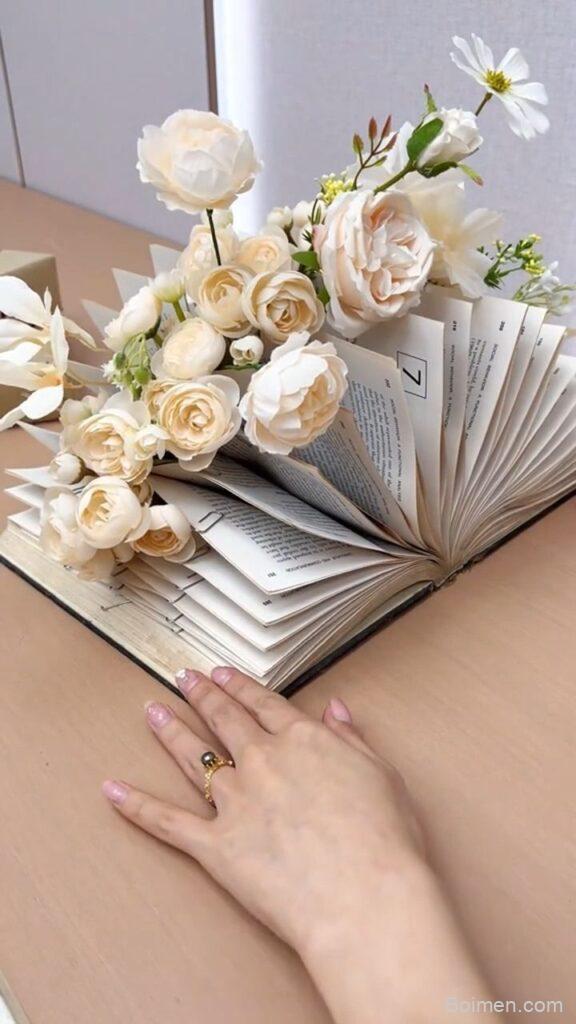
Imagine your favorite novel, its spine cracked just enough to hold a cluster of wildflowers, turning your coffee table into a conversation piece. These seven hacks will show you how to upcycle worn-out books into unique vases that are both functional and full of charm.
Advertisements1
- Hardcover books with 200+ pages are best for hollowing out.
- Always use a waterproof container or sealant to prevent damage.
- Cut only 10-15 pages at a time for clean edges.
- You can use a book as a decorative sleeve without cutting it.
- Book stack holders are a non-destructive alternative.
- Sealing the inside with Mod Podge extends the book's life.
Why Old Books Make Perfect Vase Material
Old books are sturdy, have a beautiful aesthetic, and are often destined for the recycling bin. By repurposing them, you're giving them a second life as something both decorative and useful. The key is to choose books with a hardcover and enough thickness to support a glass insert or waterproof lining.
The Classic Hollow-Out Method
The most popular technique involves cutting a rectangular hole through the pages to create a cavity for a glass jar or waterproof container. Use a craft knife and a ruler to score the pages repeatedly until you reach the back cover. This method works best with books that have at least 200 pages to provide depth for your vase.
Using a Book as a Sleeve for a Glass Vase
If you're hesitant to cut into a book, you can simply wrap the book around a cylindrical glass vase, letting the spine act as a natural backdrop. Secure the book with a ribbon or twine. This way, you can change the book whenever you like, and the vase is still fully waterproof.
A Single Page Folded Into a Vase
For a minimalist approach, you can fold a single page into an origami-style vase. This is perfect for small dried flowers or a single stem. It's a quick project that uses any book, even a paperback, and adds a delicate, artistic touch to your decor.
The Book Stack Vase Holder
Instead of cutting into one book, stack several old books and place a vase on top. To make it cohesive, drill a hole through the center of the stack that fits a small vase or test tube. This creates a stable base and adds height to your floral arrangement.
The Hacks, Step by Step
- 1Choose the right book
Select a hardcover book with at least 200 pages and a sturdy spine. A larger page size (like 8×10 inches) gives you more room for the vase cavity. Avoid books with glossy pages, as they are harder to cut. - 2Mark your cutting area
Open the book to the center and use a pencil and ruler to draw a rectangle (about 3×5 inches) on the page, leaving at least 1 inch margin from the edges and spine. This ensures the book remains structurally sound. - 3Cut the pages
Place a cutting mat under the first page and use a sharp craft knife to cut along your marked lines. Cut only a few pages at a time, about 10-15, to keep the lines clean. Repeat until you've cut through all pages down to the back cover. - 4Seal the inside
Once the cavity is cut, apply a layer of Mod Podge or PVA glue to the inside walls and bottom to seal the paper and prevent moisture damage. Let it dry completely for at least 2 hours. - 5Insert a waterproof container
Find a glass jar or a plastic container that fits snugly into the cavity. A 4-ounce mason jar works well for a 3×5-inch hole. Fill the container with water and arrange your flowers. - 6Protect the book from water
If you skip the container and place flowers directly in the book, you must line the cavity with a heavy-duty plastic bag or use a waterproof spray. However, using a removable container is the safest and easiest way to keep your book vase reusable and clean.
Every old book holds a story, and with a little creativity, it can hold a bouquet too.
Frequently Asked Questions
Can I use a paperback book for this project?
Yes, but paperback books are more flexible and harder to cut cleanly. For best results, use a hardcover book and consider reinforcing the spine with tape.
How do I keep water from ruining the book?
The easiest way is to insert a glass jar or plastic container inside the cavity. You can also apply a waterproof sealant like polyurethane to the inside, but a removable container is simpler and allows you to change flowers often.
What kind of glue is safe for book pages?
PVA glue (like Elmer's) is acid-free and safe for paper. Mod Podge is also a good choice because it dries clear and acts as a sealant. Avoid hot glue, as it can warp the pages.
Can I use fresh flowers or only dried ones?
You can use fresh flowers if you have a waterproof container inside. Without a container, the moisture will cause the pages to ripple and mold. Dried flowers are safer if you want to skip the container.
How do I cut a clean hole in a book?
Use a sharp craft knife and a metal ruler. Cut in short, repeated strokes, applying even pressure. Replace the blade often to avoid tearing the paper. A cutting mat underneath is essential to protect your table.



Leave a Comment