
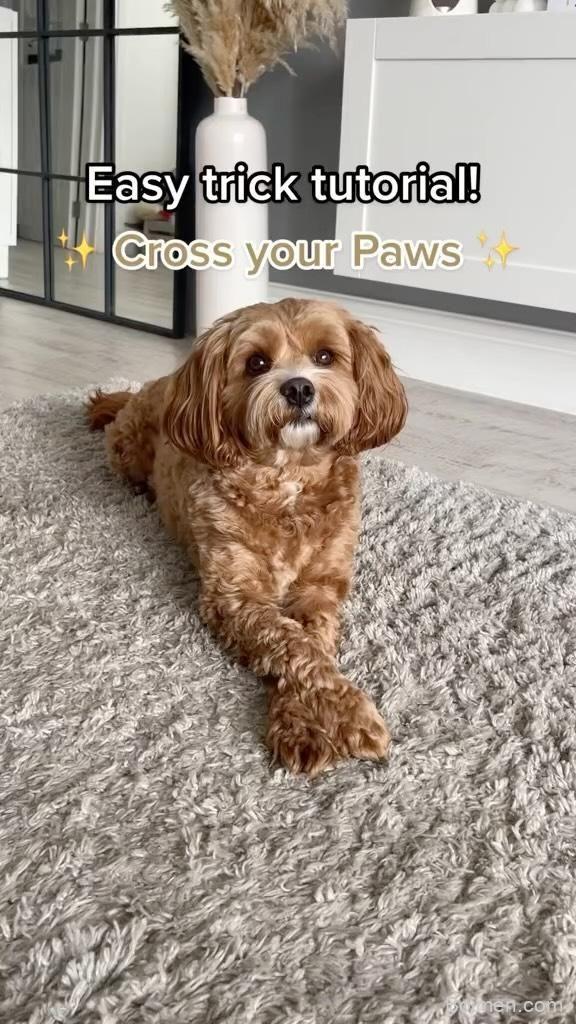
Every trick you see a dog perform on Instagram is really just a chain of tiny, boring steps stacked in the right order — and your dog can learn the same way. Here's how to teach your dog tricks with a plan that respects how dogs actually learn, not just how cute the final video looks.
Advertisements1
- Charge a marker word ('yes') for three days before teaching any trick — it timestamps the exact behavior you're rewarding.
- Keep sessions to 3–5 minutes, two or three times a day, and always end on a success.
- Fade the treat lure within a week so your dog performs on a hand signal, not just when food is visible.
- Name the trick only after it works 8 out of 10 times on a hand signal, or the word becomes background noise.
- If your dog fails three reps in a row, shrink the step — splitting is the skill that keeps training moving.
- Vary rewards between kibble, high-value treats, and life rewards like a game of tug or an open door.
Start With the Trick Your Dog Is Already Half-Doing
Before you pick a trick, watch your dog for a day like a nature documentary narrator. Does she paw at the door when she wants out? Offer a paw shake. Does she stretch into a play bow after a nap? That's the seed of a 'bow' trick. Does she nose-poke her food bowl? You've got the foundation for 'touch' or 'push a ball.'
This is called capturing — marking a behavior your dog offers naturally instead of luring her into something new. It's the difference between teaching someone to swim by throwing them in versus noticing they already float and building from there. Captured behaviors stick faster because the dog invented them.
Keep a note on your phone for a week. Write down three things your dog does unprompted that could become a trick. That list is your curriculum, and it's free.
Use a Marker Word Before You Teach Anything
Pick one word — I use 'yes' — and charge it up before you attempt a single trick. Say 'yes' and immediately hand over a pea-sized treat. Repeat ten times in a row, twice a day, for three days. By day three your dog should whip her head around the instant she hears 'yes,' because the word now predicts food.
Why does this matter? A marker word is a timestamp. Without it, your dog has no idea which part of what she just did earned the snack — was it the sit, the head tilt, or the fact that you blinked? With it, you can mark the exact half-second she lifts a paw. Trainers call this 'bridging,' and it's the single biggest upgrade most beginners can make.
Do-this-not-that: don't say your dog's name as the marker. Her name means 'look at me,' and you'll wear it out. Keep the marker word weird and short — 'yes,' 'click,' 'yip' — something you don't say in normal conversation.
Keep Sessions to 3–5 Minutes and End on a Win
Here's a number worth taping to your fridge: 3 to 5 minutes per session, two or three sessions a day. That's it. Puppies under six months often do better at 60–90 seconds. A dog's attention is like a phone battery that drains fast under new mental load — a 15-minute drilling session doesn't produce a better trick, it produces a frustrated dog and a frustrated you.
End every session while your dog is still succeeding. If she nails a spin twice, stop there and throw a little party. The last rep is what she remembers, the same way the last bite of a meal lingers on your tongue. Quit while it's fun and she'll drag you to the training spot tomorrow.
Also: train before meals, not after. A dog who's just eaten has the motivation of a person who just finished Thanksgiving dinner.
Lure, Then Fade the Lure Fast
Most tricks start with a lure — a treat held right at your dog's nose, moved slowly to guide her body. For 'spin,' hold the treat at her nose and sweep it in a circle to your left; her body follows her nose like a shopping cart follows the front wheel. Mark and reward the instant she completes the circle.
Here's the part people skip: fading. After three or four successful lured reps, hide the treat in your other hand or your pocket and use the same hand motion with an empty hand. If she still spins, mark and reward from the pocket. If she stalls, go back to luring for two reps, then try again. Within a week most dogs are spinning on a bare hand signal.
Do-this-not-that: don't keep the treat glued to her nose for 20 reps. You'll end up with a dog who only performs when food is visible — the canine equivalent of a kid who only does homework if you're standing over them.
Name the Trick Only After It Works
This trips up almost everyone. Say 'spin' while your dog is still learning the motion and the word becomes background noise. Wait until she's offering the behavior reliably on a hand signal — roughly 8 out of 10 tries — then say the cue word once, right before she does it, and reward.
Think of it like naming a song after you've written the melody, not before. The word attaches to the finished behavior, not the messy learning phase. This is why so many dogs 'know' sit but ignore 'roll over' — sit got named at the right moment, roll over got named too early.
Once the cue is attached, test it in a new room. Dogs are terrible at generalizing; a spin in the kitchen is not automatically a spin in the yard. Reteach briefly in each new place and you'll have a trick that holds up anywhere.
Use Real-Life Rewards, Not Just Treats
Treats are great currency for new tricks, but they're not the only one. For a dog who's toy-crazy, a 10-second game of tug is a jackpot reward. For a dog who loves the outdoors, the reward for a 'wait' at the door can simply be the door opening. Trainers call these 'life rewards,' and they're powerful because they're what your dog actually wants in that moment.
Try a reward hierarchy: boring kibble for easy reps, freeze-dried liver for hard ones, and a squeaky toy or a run in the yard for the breakthrough moment. Vary it. A dog who never knows whether the payoff is a treat or a game stays engaged — the same reason a slot machine beats a vending machine for attention.
Do-this-not-that: don't bribe. A bribe is showing the treat before asking; a reward is delivering it after the behavior. The order matters more than the food.
When It Goes Wrong, Shrink the Step
If your dog fails three reps in a row, the step is too big — full stop. Don't repeat it louder or add more treats. Break it into something easier. Learning 'roll over' and getting stuck at the roll? Reward the head turn first, then the shoulder dip, then the full roll.
This is called splitting, and it's the skill that separates trainers who progress from trainers who plateau. Picture teaching someone to parallel park: you don't start with the whole maneuver, you start with pulling alongside the car. Same logic.
And if your dog walks away mid-session? That's information, not defiance. She's telling you the session was too long, too hard, or too dull. Shrink it, shorten it, or try again after a nap.
How to Do It, Step by Step
- 1Charge your marker word
Say 'yes,' then immediately give a pea-sized treat. Repeat 10 times, twice a day, for 3 days until your dog snaps to attention at the word. - 2Pick a trick your dog already hints at
Spend a week noting natural behaviors — pawing, bowing, nose-poking — and choose one as your first trick so the behavior is half-built already. - 3Lure the motion in a 3-minute session
Guide your dog's nose with a treat to shape the movement. Mark with 'yes' and reward the instant the motion completes, then stop while she's still winning. - 4Fade the lure within a week
After 3–4 lured reps, hide the treat and repeat the same hand motion empty. Reward from your pocket if she performs; go back to luring if she stalls. - 5Attach the cue word last
Once she offers the behavior on a hand signal 8 out of 10 times, say the trick name once just before she does it, then reward. - 6Proof it in three new places
Retest the trick in a different room, then the yard, then a mildly distracting spot, briefly reteaching each time so it generalizes.
The trick isn't the hard part — the tiny steps you stack to get there are, and most people rush past them.
Frequently Asked Questions
How long does it take to teach a dog a trick?
Most simple tricks take one to two weeks of short daily sessions, with the cue word attached around day five to seven. Complex tricks like roll over or play dead often take three to four weeks of 3–5 minute sessions.
What age can you start teaching a puppy tricks?
Puppies can start as early as 8 weeks with 60–90 second sessions focused on marker training and simple lures. Keep it playful and stop before attention fades — short and sweet beats long and thorough at that age.
Why does my dog only do tricks when I have treats?
Because the lure was never faded. Hide the treat, repeat the same empty hand motion, and reward from your pocket only after the behavior — within a week most dogs perform on the signal alone.
What are the easiest tricks to teach a dog first?
Sit, touch (nose to palm), spin, and paw shake are the easiest starters because they build on behaviors dogs already offer. Save roll over, play dead, and leg weaving for after your marker word is solid.
Should I use a clicker or a word to mark behavior?
Either works — a clicker is more precise, but a short word like 'yes' is always with you. Pick one, charge it with 10 repetitions a day for three days, and stay consistent so the signal keeps its meaning.

Kwame writes about technology and digital privacy for everyday users. He breaks down complex topics like data tracking and encryption into simple, relatable terms.


Leave a Comment