
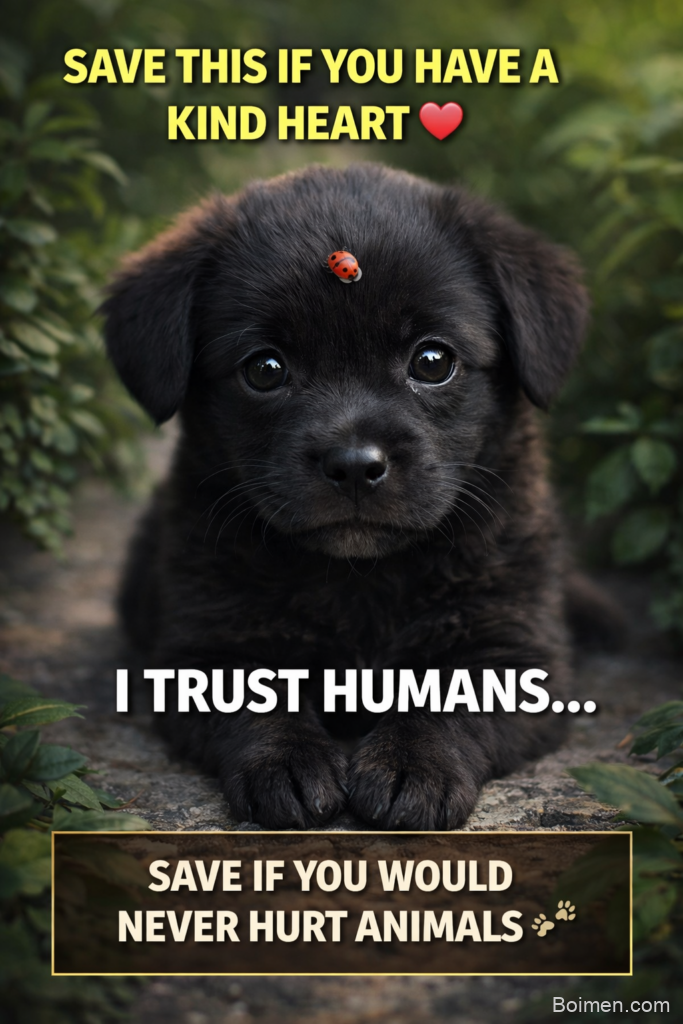
You know that heart-melting moment when a shy puppy finally trusts you? Now imagine a ladybug landing on its nose, making the bond even more emotional. In this guide, I'll share concrete tips to build that trust and create unforgettable moments.
Advertisements1
- Trust is built through patience and consistency, not force.
- Get on the puppy's level and let it come to you.
- Use treats and a soft voice to create positive associations.
- Shared moments of wonder, like a ladybug landing, deepen your bond.
- Avoid punishing fear or forcing interaction—it breaks trust.
Why a Puppy's Trust Is a Big Deal
When a puppy trusts you, it's not just cute—it's a sign of secure attachment. Puppies are born with a sensitive period for socialization between 3 and 16 weeks. During this window, positive experiences with humans shape their lifelong behavior. I once worked with a rescue puppy named Max who would cower at any sudden movement. After two weeks of daily gentle handling, he started wagging his tail when I entered the room. That shift didn't happen by accident; it happened because I respected his pace and used treats to create positive associations.
Trust is built through small, consistent actions. If you rush a puppy, you might get obedience, but you won't get true trust. True trust is when the puppy chooses to come to you, even when scared. That's the foundation for a deep emotional bond.
So, how do you know if a puppy trusts you? Look for soft eyes, a relaxed body, and a willingness to initiate contact. If you see those signs, you're on the right track.
The Ladybug Effect: How Small Wonders Deepen Connection
The ladybug in the story isn't just a random detail—it's a symbol of how shared moments of wonder can amplify trust. When you and a puppy experience something gentle and unexpected together, like a ladybug landing on its nose, it creates a memory. That memory becomes part of your relationship. I remember sitting with a foster puppy, Luna, in the garden when a butterfly fluttered by. She froze, then looked at me as if to ask, 'Did you see that?' In that moment, she chose to share her curiosity with me. That's the ladybug effect: small, shared experiences that say, 'We're in this together.'
To create your own ladybug moments, you need to be present. Put your phone away. Sit on the floor. Let the puppy explore. When something catches its attention, acknowledge it with a soft voice. These moments don't require training—they require attention. And they build a bond that commands can't.
Do This, Not That: Practical Trust-Building Tips
Do: Get down on the puppy's level. Sit on the floor and let the puppy approach you. Not: Loom over the puppy or reach for it. Why? A puppy is more likely to trust something that doesn't tower over it.
Do: Offer treats with an open palm. Not: Hold a treat between your fingers and pull away. Why? An open palm is less threatening and teaches the puppy that good things come from your hand, not that your hand is a trap.
Do: Use a calm, high-pitched voice. Not: Loud commands or sudden noises. Why? Puppies are sensitive to tone. A soft voice signals safety; a loud one signals danger.
Do: Let the puppy initiate contact. Not: Force cuddles. Why? Forced affection can break trust. When the puppy comes to you, it's choosing you—that's trust.
Do: Create a safe space. Not: Crowd the puppy's crate. Why? A crate should be a den, not a prison. Let the puppy have a retreat where it can feel secure.
Do: Be consistent. Not: Change the rules daily. Why? Puppies learn through patterns. If you're unpredictable, they can't predict safety.
Do: Celebrate small wins. Not: Expect instant results. Why? Trust is a marathon, not a sprint. Each tiny step forward is worth acknowledging.
The Science Behind the Bond
Oxytocin, often called the 'love hormone,' plays a huge role in human-animal bonding. When you pet a puppy gently, both your oxytocin levels rise. This hormone reduces stress and increases feelings of trust. Studies show that even just 10 minutes of gentle petting can lower cortisol (the stress hormone) in both you and the puppy. That's why those quiet moments matter so much.
But oxytocin isn't the only player. Puppies also read our body language and facial expressions. If you're tense, they'll feel it. If you're relaxed, they'll relax too. So, before you interact with a puppy, take a deep breath. Your calm is contagious.
And here's a bonus: the ladybug moment? That's oxytocin in action. When you and the puppy share a moment of wonder, your brains release oxytocin, strengthening your bond. It's a feedback loop: trust leads to oxytocin, and oxytocin leads to more trust.
Real-Life Example: From Fearful to Trusting
Let me tell you about Bella. Bella was a 12-week-old terrier mix I fostered. She had been found as a stray and was terrified of hands. The first day, she hid under the couch and wouldn't come out. I didn't force her. Instead, I sat on the floor, reading aloud in a soft voice, tossing treats near her. By day three, she ventured out to take a treat from my hand. By day seven, she climbed into my lap. The turning point? A ladybug landed on her paw. She looked at it, then at me, and wagged her tail. It was as if she realized, 'This human is safe.' That moment didn't happen because I trained her; it happened because I gave her time and space to choose trust.
Bella's story shows that trust can't be rushed. It's built on respect and patience. And sometimes, it's sealed by a tiny ladybug.
Common Mistakes That Break Trust
Mistake 1: Punishing fear. If a puppy growls or cowers, don't scold. That only confirms that you're scary. Instead, remove the trigger and reward calm behavior.
Mistake 2: Forcing interaction. Picking up a puppy that's trying to get away is a trust-breaker. Let the puppy come to you.
Mistake 3: Inconsistency. If you allow jumping one day and scold it the next, the puppy can't learn what's expected. Be clear and consistent.
Mistake 4: Ignoring body language. A tucked tail, flattened ears, or lip licking are signs of stress. If you miss these, you might push too far.
Mistake 5: Overwhelming with new experiences. Socialization is important, but flooding a puppy with too much at once can backfire. Introduce new things one at a time.
Avoid these mistakes, and you'll build a foundation of trust that lasts a lifetime.
How to Do It, Step by Step
- 1Sit on the floor
Get down to the puppy's level and let it approach you. This removes intimidation and gives the puppy control. - 2Offer treats with an open palm
Hold a treat on your flat palm so the puppy can lick it without feeling threatened by your fingers. - 3Use a soft, high-pitched voice
Speak in a gentle, encouraging tone. Puppies respond to pitch and volume; a soft voice signals safety. - 4Let the puppy initiate contact
Wait for the puppy to come to you. Forced affection can damage trust; chosen contact builds it. - 5Create a safe space
Set up a crate or bed where the puppy can retreat. Never force the puppy out; let it choose to come. - 6Be consistent
Use the same cues and rules daily. Predictability helps the puppy feel secure. - 7Celebrate small wins
Acknowledge every tiny step forward with praise or a treat. This reinforces progress and builds confidence.
Trust isn't trained; it's earned through small, consistent acts of kindness.
Frequently Asked Questions
How long does it take for a puppy to trust you?
It varies, but you can see progress in 1-2 weeks with daily positive interactions. Some puppies may take a month or more if they've experienced trauma.
What are signs a puppy trusts you?
A trusting puppy will have relaxed body language, soft eyes, and will initiate contact. It may also follow you around and seek comfort from you.
Can a ladybug really make a puppy more emotional?
A ladybug itself isn't emotional, but the shared moment of curiosity can strengthen your bond. It's about being present and sharing experiences.
Should I punish my puppy for growling?
No, never punish growling. Growling is a warning sign; punishing it can suppress the warning and lead to biting. Instead, address the underlying fear.
How do I socialize a fearful puppy?
Introduce new experiences slowly, one at a time, and pair them with treats. Let the puppy set the pace and never force interaction.

Maya writes about sustainable living and zero-waste swaps for busy families. She focuses on small, actionable changes that fit into real life without judgment or guilt.


Leave a Comment