
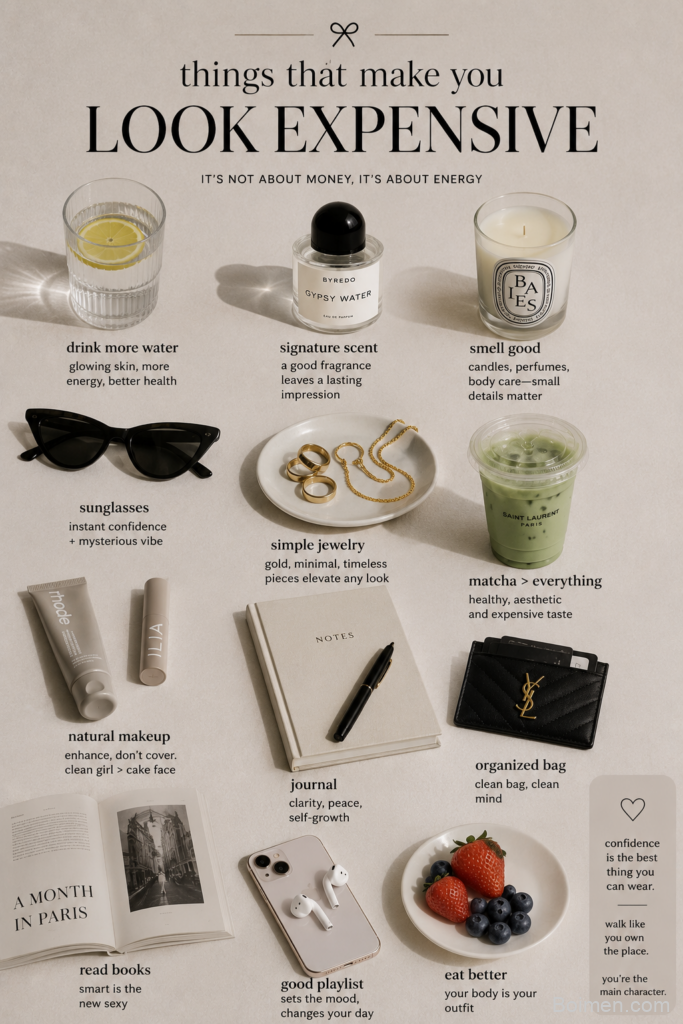
You don't need a designer wardrobe to read as polished and put-together. These are the exact tricks stylists use to create an expensive look on any budget, from fabric choices to fit and grooming.
Advertisements1
- Fit beats brand every time—spend $20 on tailoring, not $200 on a label.
- Neutral colors and natural fabrics (cotton, wool, silk) instantly read as expensive.
- Limit logos and trends; buy timeless pieces that last 5+ years.
- Your shoes and grooming are non-negotiable—scuffed shoes and messy hair ruin any outfit.
- Quality over quantity: 10 great pieces outperform 50 cheap ones.
- Confidence and posture are free—wear them daily.
Start with Fit, Not Labels
The single biggest factor in looking expensive is how your clothes fit your body. A $50 blazer tailored to your shoulders will always look better than a $500 one off the rack. Find a good tailor—most alterations cost $15-$30 per garment—and invest in adjusting the waist, hem, and sleeves of your key pieces.
Master the Color Palette of Quiet Luxury
Stick to a neutral, muted palette: camel, cream, navy, gray, olive, and black. These colors read as timeless and expensive because they don't scream for attention. Avoid neon, overly bright, or clashing shades. When you wear neutrals, your eye goes to the cut and fabric, not the color.
Choose Fabrics That Look and Feel Rich
Natural fibers like cotton, linen, wool, cashmere, and silk drape better, breathe, and last longer than synthetics. Learn to read labels—buy 100% cotton shirts, wool-blend coats, and silk scarves. Even a simple white tee in heavyweight cotton (6 oz or more) looks more expensive than a thin, see-through one.
Invest in a Few Statement Accessories
A good watch, a leather belt, or a structured bag can elevate an entire outfit. You don't need many—just one or two high-quality pieces. A classic leather watch with a metal or leather strap (think $100-$300 range) says more than a flashy smartwatch. Choose accessories in black, brown, or gold/silver that match your skin tone.
Pay Attention to Grooming and Posture
Nothing kills an expensive look faster than unkempt hair, dirty nails, or slouching. A crisp haircut, clean, trimmed nails, and subtle grooming (like a light cologne or moisturizer) cost little but add polish. Stand tall, walk slowly, and make eye contact—confidence is the most expensive accessory you can wear.
Keep Your Shoes Flawless
Shoes are the first thing people notice, and scuffed, worn shoes scream 'cheap.' Invest in 2-3 quality pairs (leather loafers, white sneakers, and a boot) and maintain them: polish leather, clean soles, and replace worn heels. You can find good second-hand leather shoes on eBay or Poshmark for under $50 and have them re-soled for $40.
Avoid Logos and Trends
Loud logos and fast-fashion trends date quickly and often look cheaper than they are. Instead, buy classic, logo-free pieces that you'll wear for years. A plain cashmere crewneck, a trench coat, or a well-cut pair of dark-wash jeans will serve you longer than a trendy logo hoodie. The rule: if it screams '2024,' skip it.
How to Do It, Step by Step
- 1Audit your wardrobe
Pull out everything you own and separate pieces into 'fits well' and 'needs tailoring.' Discard anything stained, pilled, or worn out. You'll see what you actually have and what to buy next. - 2Get a tailor on speed dial
Find a local tailor (ask for recommendations or check Yelp). Take your best blazer, pants, and shirts to get fitted. The $20-$40 you spend per garment is the cheapest upgrade to your image. - 3Stick to a neutral shopping list
Before buying anything new, ask: 'Does this come in navy, black, cream, or gray?' If not, put it back. This one rule will instantly make your wardrobe look more cohesive and expensive. - 4Upgrade your basics
Replace your thin, see-through tees with heavyweight cotton (6-7 oz). Buy one quality pair of dark-wash jeans (no rips) instead of three cheap pairs. Basics are the foundation—make them count. - 5Learn to spot quality in stores
Check the inside seams—they should be straight and finished. Pull the fabric—it should spring back, not sag. Look for buttons that are sewn on tightly. These tests take 10 seconds and prevent bad purchases. - 6Maintain what you own
Steam your clothes instead of ironing (a $15 steamer saves time and fabric). Brush wool coats, polish leather shoes monthly, and store sweaters folded, not hung, to keep their shape. - 7Dress for your body, not the mannequin
Ignore what's trendy. If you're tall, go for longer blazers; if petite, try cropped jackets. The goal is to accentuate your proportions—that's what makes you look intentional and expensive. - 8Practice the 'one-day' rule
When tempted by a trendy or logoed item, wait 24 hours. If you still want it the next day, consider it. Most impulse buys end up in the donate pile—and money spent on impulse is money wasted.
Looking expensive isn't about price tags; it's about the message your details send before you speak.
Frequently Asked Questions
How can I look expensive without buying designer clothes?
Focus on fit, fabric, and grooming. Tailor your clothes, choose natural fibers, and keep your shoes and hair neat. These cost little but make the biggest difference.
What colors make you look expensive?
Neutrals like camel, cream, navy, gray, black, and olive. They look timeless and allow your outfit's cut and quality to shine.
Is it better to buy cheap clothes or invest in a few expensive ones?
Invest in a few high-quality basics you wear often, like a blazer, jeans, and shoes. Cheap versions of these wear out quickly and look worse, costing you more over time.
How do I know if a fabric is high quality?
Check the label for natural fibers (cotton, linen, wool, silk). Feel the weight—quality fabrics are dense and drape well. Also, look at the seams: straight, finished seams indicate better construction.
Can I look expensive with an average body type?
Absolutely. The key is tailoring to your specific proportions. Clothes that fit your shoulders and waist—not too loose or tight—create a polished, expensive silhouette regardless of size.

Diego covers personal finance and investing for freelancers and gig workers. His angle is practical money management for irregular income, from budgeting to tax basics.


Leave a Comment