
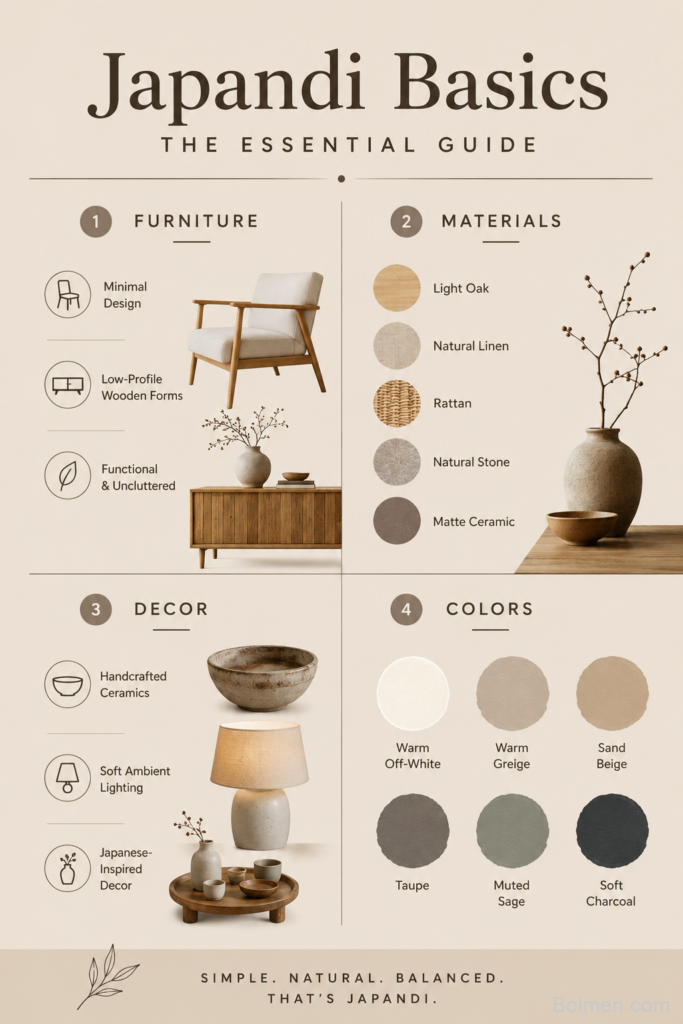
Japandi sounds like a big design word, but it really comes down to one feeling: calm. It blends the cozy warmth of Scandinavian homes with the quiet simplicity of Japanese interiors. The good news? You do not need a big budget or a designer. You just need to know the basics.
Advertisements1
Maybe you have stared at a blank living room and thought, “Where do I even start?” I have been there. In this guide, I am walking you through 21 Japandi basics, from low-profile furniture to soft lighting, so you can build a home that feels warm and uncluttered, one small step at a time.
Table of Contents(Click to Toggle)
- Why Japandi Basics Make Any Home Feel Calmer
- 21 Japandi Basics for a Calm, Warm Minimalist Home
- 1. Low-Profile Sofa
- 2. Wooden Coffee Table
- 3. Earthy Neutral Wall Color
- 4. Linen Slipcovers
- 5. Wool Throw Blanket
- 6. Paper Lantern Pendant
- 7. Warm Bulb Lighting
- 8. Handmade Ceramic Vase
- 9. Jute Area Rug
- 10. Rattan Accent Chair
- 11. Open Wood Shelving
- 12. Black Metal Accents
- 13. Single Branch Display
- 14. Wabi-Sabi Pottery
- 15. Floor Cushions
- 16. Shoji-Style Room Divider
- 17. Bonsai or Small Plant
- 18. Stone or Concrete Bowl
- 19. Neutral Curtains
- 20. Decluttered Surfaces
- 21. One Textured Wall
- Bonus: Wooden Serving Tray
- Bonus: Woven Storage Baskets
- Bonus: Linen Bedding Set
- Bonus: Ceramic Table Lamp
- Bonus: Simple Wall Art
- Your Japandi Home Starts With One Small Step
Why Japandi Basics Make Any Home Feel Calmer
Most homes feel busy without anyone meaning for them to. Too many colors, too much stuff, too many bright lights. Japandi fixes that gently. It borrows from Scandinavian design the idea that a home should be warm and useful, and from Japanese design the idea that empty space matters just as much as objects.
Here is a concrete example. If you swap a glossy black side table for a pale oak one and add a soft 2700K bulb, the corner instantly feels softer. Same corner, same budget, different mood.
You also do not need to renovate. Most of the 21 basics below are swaps and small additions you can make over a weekend. That is the whole point.
21 Japandi Basics for a Calm, Warm Minimalist Home
1. Low-Profile Sofa : The Anchor of a Calm Living Room
What it is:
- A sofa with a low back and simple lines, usually in beige, oatmeal, or charcoal.
Category:
- Furniture
Why it stands out:
- Low backs let light travel across the room, so even a small space feels open.
- Clean lines keep the eye relaxed instead of bouncing around.
- One limitation: low sofas can be harder to stand up from if you have knee issues.
Best for:
- Small apartments and open-plan living rooms.
2. Wooden Coffee Table : Warmth Without Bulk
What it is:
- A round or oval table in light oak, ash, or walnut with no heavy ornament.
Category:
- Furniture
Why it stands out:
- Wood grain adds natural texture, which is the heart of Japandi.
- Round shapes soften the hard corners of a rectangular room.
- Real wood can scratch, so use coasters for hot mugs.
Best for:
- Anyone who wants a natural focal point that is not loud.
3. Earthy Neutral Wall Color : The Quiet Backdrop
What it is:
- Warm off-whites, soft greige, clay, and muted sage tones.
Category:
- Color
Why it stands out:
- A warm undertone stops a room from feeling cold and clinical.
- It lets your wood and ceramics do the talking.
- Pure bright white can feel stark, so test a sample patch first.
Best for:
- Renters who can only paint one accent wall.
4. Linen Slipcovers : Soft Texture You Can Wash
What it is:
- Removable linen or linen-blend covers for sofas and chairs.
Category:
- Textiles
Why it stands out:
- Linen has a natural slub that looks handmade, not machine-perfect.
- You can wash them, which matters in homes with pets or kids.
- Linen wrinkles by nature, so embrace the lived-in look.
Best for:
- Giving an old sofa a fresh Japandi feel for less than a new couch.
5. Wool Throw Blanket : Cozy in Every Season
What it is:
- A chunky wool or wool-blend throw in cream, camel, or grey.
Category:
- Textiles
Why it stands out:
- Wool breathes, so it works in summer and winter.
- A draped throw adds softness to a low-profile sofa.
- Some wool can feel itchy, so look for merino or a blend.
Best for:
- Adding warmth to a minimal room without adding clutter.
6. Paper Lantern Pendant : Soft Light, Big Impact
What it is:
- A rice-paper or fabric pendant shade that diffuses light gently.
Category:
- Lighting
Why it stands out:
- It spreads light instead of blasting it, which instantly calms a room.
- It is lightweight, so it works even in rooms with low ceilings.
- Paper shades can dent, so hang them away from busy walkways.
Best for:
- Dining nooks and reading corners.
7. Warm Bulb Lighting : The 2700K Rule
What it is:
- Bulbs around 2700K, the warm white range, instead of cool daylight bulbs.
Category:
- Lighting
Why it stands out:
- Warm light makes wood and linen look golden rather than grey.
- Smart bulbs let you dim everything to a soft glow at night.
- Cheap bulbs can flicker, so buy from a known brand.
Best for:
- The single easiest Japandi upgrade you can make tonight.
8. Handmade Ceramic Vase : Imperfect on Purpose
What it is:
- A matte, slightly uneven vase in stone, sand, or charcoal.
Category:
- Decor
Why it stands out:
- The small irregularities are the point, not a flaw.
- Matte glazes feel earthy next to wood and linen.
- Very thin ceramics can chip, so handle with care.
Best for:
- One quiet statement piece on a bare shelf.
9. Jute Area Rug : Grounding Underfoot
What it is:
- A flat-weave natural fiber rug in a neutral tone.
Category:
- Textiles
Why it stands out:
- It anchors a low sofa without competing for attention.
- Jute is durable and hides everyday wear well.
- It is rough underfoot, so layer a softer rug on top if you like.
Best for:
- Living rooms and dining areas with heavy foot traffic.
10. Rattan Accent Chair : A Natural Curve
What it is:
- A chair with a woven rattan or cane back and a simple frame.
Category:
- Furniture
Why it stands out:
- The weave adds pattern through texture instead of color.
- It is light enough to move when you rearrange.
- Rattan can dry out in very sunny spots, so keep it out of direct sun.
Best for:
- Reading corners and bedroom nooks.
11. Open Wood Shelving : Display Less, Better
What it is:
- Simple floating or bracket shelves in the same wood tone as your table.
Category:
- Storage
Why it stands out:
- Open shelves force you to choose only what you love.
- A single wood tone ties the whole room together.
- They collect dust, so keep the count low.
Best for:
- Showing off a few ceramics and books without a cluttered look.
12. Black Metal Accents : The Tiny Bit of Contrast
What it is:
- Matte black hardware, lamp bases, or chair legs.
Category:
- Decor
Why it stands out:
- Japandi is warm, but a touch of black keeps it from feeling flat.
- Matte finishes read as calm; shiny chrome reads as busy.
- Too much black tips the room cold, so use it sparingly.
Best for:
- Adding definition to an all-beige room.
13. Single Branch Display : Ikebana Made Simple
What it is:
- One branch or stem in a slim vase, placed with empty space around it.
Category:
- Decor
Why it stands out:
- It is the easiest way to bring nature indoors without a big arrangement.
- The empty space around it is part of the design.
- Fresh branches need water changes every few days.
Best for:
- Console tables and bathroom counters.
14. Wabi-Sabi Pottery : Beauty in the Uneven
What it is:
- Bowls and cups with visible handmade marks and soft, irregular rims.
Category:
- Decor
Why it stands out:
- Each piece is slightly different, which makes your home feel personal.
- It pairs beautifully with plain linen and raw wood.
- Some pieces are not dishwasher safe, so check before buying.
Best for:
- Everyday bowls you actually use, not just display.
15. Floor Cushions : Low Living, Done Right
What it is:
- Square cotton or linen cushions for sitting near a low table.
Category:
- Furniture
Why it stands out:
- They keep the sightline low, which makes ceilings feel taller.
- They store flat under a coffee table when not in use.
- They are not ideal for long sitting sessions if you have back pain.
Best for:
- Meditation corners and guest seating.
16. Shoji-Style Room Divider : Light Through Paper
What it is:
- A folding screen with a light wood frame and translucent panels.
Category:
- Furniture
Why it stands out:
- It separates zones in a studio without blocking light.
- The grid pattern adds quiet geometry to a plain wall.
- Paper panels tear easily, so keep them away from pets.
Best for:
- Dividing a bedroom from a home office in one room.
17. Bonsai or Small Plant : Living Sculpture
What it is:
- A small bonsai, olive tree, or snake plant in a simple pot.
Category:
- Decor
Why it stands out:
- One plant reads as intentional; ten plants read as clutter.
- Green breaks up a neutral palette in a natural way.
- Bonsai needs regular watering and light, so start with an easier plant.
Best for:
- A single green moment on a shelf or side table.
18. Stone or Concrete Bowl : Weight and Calm
What it is:
- A shallow bowl in grey stone, concrete, or travertine.
Category:
- Decor
Why it stands out:
- Stone adds a cool, grounded texture next to warm wood.
- It works as a catch-all for keys or as a standalone piece.
- Real stone is heavy, so check shelf weight limits.
Best for:
- Entryway tables and coffee tables.
19. Neutral Curtains : Soft Light All Day
What it is:
- Linen or cotton curtains in oatmeal, ivory, or soft grey.
Category:
- Textiles
Why it stands out:
- They filter harsh daylight into a soft glow.
- Hanging them floor to ceiling makes windows feel bigger.
- Thin linen does not block much light, so layer blinds if you need darkness.
Best for:
- Bedrooms and living rooms with big windows.
20. Decluttered Surfaces : The Invisible Basic
What it is:
- The habit of keeping tables, counters, and shelves mostly empty.
Category:
- Habit
Why it stands out:
- Empty space is a design element in Japandi, not wasted room.
- It is free and takes ten minutes.
- It needs repeating, because clutter creeps back fast.
Best for:
- Anyone who feels their home is “almost there” but cannot say why.
21. One Textured Wall : Quiet Depth
What it is:
- A single wall in limewash, micro-cement, or textured plaster.
Category:
- Color
Why it stands out:
- Texture adds interest without adding a single object.
- It catches warm lamplight in a way flat paint cannot.
- It costs more than paint, so start with one wall.
Best for:
- The wall behind your bed or sofa.
Bonus: Wooden Serving Tray : Corrals the Small Stuff
What it is:
- A simple oak or acacia tray for candles, cups, and remotes.
Category:
- Decor
Why it stands out:
- It turns a scatter of objects into one tidy group.
- It matches the wood tone of your table for a cohesive look.
Best for:
- Coffee tables that always collect clutter.
Bonus: Woven Storage Baskets : Hide the Everyday
What it is:
- Seagrass or cotton rope baskets in natural tones.
Category:
- Storage
Why it stands out:
- They swallow blankets and toys while still looking styled.
- Natural fibers add texture at floor level.
Best for:
- Families who want calm with kids in the house.
Bonus: Linen Bedding Set : A Softer Bedroom
What it is:
- Stonewashed linen sheets in oat, clay, or soft grey.
Category:
- Textiles
Why it stands out:
- Linen gets softer with every wash.
- Its relaxed texture suits the Japandi look better than crisp cotton.
Best for:
- Creating a hotel-calm feeling without a full bedroom makeover.
Bonus: Ceramic Table Lamp : Small Pool of Light
What it is:
- A compact lamp with a ceramic base and linen shade.
Category:
- Lighting
Why it stands out:
- It gives you layered light, which is key to a cozy Japandi room.
- The ceramic base ties back to your pottery pieces.
Best for:
- Bedside tables and dark corners.
Bonus: Simple Wall Art : One Quiet Focal Point
What it is:
- A single framed print with a muted palette or line drawing.
Category:
- Decor
Why it stands out:
- One piece reads calmer than a gallery wall.
- Thin wood or black frames match the rest of the palette.
Best for:
- The wall you see first when you walk in.
Your Japandi Home Starts With One Small Step
You do not need all 21 basics at once. Pick one thing that bothers you most, like a cold overhead light, and swap it for a warm bulb today. Then add one wood piece next month. That slow, steady approach is actually very Japandi in itself.
Remember the core idea: warm neutrals, natural materials, low furniture, handmade texture, and soft light. Everything else is just detail. Your home does not need to look like a magazine. It just needs to feel calm when you walk in the door.
Which Japandi basic are you trying first? Tell me in the comments, I love hearing what people pick.
Here’s to small steps, big impact.

Maya writes about sustainable living and zero-waste swaps for busy families. She focuses on small, actionable changes that fit into real life without judgment or guilt.


Leave a Comment