
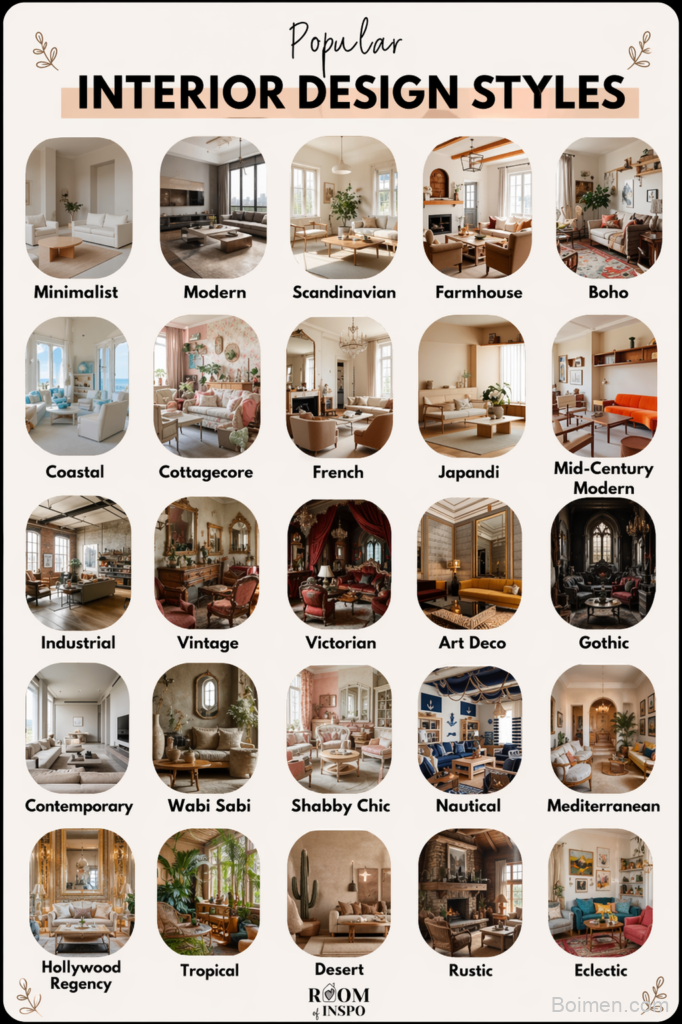
When my husband and I bought our first little house, I spent three weekends staring at paint swatches and scrolling decor feeds, completely frozen. Every style looked beautiful online, but none of them felt like us. Then a friend told me something I still repeat: you do not pick a style, you notice one. You save the photos that make you exhale, and the pattern shows up on its own.
Advertisements1
That is exactly what this guide is for. Below are 16 interior design styles, each with what it is, why it stands out, and who it suits best. Read it like a menu, not a test. You are allowed to mix two or three, and honestly, most real homes do.
Table of Contents(Click to Toggle)
Why Knowing Your Design Style Changes Everything
Here is the honest truth: most decorating regret comes from buying things one at a time with no filter. You grab a cute lamp, then a rug that fights it, then a chair that fights both. Six months later the room feels like a yard sale, and you cannot say why.
A style name is just a filter. It tells you which three or four things to say yes to and, more importantly, which fifty things to walk past. It also saves real money, because you stop rebuying the same mistake in a different color.
You do not need a designer or a big budget. You need a direction. Pick one style as your anchor, borrow small pieces from one or two others, and let the room evolve slowly. Progress over perfection, always.
16 Interior Design Styles to Explore
1. Minimalist : Calm, clutter-free rooms that breathe
What it is: A pared-back approach built on neutral palettes, clean lines, and only the objects you actually use or love.
Category: Modern essential
Why it stands out:
- Fewer pieces means each one gets noticed, so a single good chair reads as a statement
- Easy to keep clean, which matters in small apartments and busy households
- The downside: it demands discipline, and bare walls can feel cold without texture
Best for: Anyone overwhelmed by stuff who wants a visual reset without a full renovation.
2. Modern : Sleek lines with a polished, current edge
What it is: Low-profile furniture, glossy or matte surfaces, and open floor plans with very little ornament.
Category: Contemporary classic
Why it stands out:
- Strong geometry makes even a rental living room look intentional
- Works beautifully with large windows and natural light
- Watch the temperature: all-glass and chrome can feel showroom-like, so add one wood or wool piece
Best for: City dwellers and anyone who loves a crisp, hotel-lobby feel at home.
3. Scandinavian : Light woods, soft textiles, everyday hygge
What it is: Pale wood, white walls, wool throws, and simple shapes designed for long dark winters.
Category: Nordic cozy
Why it stands out:
- Affordable to recreate because the core pieces are basic and widely available
- Layered lighting, candles, and blankets make it feel warm rather than sparse
- It can tip into plain if you skip texture, so mix in chunky knits and sheepskin
Best for: Renters and first-time decorators who want cozy without clutter.
4. Bohemian : Layered, plant-filled, personal and free
What it is: Global textiles, rattan, floor cushions, and collected objects arranged with happy looseness.
Category: Eclectic layered
Why it stands out:
- Perfect for showcasing travel finds and heirlooms instead of hiding them
- Plants and hanging textiles soften hard rental walls instantly
- Without a color thread it can look chaotic, so anchor on two or three shared tones
Best for: Collectors, plant lovers, and anyone who hates matching sets.
5. Farmhouse : Warm, practical, gathered-over-time charm
What it is: Weathered wood, apron sinks, open shelving, and vintage tools used as decor.
Category: Rustic traditional
Why it stands out:
- Built for real life: durable surfaces handle kids, pets, and muddy boots
- Thrifted and secondhand pieces fit the look, so it is budget-friendly
- Too much distressed wood can feel themed, so balance with white ceramics and fresh linens
Best for: Families in houses and anyone who loves a lived-in kitchen.
6. Industrial : Raw materials with a loft-ready attitude
What it is: Exposed brick, black metal, concrete, and reclaimed wood, often in converted spaces.
Category: Urban raw
Why it stands out:
- Metal and concrete are extremely hard-wearing and low maintenance
- Pairs naturally with tall windows and open ceilings
- It runs cool and echoey, so add rugs, leather, and soft lighting to warm it up
Best for: Loft apartments, studios, and lovers of a slightly edgy, unfinished look.
7. Mid-Century Modern : Tapered legs, warm wood, retro cool
What it is: Furniture from the 1950s and 60s, with splayed legs, organic curves, and bold accent colors.
Category: Retro modern
Why it stands out:
- Pieces are widely reproduced, so you can start with one iconic chair
- Scales well in small rooms because the legs keep sightlines open
- Authentic vintage can get pricey, so mix one real piece with newer copies
Best for: Design-history fans and small-space dwellers who want character.
8. Coastal : Breezy, sun-bleached, relaxed by design
What it is: Whites and blues, linen slipcovers, jute rugs, and natural light treated as a material.
Category: Airy natural
Why it stands out:
- Slipcovers are washable, which is a gift in sandy or pet-heavy homes
- The palette is calming and easy to shop for anywhere
- Avoid literal nautical overload; one rope detail is plenty, not ten
Best for: Beach houses, lake cottages, and anyone craving a vacation feeling daily.
9. Traditional : Timeless, symmetrical, quietly grand
What it is: Rich woods, classic patterns, brass hardware, and furniture arranged in balanced pairs.
Category: Heritage classic
Why it stands out:
- Quality pieces last decades, so it rewards slow, considered buying
- Symmetry makes any room feel settled and formal without extra effort
- It can read heavy in small spaces, so keep walls light and edit accessories
Best for: Older homes, formal dining rooms, and lovers of inherited furniture.
10. Transitional : The comfortable middle ground
What it is: A blend of traditional warmth and modern simplicity, with neutral colors and soft curves.
Category: Balanced hybrid
Why it stands out:
- Extremely forgiving if you already own a mix of old and new pieces
- Neutral bases let you swap pillows and art seasonally for a fresh look
- Because it is safe, it needs one bold moment, like a large piece of art
Best for: People who like both classic and modern and refuse to choose.
11. Japandi : Japanese calm meets Nordic warmth
What it is: Low furniture, natural materials, muted earth tones, and deliberate empty space.
Category: Minimalist hybrid
Why it stands out:
- Focuses on craftsmanship, so fewer, better objects carry the whole room
- The muted palette is restful and photographs beautifully in natural light
- It requires restraint; one cluttered surface breaks the whole feeling
Best for: Small apartments, meditation corners, and minimalists who want warmth.
12. Maximalist : Bold color, pattern, and joyful abundance
What it is: Layered pattern, saturated color, gallery walls, and collections displayed proudly.
Category: Expressive bold
Why it stands out:
- Lets you use the things you love instead of storing them
- Thrifted and inherited pieces shine here, which keeps costs down
- It is the hardest style to edit, so repeat a color at least three times per room
Best for: Creative souls, collectors, and anyone bored by beige.
13. Rustic : Natural, handcrafted, grounded in texture
What it is: Stone, timber, linen, and hand-thrown pottery, with an emphasis on imperfection.
Category: Earthy natural
Why it stands out:
- Natural materials age gracefully, so scratches become character
- Works in cabins, cottages, and suburban homes alike
- Can feel dark in low-light rooms, so keep window treatments minimal
Best for: Country homes and anyone who loves tactile, honest materials.
14. Art Deco : Glamorous geometry and old-Hollywood drama
What it is: Velvet, brass, lacquer, and repeating geometric motifs from the 1920s and 30s.
Category: Vintage glamour
Why it stands out:
- Small doses go far; one velvet chair or mirrored console transforms a room
- Rich materials make modest spaces feel expensive
- It can overwhelm, so limit yourself to two metallic finishes per room
Best for: Bedrooms, entryways, and lovers of dramatic, jewel-toned interiors.
15. Mediterranean : Sun-warmed plaster, arches, and tile
What it is: Terracotta, lime plaster, arched doorways, and patterned tile in warm earthy hues.
Category: Old-world warm
Why it stands out:
- Arches and curved edges soften modern boxy rooms beautifully
- Tile adds durable color in kitchens, baths, and entryways
- Authentic plaster is a specialty finish, so budget accordingly or use paint
Best for: Sunlit homes, kitchens, and anyone dreaming of a European summer.
16. Contemporary : What is trending right now, softly
What it is: Current shapes and materials, often curved furniture, warm neutrals, and matte black accents.
Category: Current modern
Why it stands out:
- Reflects what is actually available in stores this year
- Curved silhouettes feel friendly and work in tight floor plans
- Because it shifts with trends, invest in the big pieces and rent the trends
Best for: Anyone furnishing a new place who wants a current, cohesive look fast.
Bonus Mentions
Cottagecore : Soft, nostalgic, garden-inspired comfort
Florals, gingham, dried flowers, and vintage china. Lovely in small doses and wonderful if you garden.
Grandmillennial : Old-school charm with a young twist
Pleated lampshades, chintz, and rattan, styled so it feels fresh rather than fussy.
Biophilic : Designing around plants and natural light
Living walls, timber, and daylight are treated as core materials, not accessories.
Dark Academia : Moody libraries and scholarly warmth
Deep greens, leather, brass lamps, and stacked books. Cozy in autumn and winter.
The Style That Was Yours All Along
Here is what I learned after repainting that first living room twice: your style is not a label you adopt, it is a pattern you already have. Scroll back through your saved photos and count the repeats. Maybe it is pale wood and soft white. Maybe it is brass and deep green. That is your answer.
Start with one room, not the whole house. Choose your anchor style, add two textures, and live with it for a month before buying more. Small steps beat big spending every single time.
Try this week: Pick your top three styles from this list, then remove one item from your main room that does not fit any of them. Just one. Notice how much lighter the space feels.
Which style surprised you most, or which one already lives in your home without you naming it? Tell me in the comments, I read every one.
Here’s to small steps, big impact.

Maya writes about sustainable living and zero-waste swaps for everyday families. She focuses on small, budget-friendly changes that actually stick, tested in her own chaotic kitchen.


Leave a Comment