
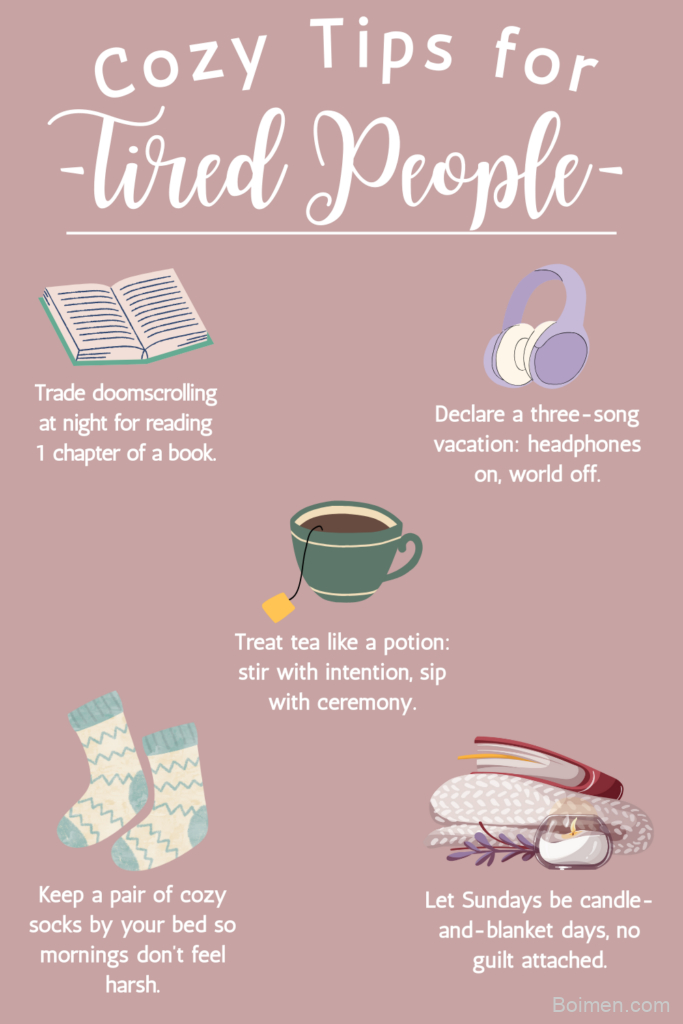
When you come home bone-tired, the last thing you need is another chore. Hygge is not about perfect candles or expensive throws—it's about small, deliberate comforts that let your shoulders drop. Here are gentle, practical ways to turn your space into a sanctuary, even on the lowest-energy days.
Advertisements1
- Hygge is about small, deliberate comforts, not expensive decor.
- Warm, dim lighting (2700K) is essential for signaling rest.
- Texture matters: blankets, rugs, and pillows create physical comfort.
- A two-minute entry ritual (like lighting a candle) shifts your mindset.
- Loose-leaf tea turns a quick drink into a mindful ceremony.
- A dedicated cozy corner, even tiny, trains your brain to relax.
Start with a Two-Minute Reset
Before you even sit down, spend two minutes changing the energy of your entryway. Kick off your shoes, hang your coat, and light one candle. This tiny ritual signals to your brain that the day is over. I keep a taper candle by the door, and the act of striking the match is like a deep breath for the whole apartment.
Choose Warm Light Over Bright Light
Overhead lights are the enemy of rest. Replace your brightest bulb with a warm, dimmable one, or better yet, use table lamps and floor lamps positioned low. Aim for a color temperature around 2700K—it mimics sunset. In my living room, I only turn on the floor lamp after 7 PM; the difference is immediate.
Wrap Yourself in Texture
Hygge is felt as much as seen. Keep a chunky knit blanket within arm's reach of your usual spot, and swap your cotton throw pillows for velvet or wool. The tactile contrast against your skin triggers a relaxation response. I have a sheepskin rug that I drag onto the couch when I read—it's a small luxury that costs nothing but feels priceless.
Make Tea a Ceremony, Not a Chore
Even if you're exhausted, take three extra minutes to brew loose-leaf tea instead of a bag. The act of measuring leaves, heating the water, and watching it steep becomes a meditation. I keep a small cast-iron pot on the stove; the weight in my hands is grounding. Choose a caffeine-free blend like chamomile or rooibos to truly unwind.
Create a Cozy Corner for Reading or Daydreaming
You don't need a whole room—just a corner. Place a comfortable chair, a small side table, and a stack of books or magazines. Angle the chair toward a window, even if the view is just rooftops. This dedicated spot tells your mind, 'This is where I rest.' I have a worn armchair by the radiator, and just sitting there makes me exhale.
Let the Outside In — Gently
Bringing nature inside is a hygge staple, but it doesn't have to be elaborate. A few sprigs of eucalyptus in a glass jar, a potted fern, or even a bowl of pinecones can soften a room. The green and organic shapes calm the eye. I change mine with the seasons—bare branches in winter, wildflowers in summer—and it keeps the home feeling alive.
End the Day with a Digital Sunset
An hour before bed, put your phone in another room or at least on airplane mode. Instead, do one analog activity: journal, knit, or simply stare out the window. The blue light from screens suppresses melatonin, but a screen-free hour lets your body's own sleepiness rise. I've started writing three lines in a notebook each night—it's enough to clear my mind without feeling like homework.
How to Do It, Step by Step
- 1Light a candle at the door
Keep a candle and matches by your entryway; light it as soon as you come home. The flame and scent create an immediate transition from outside stress to inside calm. - 2Switch to warm bulbs
Replace bright white bulbs with 2700K warm ones, and use lamps instead of overhead lights. This lowers the room's color temperature, mimicking sunset and signaling relaxation. - 3Drape a soft blanket on your main seat
Keep a chunky knit or fleece blanket on the couch or chair you use most. The texture invites you to snuggle, and the visual softness makes the space feel more inviting. - 4Brew loose-leaf tea slowly
Take three extra minutes to make a pot of loose-leaf herbal tea. The ritual of measuring and steeping becomes a mindful pause; choose caffeine-free blends for evening. - 5Set up a tiny reading nook
Arrange a chair, a small table, and a stack of books in a corner, even if it's cramped. This dedicated spot physically separates 'rest' from 'work' and makes relaxing a habit. - 6Add one natural element
Place a small vase of greenery, a bowl of pinecones, or a single branch in your main living area. Natural shapes and textures reduce stress and connect you to the outdoors. - 7Declare a digital sunset
One hour before bed, move your phone out of reach and do a non-screen activity like reading or journaling. This boosts melatonin production and helps you fall asleep faster.
True hygge is not about perfection; it's about creating pockets of warmth and stillness that let your soul catch up to your body.
Frequently Asked Questions
What is the best way to make my home cozy on a budget?
Start with the cheapest changes: switch to warm light bulbs, light candles, and add a textured throw. These cost little but immediately change the feel of a room.
How do I create a hygge atmosphere without candles?
Use warm fairy lights or a salt lamp for a similar glow, and focus on soft textures and natural elements like wood or plants to add warmth.
Can hygge help with anxiety or stress?
Yes, hygge practices like dim lighting, cozy textures, and mindful rituals activate the parasympathetic nervous system, which helps reduce stress and promote calm.
What are some simple hygge activities for a tired evening?
Try brewing a cup of herbal tea, reading a few pages of a book under a soft blanket, or taking a warm bath with a candle—all low-effort and deeply soothing.
Is hygge just for winter?
No, hygge is year-round. In summer, it might mean open windows, fresh flowers, and a cool drink on a shaded balcony—it's about comfort and presence, not season.

Ingrid explores Scandinavian minimalist design and slow living. She writes about creating calm, functional spaces with fewer, better things.


Leave a Comment