
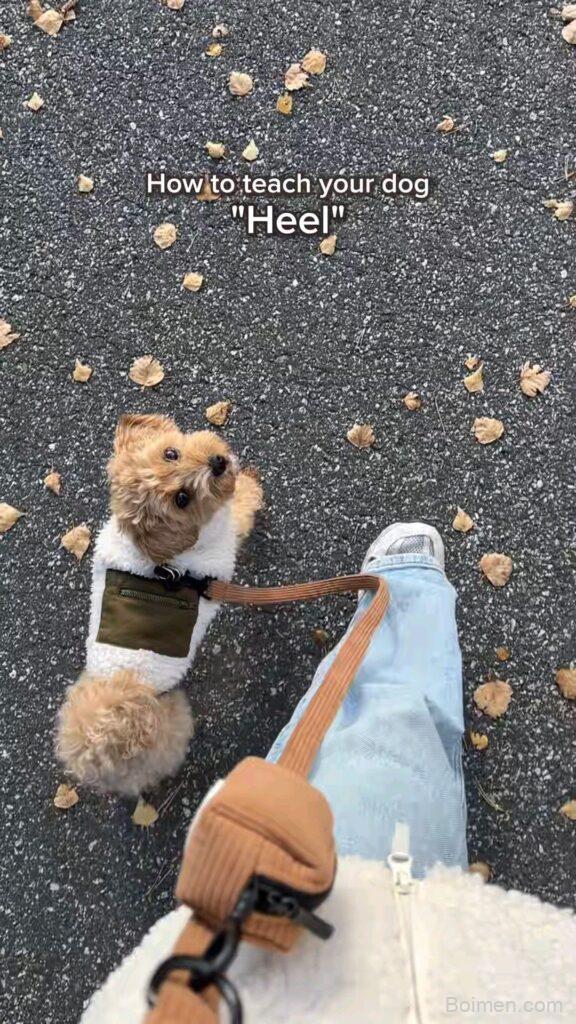
Teaching your dog to heel can transform your walks from a tug-of-war into a peaceful stroll. It's not about dominance; it's about communication and partnership. In this guide, I'll share the exact method I've used with hundreds of dogs, including my own spirited border collie, Finn.
Advertisements1
- Heeling is a partnership, not a power struggle—focus on communication and connection.
- Start training indoors with minimal distractions, then gradually add the Three Ds: Distance, Duration, and Distraction.
- Reward your dog while they're in the correct heel position, not after they've left it.
- Keep sessions short, fun, and frequent. End on a positive note every time.
- Proof the behavior in many environments to make it reliable anywhere.
- Be patient. Every dog learns at their own pace; celebrate small victories.
Why Heel Matters: More Than Just Manners
Heeling is a specific position: your dog walks close to your side, typically with their shoulder aligned with your leg, matching your pace and direction. It's not just about preventing pulling; it's about creating a shared language between you and your dog. When your dog understands heel, you can navigate crowded streets, pass other dogs without drama, and enjoy a relaxed walk where you're both attuned to each other.
Think of it as a dance. You lead, but you're aware of your partner. The leash hangs loose, a smile on your face. This isn't about rigid obedience; it's about connection. I remember the first time Finn and I truly heeled together—a quiet morning, the sun filtering through the trees, and our steps in perfect sync. It felt like a conversation without words.
Start Indoors: The Foundation of Focus
Before you brave the sidewalk, build the behavior in a low-distraction environment. Your living room or a quiet hallway works perfectly. Begin with your dog on a leash, standing on your left side (the traditional side, but you can choose either as long as you're consistent). Hold a treat in your left hand, close to your leg. Take one step forward and say 'Heel' in a cheerful tone. If your dog follows and stays close, mark with a clicker or a verbal 'Yes!' and reward with the treat. If they lag or surge ahead, simply stop, reset, and try again with a smaller step.
The goal is to reward your dog for being in the correct position. Keep sessions short—two to three minutes, a few times a day. Puppies and adult dogs alike can lose focus quickly. End on a positive note, even if it's just one successful step. This builds a positive association with the word 'Heel' and the position itself.
Add Distractions Gradually: The Three Ds
Once your dog can heel for several steps indoors, it's time to add the Three Ds: Distance, Duration, and Distraction. Increase distance by taking more steps before rewarding. Increase duration by asking for a few more steps each time. But the biggest challenge is distraction. Start in your backyard or a quiet park. If your dog pulls toward a squirrel, stop moving. Wait for them to reorient to you, then reward. Never reward pulling; that only teaches them that pulling works.
If your dog struggles, you've increased difficulty too quickly. Go back to an easier step. For example, if they can't heel past a noisy playground, practice near a less exciting spot first. Patience is key. I once spent a week just working on heeling past a particularly enticing fire hydrant. Each day, we got a little closer. The breakthrough came when Finn chose to look at me instead of the hydrant—a small victory that felt monumental.
The Leash Hand: Quiet Signals
Your leash hand should be still and soft. Avoid tension; a tight leash communicates anxiety and can actually encourage pulling. Hold the leash loosely, with your hand near your waist. Your other hand is free to reward. When your dog is in the correct heel position, the leash should have a gentle J-shape. If it's taut, you're either moving too fast or your dog is drifting. Slow down, reset, and reward the slack.
Think of the leash as a telephone line, not a steering wheel. It's there for safety, not control. Your voice and body language do the directing. I often see people yanking the leash, which only creates resistance. Instead, use your voice to encourage and your treats to guide. If your dog forges ahead, simply turn and walk the other way. This teaches them to pay attention to your direction.
Common Mistakes and How to Avoid Them
One common mistake is repeating the cue 'Heel, heel, heel.' This dilutes the word's meaning. Say it once, then help your dog succeed. Another mistake is rewarding after the dog has left the heel position. The reward must come while they're in the correct spot. Also, don't practice when you're frustrated. Dogs sense our emotions. If you're tense, your dog will be too. Take a deep breath and keep sessions light.
Finally, don't expect perfection overnight. Heeling is a complex skill that requires coordination and impulse control. Celebrate small wins. If your dog gives you three good steps, that's a triumph. End the session and play. Over time, those three steps become thirty. I've seen dogs take months to master heel, and that's okay. It's a journey, not a race.
Proofing: Generalizing the Behavior
Once your dog can heel reliably in several locations, it's time to proof the behavior. This means practicing in new environments with different distractions. Try a busy street, a pet store, or a farmer's market. Start with short sessions and high-value rewards. If your dog regresses, don't be discouraged; simply reduce the difficulty. You might need to go back to basics in that new place.
Proofing is what makes the behavior reliable anywhere. It's the difference between a dog who heels in the living room and one who heels on a crowded sidewalk. Gradually expose your dog to more challenging situations, always setting them up for success. Remember, every dog is an individual. Some need more proofing than others. Respect your dog's pace.
How to Do It, Step by Step
- 1Choose Your Side and Stick to It
Decide whether your dog will heel on your left or right. Consistency is crucial. I prefer left because it keeps my right hand free for treats and other tasks. Once you choose, always practice on that side. - 2Start with One Step
In a quiet space, hold a treat in the hand on the side your dog will heel. Take one step forward and say 'Heel.' If your dog follows and stays close, mark and reward. If not, reset and try again. This builds the initial association. - 3Reward Position, Not Movement
The reward should come when your dog is in the correct heel position, not just when they're moving. This teaches them that the position itself is valuable. Use a clicker or a verbal marker to pinpoint the exact moment. - 4Increase Duration Gradually
Once your dog can do one step, try two, then three. Slowly increase the number of steps before rewarding. If they break position, simply stop and reset. Don't rush this; duration is built incrementally. - 5Add Distractions Slowly
Start with mild distractions like a toy on the floor, then progress to other people, dogs, and noises. If your dog can't focus, you've made it too hard. Reduce the distraction and try again later. - 6Practice in Different Locations
Generalize the behavior by practicing in various places: your backyard, front yard, quiet street, park. Each new location is a new challenge. Start with short sessions and high rewards. - 7Keep Sessions Short and Fun
Limit training sessions to 5 minutes or less. End on a positive note, even if it's just one perfect step. Your dog will look forward to training if it's enjoyable. - 8Fade the Treats
Once your dog is reliable, start rewarding intermittently. Use a variable schedule: reward after 2 steps, then 5, then 3. This makes the behavior more resistant to extinction. Always keep a few treats handy for surprise rewards.
Heeling is a conversation without words—a quiet agreement to move through the world together.
Frequently Asked Questions
How long does it take to teach a dog to heel?
It varies, but with consistent short sessions, most dogs show progress in a few weeks. Reliable heeling in distracting environments can take several months. Patience and consistency are key.
What if my dog pulls ahead during heel training?
Stop moving immediately. Wait for your dog to reorient to you, then reward. Never reward pulling. You can also turn and walk the other way to teach them to follow your lead.
Should I use a clicker for heel training?
A clicker can be very effective because it marks the exact moment your dog is in the correct position. If you don't have a clicker, a verbal marker like 'Yes!' works too.
Can I teach an older dog to heel?
Absolutely. Older dogs can learn new behaviors. Adjust your training to their physical abilities and keep sessions gentle. They may need more time, but they can succeed.
What if my dog is too distracted to focus?
Reduce the distraction level. Move to a quieter place or increase the value of your rewards. If your dog still can't focus, they might be tired or stressed. Take a break and try later.

Ingrid explores Scandinavian minimalist design and slow living. She writes about creating calm, functional spaces with fewer, better things.


Leave a Comment