
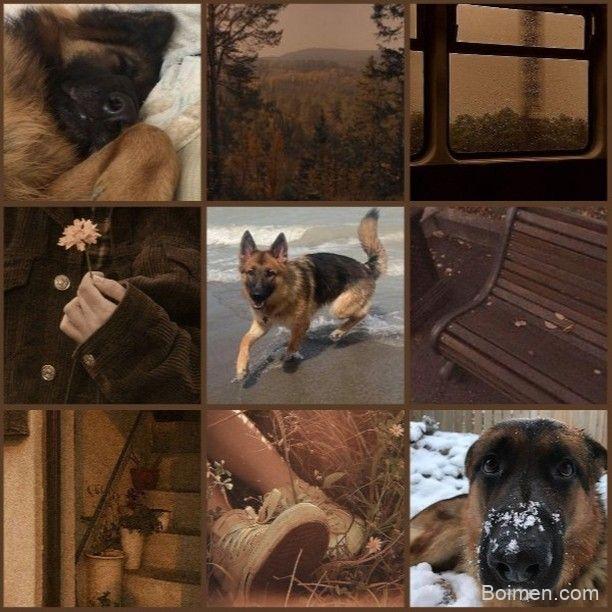
You're scrolling through Pinterest, and suddenly a German Shepherd moodboard stops your thumb—the mix of strength and softness, those intelligent eyes, that noble stance. But when you try to build your own, it feels flat, like a photocopy of a photocopy. Here's how to make a moodboard that feels as alive as the breed itself.
Advertisements1
- Start with an emotional theme, not a random collection of images—it's the difference between a story and a pile.
- Pull a 5-color palette directly from the dog's coat and stick to the 60-30-10 rule for visual harmony.
- Use one hero image and vary sizes; avoid equal-sized images that look like stamps.
- Add texture and minimal text (1-2 elements) to give your board depth and meaning.
- Embrace messy first drafts—edit ruthlessly later to keep only what serves the core feeling.
Start with a Feeling, Not a Folder
Most people begin by dumping every German Shepherd photo they've saved into a folder. That's like throwing all your spices into a pot and hoping for curry. Instead, decide on the emotional core: is this board about loyalty, protection, playfulness, or the working drive? For example, a board themed 'Guardian at Heart' might use 70% darker, moodier images—think a shepherd silhouetted against a stormy sky—and 30% soft moments like a paw on a child's lap. That ratio creates tension and tells a story. When I built my first shepherd board, I started with 50 random pins and it felt chaotic. Once I narrowed to 12 images that all evoked 'steadfast,' the board finally breathed.
Curate a Color Palette That Barks
German Shepherds come in rich blacks, tans, sables, and even whites. Pull your palette directly from their coat: use a color picker tool on a high-res photo to grab the exact hex codes. For a classic black-and-tan, you might get #1A1A1A (deep black), #B5651D (tan), and #F5F5DC (cream). Then add one accent—maybe a muted forest green or slate blue—to represent their working heritage. This isn't just artsy; it makes your board instantly recognizable. I've seen boards where the palette alone made me think 'German Shepherd' before I even saw a dog. Limit yourself to five colors max, and use the 60-30-10 rule: 60% dominant, 30% secondary, 10% accent.
Mix Textures and Text to Add Depth
A moodboard isn't just photos. Layer in textures that evoke the breed: a close-up of a leather collar, a snippet of a schutzhund field, a vintage police badge, or even a tuft of fur (photographed, not glued). Add short text overlays—single words like 'Loyal,' 'Brave,' or 'Gentle' in a bold sans-serif font. But don't overdo it: one or two text elements per board. I once added a quote from a K9 handler: 'He's not just a dog; he's my partner.' That one line gave the whole board emotional weight. For digital boards, use Canva or Milanote to drag and drop; for physical boards, a corkboard with pushpins works wonders.
Compose with the Rule of Thirds (and Break It)
Place your focal point—usually a striking headshot—at one of the intersections of a 3×3 grid. Then arrange supporting images around it, varying sizes. A common mistake is making every image the same size, which looks like a stamp collection. Instead, use one hero image (large), two medium, and several small. In a physical board, overlap edges slightly to create intimacy. For digital, use a grid tool but leave some white space—it lets the eye rest. I like to create a diagonal flow from top-left to bottom-right, guiding the viewer through the story. If you want a more dynamic feel, tilt a few images 5-10 degrees.
Use Prompts to Spark Ideas (and Get Messy)
Stuck? Try these playful prompt variations to generate unique angles: 1) 'If my German Shepherd were a season, what would it be?' (Autumn: rust colors, falling leaves, cozy but alert). 2) 'Design a board for a shepherd who's a retired police dog—what memories would it hold?' 3) 'What would a German Shepherd's dream look like?' (Flying through fields, chasing squirrels, a giant bone). 4) 'Create a board that contrasts their fierce bark with their goofy zoomies.' 5) 'Make a board using only black, white, and one accent color.' These prompts push you past generic stock photos. Remember: your first draft will be messy. That's perfect. My own boards often start as a chaotic pile; I edit ruthlessly later.
Refine and Share (Without Losing the Soul)
After you've assembled 15-20 elements, step back. Squint. Does it feel cohesive? If not, remove anything that doesn't serve the core emotion. A good test: cover the text—does the imagery alone still communicate 'German Shepherd'? Then, export as a high-res image or take a well-lit photo of your physical board. Share on Pinterest with a keyword-rich description like 'German Shepherd moodboard inspiration for dog lovers and designers.' Engage with other boards—comment on what you love. The community will give you feedback and new ideas. I've discovered amazing photographers and artists this way. And don't be afraid to iterate: your board can evolve as you learn more about the breed.
How to Do It, Step by Step
- 1Define your emotional core
Write down one word that captures the mood (e.g., 'steadfast'). This guides every choice and prevents a random collage. - 2Gather 20-30 candidate images
Pull from Pinterest, Unsplash, and your own photos. Focus on high-resolution, varied poses and settings. - 3Extract a 5-color palette
Use a color picker on a clear shepherd photo. Limit to five colors and apply the 60-30-10 rule for balance. - 4Arrange using a grid
Place a hero image at a rule-of-thirds intersection. Vary sizes: one large, two medium, several small. Overlap slightly for depth. - 5Add 1-2 text elements
Choose a bold font and a single word or short quote that reinforces the theme. Don't clutter. - 6Step back and edit
Remove anything that doesn't fit the core emotion. Squint to check cohesion. Less is more. - 7Export and share
Save as a high-res image or photograph your physical board in natural light. Post with a descriptive caption.
A great German Shepherd moodboard doesn't just show the breed; it makes you feel their loyalty, strength, and heart before you even read a word.
Frequently Asked Questions
What should I include in a German Shepherd moodboard?
Include a mix of high-quality photos (headshots, action shots, candid moments), a cohesive color palette drawn from the breed's coat, textures like leather or grass, and 1-2 text elements such as a single word or short quote. Aim for 12-20 elements total.
How do I choose a color palette for my moodboard?
Use a color picker tool on a clear photo of a German Shepherd to extract exact hex codes from their black, tan, sable, or white fur. Limit to five colors and apply the 60-30-10 rule: 60% dominant, 30% secondary, 10% accent.
What's the best layout for a moodboard?
Use the rule of thirds: place your focal image at an intersection. Vary image sizes (one large, two medium, several small) and overlap edges slightly for depth. Create a diagonal flow to guide the eye.
Can I make a physical German Shepherd moodboard?
Absolutely. Use a corkboard or foam board, print your images, and arrange them with pushpins or double-sided tape. Add physical textures like fabric swatches or a real collar piece for a tactile feel.
How do I avoid a cluttered moodboard?
Edit ruthlessly: if an element doesn't support your core emotion, remove it. Leave white space, limit text to 1-2 elements, and ensure the board still communicates 'German Shepherd' even without words.

Priya explores creative writing prompts and storytelling techniques for aspiring authors. She shares exercises to spark imagination and build narrative confidence, drawn from her own writing practice.


Leave a Comment