
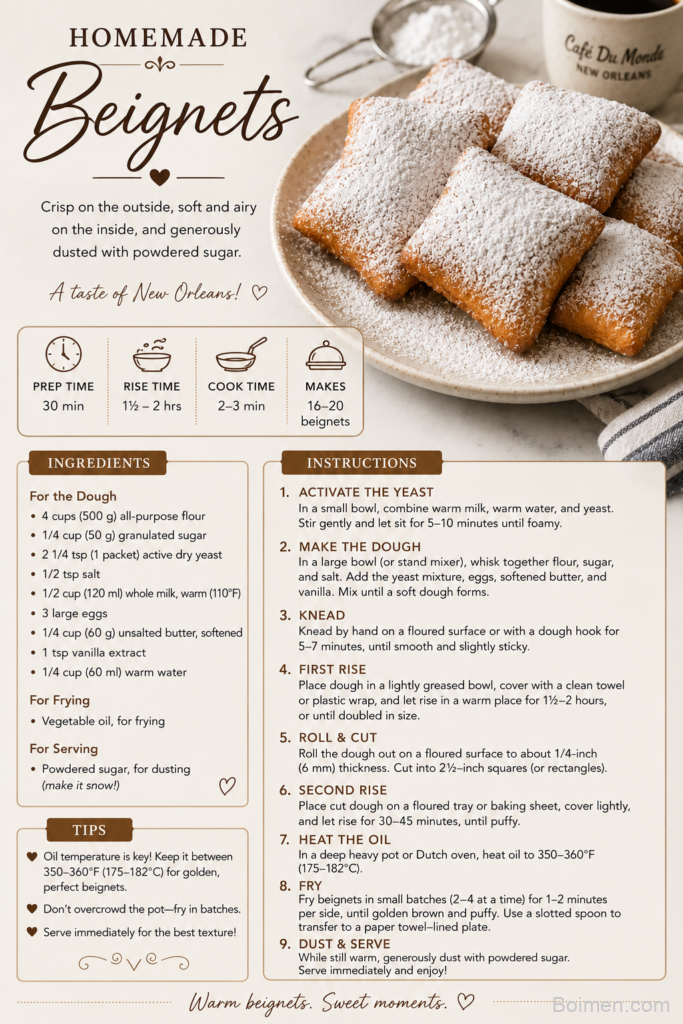
The first time I made this beignets recipe, my kitchen looked like a powdered sugar snowstorm and my kids thought it was the best day ever. These little square donuts are golden and crisp on the outside, soft and airy inside, and they come together with pantry staples you probably already have.
Advertisements1
You do not need a fancy fryer or a pastry diploma. A heavy pot, a thermometer, and a little patience with the dough are all it takes. I have made these dozens of times now, and I promise the learning curve is short and sweet.
If you have ever had a warm beignet at Cafe du Monde in New Orleans, this is my home-kitchen version of that memory. Let's make some together.
Why You'll Love This Recipe
About the Ingredients
1 1/2 cups (180g) all-purpose flour
Spoon the flour into the cup and level it off so the dough stays light. For a slightly chewier texture, swap in 1/4 cup (30g) bread flour for the same amount of all-purpose.
1 1/2 teaspoons (5g) active dry yeast
Check the expiration date before you start, since old yeast will not foam. Instant yeast works too, just skip the proofing step and add it straight to the dry ingredients.
3/4 cup (180ml) warm water, about 110F (43C)
Warm to the touch but not hot, or you will kill the yeast. A kitchen thermometer is the safest bet, or test a drop on your wrist like baby milk.
2 tablespoons (25g) granulated sugar
This feeds the yeast and gives a subtle sweetness. Honey can replace it one-for-one if you like a deeper flavor.
1/2 teaspoon (3g) fine salt
Salt balances the sweetness and strengthens the dough. Use fine sea salt rather than coarse, which will not dissolve evenly.
1 large egg, room temperature
Room-temperature egg blends in smoothly and helps the dough rise evenly. Out of eggs? Use 3 tablespoons (45ml) whole milk instead.
2 tablespoons (28g) unsalted butter, melted
Melted butter makes the beignets tender and rich. Salted butter works too, just reduce the added salt to a pinch.
1/2 cup (60g) evaporated milk
Evaporated milk gives that classic richness; whole milk is a fine substitute in the same amount. Shake the can well before measuring.
6 cups (1.4L) vegetable oil, for frying
Use a neutral, high-smoke-point oil like canola or peanut oil. Save and strain the oil after frying for one more batch.
1 cup (120g) powdered sugar, for dusting
Toss the warm beignets generously so the sugar clings. Add a pinch of cinnamon to the sugar for a churro-style twist.
Tips & Tricks
- Keep the oil steady at 350F (175C) with a thermometer, since too-hot oil browns the outside before the inside cooks.
- Roll the dough to an even 1/4-inch (6mm) thickness so the squares puff and fry at the same rate.
- Dust with powdered sugar only when the beignets are still warm so it sticks and melts into the surface.
- Fry in small batches of 4 to 6 so the oil temperature does not drop and the beignets stay crisp.
Pro Tips
Step-by-Step Instructions
1. Bloom the yeast
Whisk the warm water (110F/43C) with the sugar and yeast in a small bowl and let it sit 5 to 10 minutes until foamy. If it does not foam, the yeast is dead and you should start over with fresh yeast.
2. Mix the dough
In a large bowl, whisk the flour and salt, then add the yeast mixture, egg, melted butter, and evaporated milk. Stir with a wooden spoon until a shaggy dough forms, about 2 minutes.
3. Knead until smooth
Turn the dough onto a floured surface and knead 6 to 8 minutes until it is smooth and slightly tacky. It should spring back slowly when you poke it; if it is too sticky, add flour one tablespoon at a time.
4. Let it rise
Place the dough in a lightly oiled bowl, cover with a clean towel, and let it rise in a warm spot for 60 to 90 minutes until doubled in size. It is ready when a gentle poke leaves an indentation.
5. Roll and cut
Punch down the dough, roll it on a floured surface to 1/4-inch (6mm) thickness, and cut into 2-inch (5cm) squares with a sharp knife or pizza cutter. Let the squares rest 10 minutes while the oil heats.
6. Heat the oil
Pour the oil into a heavy pot to a depth of 2 inches (5cm) and heat over medium-high to 350F (175C). Use a thermometer to keep it steady; a cube of bread should brown in about 60 seconds.
7. Fry in batches
Fry 4 to 6 beignets at a time for 60 to 90 seconds per side until golden brown and puffed, flipping once with a slotted spoon. They are done when they float and the edges look crisp and bubbling.
8. Drain and dust
Transfer the beignets to a wire rack to drain for 30 seconds, then toss them in powdered sugar while still warm. Serve immediately, because warm beignets are the whole point.
Delicious Variations
Chocolate-Stuffed Beignets
Tuck a small square of dark chocolate into each dough square before frying for a molten center.
Cinnamon-Sugar Beignets
Skip the powdered sugar and roll the warm beignets in a cinnamon-sugar mix for a churro vibe.
Lemon-Glazed Beignets
Whisk powdered sugar with lemon juice and zest and drizzle over the cooled beignets for a bright finish.
How to Store Beignets Recipe
Refrigerator
Store cooled beignets in an airtight container at room temperature for up to 2 days; refrigerate only if your kitchen is very warm, and expect them to soften.
Freezer
Freeze cooled beignets on a sheet pan, then transfer to a freezer bag for up to 2 months. Reheat straight from frozen for the best texture.
Reheating
Reheat in a 350F (175C) oven for 5 to 7 minutes until crisp, then dust with fresh powdered sugar before serving.
Frequently Asked Questions
Q: Why did my beignets turn out dense and not fluffy?
Dense beignets usually mean the dough did not rise enough or the oil was too cool. Let the dough double fully and keep the oil at a steady 350F (175C) so the inside cooks as the outside browns.
Q: Can I make beignet dough ahead of time?
Yes, you can mix the dough and refrigerate it overnight, then let it come to room temperature and rise before frying. This actually deepens the flavor and makes the dough easier to roll.
Q: What kind of oil is best for frying beignets?
Use a neutral oil with a high smoke point, like canola, vegetable, or peanut oil. Avoid olive oil, which smokes and flavors the beignets at frying temperatures.
Q: How do I know when the oil is at the right temperature without a thermometer?
Drop a small piece of dough into the oil; it should sizzle and rise to the surface within about 60 seconds. If it browns in 20 seconds, the oil is too hot and needs to cool slightly.
Q: Can I bake beignets instead of frying them?
You can bake them at 400F (205C) for 12 to 15 minutes, but they will be more like soft rolls than crispy fried beignets. Frying is what gives them that classic airy shell.
Give this beignets recipe a try this weekend and let the powdered sugar fly. Try this week's tip: fry just one test beignet first to check your oil, then enjoy the rest with confidence. Here's to small steps, big impact.

Beignets Recipe
This beignets recipe makes pillowy New Orleans-style donuts dusted in powdered sugar – a crispy, airy treat you can fry at home in under an hour.
🧂 Ingredients
- 1 1/2 cups (180g) all-purpose flour
- 1 1/2 teaspoons (5g) active dry yeast
- 3/4 cup (180ml) warm water, about 110F (43C)
- 2 tablespoons (25g) granulated sugar
- 1/2 teaspoon (3g) fine salt
- 1 large egg, room temperature
- 2 tablespoons (28g) unsalted butter, melted
- 1/2 cup (60g) evaporated milk
- 6 cups (1.4L) vegetable oil, for frying
- 1 cup (120g) powdered sugar, for dusting
📋 Instructions
- 1Bloom the yeast — Whisk the warm water (110F/43C) with the sugar and yeast in a small bowl and let it sit 5 to 10 minutes until foamy. If it does not foam, the yeast is dead and you should start over with fresh yeast.
- 2Mix the dough — In a large bowl, whisk the flour and salt, then add the yeast mixture, egg, melted butter, and evaporated milk. Stir with a wooden spoon until a shaggy dough forms, about 2 minutes.
- 3Knead until smooth — Turn the dough onto a floured surface and knead 6 to 8 minutes until it is smooth and slightly tacky. It should spring back slowly when you poke it; if it is too sticky, add flour one tablespoon at a time.
- 4Let it rise — Place the dough in a lightly oiled bowl, cover with a clean towel, and let it rise in a warm spot for 60 to 90 minutes until doubled in size. It is ready when a gentle poke leaves an indentation.
- 5Roll and cut — Punch down the dough, roll it on a floured surface to 1/4-inch (6mm) thickness, and cut into 2-inch (5cm) squares with a sharp knife or pizza cutter. Let the squares rest 10 minutes while the oil heats.
- 6Heat the oil — Pour the oil into a heavy pot to a depth of 2 inches (5cm) and heat over medium-high to 350F (175C). Use a thermometer to keep it steady; a cube of bread should brown in about 60 seconds.
- 7Fry in batches — Fry 4 to 6 beignets at a time for 60 to 90 seconds per side until golden brown and puffed, flipping once with a slotted spoon. They are done when they float and the edges look crisp and bubbling.
- 8Drain and dust — Transfer the beignets to a wire rack to drain for 30 seconds, then toss them in powdered sugar while still warm. Serve immediately, because warm beignets are the whole point.

Maya writes about sustainable living and zero-waste swaps for everyday families. She focuses on small, budget-friendly changes that actually stick, tested in her own chaotic kitchen.


Leave a Comment