
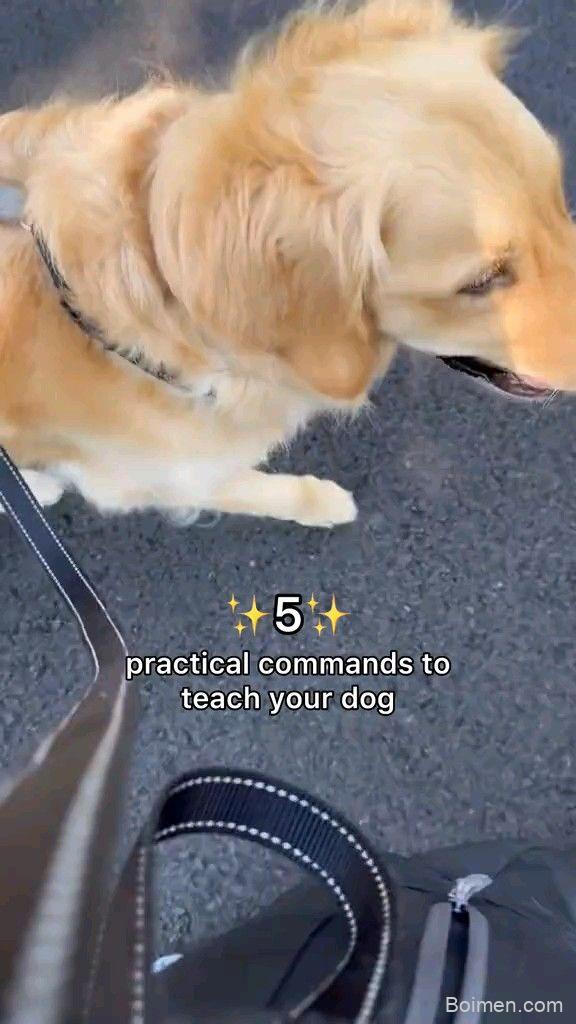
When I adopted my rescue terrier, Milo, he didn't know 'sit' from 'stay'—and I quickly learned that teaching practical commands isn't about perfection, it's about building trust and safety. In this guide, I'll share the five commands that made the biggest difference in our daily life, with step-by-step instructions and the reasoning behind each one. You'll walk away with a clear plan to start today.
Advertisements1
- Focus on five core commands: sit, stay, come, leave it, and loose-leash walking—they cover most daily safety and manners needs.
- Train in short, frequent sessions (5–10 minutes) and always end on a positive note to keep your dog engaged.
- Use positive reinforcement: reward the behavior you want, and ignore or manage the behavior you don't.
- Practice in low-distraction environments first, then gradually add challenges like distance, duration, and distractions.
- Never punish your dog for coming to you or for breaking a stay—it damages trust and slows progress.
- Consistency is key: everyone in the household should use the same cues and rules.
Why These Five Commands Matter Most
After years of fostering dogs and volunteering at our local shelter, I've seen which commands truly change the game. It's not about having a dog that can balance a treat on its nose; it's about having a dog that can safely navigate the world with you. The five commands I focus on—sit, stay, come, leave it, and loose-leash walking—cover 90% of the situations where I need my dog to listen for his own safety and our sanity. They're practical, they build on each other, and they're achievable for any breed, age, or energy level.
When I started with Milo, I made the mistake of trying to teach everything at once. He got overwhelmed, and so did I. Once I narrowed it down to these core five and practiced one at a time for just 5–10 minutes a day, everything clicked. The key is consistency, not marathon sessions. Short, frequent training bursts work with how dogs actually learn—through repetition and positive reinforcement.
Each command in this guide includes a 'try this week' tip, so you can focus on one skill without feeling behind. Remember: progress over perfection. Even if your dog only gets it right 50% of the time, that's still a win worth celebrating.
1. Sit: The Foundation of Everything
Sit is the first command I teach every dog because it's the easiest to capture and it becomes the default 'please' behavior. When Milo wants attention, a treat, or to go outside, he sits automatically—and that's exactly what I want. To teach it, hold a treat close to your dog's nose and slowly move it up and back over their head. Their bottom will naturally hit the floor. The moment it does, say 'yes!' (or click if you use a clicker) and give the treat. Repeat five times, then take a break.
Why this works: you're using their natural physics, not forcing them into position. Forcing creates resistance; luring creates cooperation. I practiced with Milo in the kitchen while I was waiting for coffee to brew—30 seconds here, 30 seconds there. Within three days, he was sitting on cue 8 out of 10 times. The trick is to add the verbal cue 'sit' just before the lure, then fade the lure quickly. Don't keep bribing with a treat in your hand forever; otherwise, your dog will only sit when they see food.
Common mistake: repeating 'sit, sit, sit' when they don't do it. That just teaches them that the word is background noise. Say it once, wait two seconds, then help them if needed. If they still don't, reset and try again with less distraction. I had to learn this the hard way with Milo in the park—he was too excited to focus, so I went back to the quiet living room for a week before trying outside again.
2. Stay: Building Duration and Distance
Stay is the command that keeps your dog safe when you open the front door or need them to wait while you tie your shoe. I teach it in three dimensions: duration (time), distance (how far you go), and distraction (what's going on around you). Start with duration: ask for a sit, say 'stay,' take one step back, and immediately return and reward. If your dog holds for even two seconds, that's a success. Gradually increase to five seconds, then ten, then thirty.
Once your dog can stay for 30 seconds with you standing right in front of them, add distance. Step back two steps, then three, always returning to reward before they break. The rule is: never punish a break. If they get up, just calmly reset and make it easier next time. I used a release word—'free'—so Milo knows exactly when the stay is over. Without a release word, dogs guess, and guessing leads to breaking early. With Milo, I practiced during TV commercials: one commercial break = one training session. It was low-pressure and fit into my day.
Why it works: stay is essentially a long-duration sit or down, and it builds impulse control. It's mentally tiring for dogs, which is great because a tired dog is a well-behaved dog. But keep sessions under two minutes to avoid frustration. If your dog breaks the stay three times in a row, you've made it too hard—go back to an easier step. That's not failure; that's good training.
3. Come: The Most Important Safety Command
Come—or recall—is the command that can save your dog's life. I can't count how many times Milo has started toward a busy street and I've called him back. To teach it, start in a hallway or small room with zero distractions. Say your dog's name and 'come' in a happy, high-pitched voice, then back away or run in the opposite direction. When they chase you, reward generously with a jackpot of treats (three or four small pieces in a row) and praise. The key is to make coming to you the best thing that ever happens.
Never call your dog to punish them. If you call 'come' and then scold them for something they did earlier, they'll associate coming with bad news. I made that mistake once with Milo—he knocked over a plant, I called him to clean up, and he avoided me for an hour. Now, I only call 'come' when I'm 99% sure he'll comply, and I always reward. In distracting environments, use a long line (a 15-foot leash) so you can gently guide them if needed without repeating the cue.
Why it works: recall is about relationship, not obedience. The more you practice in easy settings and reward heavily, the stronger the behavior becomes in hard settings. I practice 'come' with Milo in the backyard every morning before breakfast—five repetitions, each rewarded with a piece of chicken. It's our little ritual, and his recall is now reliable even when he's chasing a squirrel. Well, 80% reliable. Progress, not perfection.
4. Leave It: Preventing Trouble Before It Starts
Leave it is the command that tells your dog to ignore something—a chicken bone on the sidewalk, a dead bird, or your favorite shoe. I teach it by holding a treat in my closed fist and letting Milo sniff and paw at it. The moment he backs off or looks away, I say 'yes!' and give him a different treat from my other hand. Repeat until he immediately looks away when he sees my closed fist. Then, put a treat on the floor, cover it with your foot, and say 'leave it.' When he ignores it, reward from your hand.
Why this works: you're teaching a default ignore response. The reward comes from you, not the object, so your dog learns that leaving things alone pays better. I used this when Milo found a half-eaten hamburger on our walk—he looked at me, I said 'leave it,' and he got a piece of cheese. That's a win. Never yank the leash or yell; that creates resource guarding. Instead, make yourself more interesting than the forbidden item.
Common mistake: using 'leave it' for things your dog already has in their mouth. That's actually 'drop it,' a separate command. For leave it, the item should be on the ground or in your hand, not in their mouth. I keep these separate to avoid confusion. Practice with low-value items first (like kibble) and work up to high-value ones (like a piece of hot dog). With Milo, I practiced with a sock first, then a treat, then a toy. Each success built the next.
5. Loose-Leash Walking: Enjoying Walks Together
Loose-leash walking isn't about a perfect heel; it's about your dog not dragging you down the street. I teach it by rewarding Milo for being by my side. Start indoors: hold a treat at your hip, say 'let's go,' and take a few steps. If Milo stays near, reward. If he pulls, stop moving. The walk only continues when the leash is slack. This is called negative punishment (removing the thing they want—forward motion) and it works because dogs want to move forward.
Why this works: pulling is self-rewarding—they pull, they get where they want. By stopping, you remove the reward. It takes patience. The first week, we barely made it to the end of the driveway. But within a month, Milo could walk to the park without choking himself. I also use a front-clip harness, which reduces pulling power by about 50% compared to a back-clip harness. It's not a magic fix, but it helps while you train.
Common mistake: using a retractable leash. It teaches your dog that pulling extends the leash, which is the opposite of what you want. I switched to a 6-foot standard leash and saw a huge difference. Also, don't expect your dog to walk perfectly on the first try—or the tenth. Every time Milo looks up at me during a walk, I mark it with 'yes!' and treat. That check-in is the foundation of loose-leash walking. Now, he checks in every few steps, and our walks are actually enjoyable.
How to Do It, Step by Step
- 1Start with Sit in a Quiet Space
Hold a treat at your dog's nose and slowly move it up and back over their head. When their bottom hits the floor, say 'yes!' and reward. Repeat 5 times, then take a break. Do this in a low-distraction room like a bathroom or hallway. Why: success builds confidence for both of you. - 2Practice Stay for 5 Seconds
Ask for a sit, say 'stay,' take one step back, and immediately return and reward. If your dog holds for 5 seconds, that's a win. Gradually increase to 10, then 20 seconds. Why: short, successful reps teach duration better than long, failed ones. - 3Play the Come Game
In a hallway, say your dog's name and 'come' in a happy voice, then run away. When they chase you, reward with a jackpot of 3–4 treats. Do 5 reps. Why: making yourself the most exciting thing teaches fast, enthusiastic recalls. - 4Teach Leave It with a Closed Fist
Hold a treat in your closed fist. Let your dog sniff and paw. The moment they back off or look away, say 'yes!' and reward from your other hand. Repeat until they immediately look away. Why: this builds impulse control and a default ignore response. - 5Walk with a Slack Leash
Indoors, hold a treat at your hip and take a few steps. If the leash is slack, reward. If your dog pulls, stop moving. Only move forward when the leash is loose. Why: stopping removes the reward of forward motion, teaching that pulling doesn't work. - 6Add Distractions Gradually
Once your dog can do each command in a quiet room, practice in the backyard, then on a quiet street, then near other dogs. Why: dogs don't generalize well—they need to practice in many places to make the behavior reliable anywhere. - 7Keep Sessions Short and End on a Win
Train for 5–10 minutes max, and always end with a success, even if it's just a simple sit. Why: ending on a positive note leaves your dog wanting more and prevents frustration.
Training isn't about dominating your dog; it's about building a communication system where you both win.
Frequently Asked Questions
How long does it take to teach a dog basic commands?
Most dogs can learn a new command in 5–10 short sessions, but reliability takes weeks of practice in different environments. For example, my dog Milo learned 'sit' in three days but took a month to do it reliably around other dogs. Consistency and patience matter more than speed.
What if my dog already knows these commands but ignores me?
Your dog likely hasn't generalized the behavior to new places or distractions. Go back to easier settings and practice there, then gradually increase difficulty. Also, check your rewards—if they're not high-value enough, your dog may choose the environment over you.
Should I use a clicker or just a verbal marker?
Both work; a clicker is more precise, but a verbal marker like 'yes' is fine for most pet dogs. The key is timing: mark the exact moment your dog does the right thing, then reward. I use 'yes' because I always have my voice with me.
How do I stop my dog from pulling on the leash?
Stop moving the moment the leash goes tight. Wait for your dog to look back or step toward you, then reward and continue. This teaches them that pulling gets them nowhere, while a loose leash gets them forward. It takes patience but works.
What's the most important command for safety?
A reliable recall ('come') is the most critical for safety. It can prevent your dog from running into traffic or getting into fights. Practice it daily with high-value rewards, and never call your dog to punish them.

Maya writes about sustainable living and zero-waste swaps for everyday families. She focuses on small, budget-friendly changes that actually stick, tested in her own chaotic kitchen.


Leave a Comment