
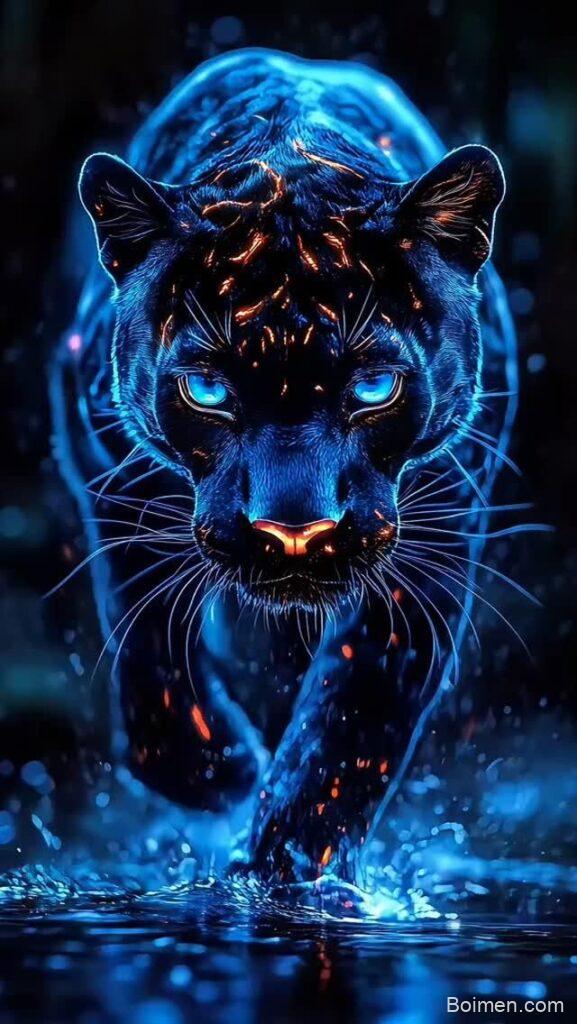
The black panther is not a species but a shadow with a heartbeat — a leopard or jaguar carrying a genetic quirk that turns gold into ink. Here is what I have learned from long, quiet hours in the field about finding one, understanding one, and photographing one without ever truly possessing it.
Advertisements1
- A black panther is a melanistic leopard or jaguar, not a separate species — its rosettes are still visible in good light.
- Melanistic leopards are most reliably found in southern India, Sri Lanka, and peninsular Malaysia; melanistic jaguars in the Amazon basin.
- Low, raking light at dawn and dusk is the difference between seeing a shape and seeing an animal.
- Expose for the highlights and shoot at ISO 3200 or higher — black fur holds detail only in the bright edges.
- Never bait or crowd a cat; ethical distance protects both the animal and the integrity of the sighting.
First, Understand What You Are Looking For
A black panther is a melanistic leopard in Asia and Africa, or a melanistic jaguar in the Americas. The mutation is a recessive trait that boosts dark pigment, and it appears most often in dense, humid forests where shadow is a form of camouflage. In Malaysia, researchers have estimated that melanistic leopards may make up a significant share of the population in some ranges — the opposite of the rarity we assume.
Look closely at a good photograph and you will still see the rosettes, faint as watermarks pressed into dark paper. That ghost pattern is the tell. A true black cat with no markings at all is almost always a domestic animal or a trick of underexposure.
So before you book a flight, decide which cat you are actually hoping to meet. A jaguar in the Pantanal moves through flooded light and open riverbank; a leopard in the Western Ghats moves through tea-colored shade. The strategies are not interchangeable.
Choose Habitat Over Luck
The single most useful decision you will make is where you stand. Melanistic leopards cluster in the forested hills of southern India and Sri Lanka, and in the dense rainforest of peninsular Malaysia. Melanistic jaguars appear across the Amazon basin, with regular sightings reported in parts of Brazil and Guyana.
Do not chase a viral photograph. Instead, ask a local guide which territories have produced repeated sightings over three or more years. A resident female with a stable home range is worth more than a hundred rumors.
I once spent nine nights in a hide above a forest trail in Karnataka, listening to cicadas wind down at dusk. On the tenth morning, in flat grey light, a melanistic leopard crossed forty meters ahead of me and vanished into a gully. Ten seconds. That was the entire reward, and it was enough.
Learn to Read the Forest at Dusk
Black panthers are easiest to see in low, angled light — the first hour after sunrise and the last before dark. Direct sun flattens a dark coat into a silhouette; raking light picks out the shoulder blades and the sheen along the spine.
Listen for alarm calls. Chital and langur give specific, repetitive warnings when a large cat is moving, and the direction of those calls tells you where to point your eyes. Sambar deer, in particular, will often stand and stare toward a predator rather than flee.
Move slowly and stop often. A cat that has seen you will usually freeze rather than run, and a human who keeps walking will pass right by it. I have had my best sightings in the pause after a vehicle stops, when the engine noise fades and the forest resets.
Photographing Black on Black
A melanistic cat is a tonal problem before it is a wildlife problem. Meter for the highlights along the back and let the shadows fall where they want; if you expose for the face, you will blow out the rim light that makes the shape legible.
Use a fast prime — 300mm f/2.8 or 400mm f/2.8 if you can carry it — and open up. In forest light you will often be at ISO 3200 to 6400, and modern sensors handle that far better than a blurred frame. Shutter speed of 1/500s or faster stops the small movements that ruin the shot.
Underexpose by a third of a stop and bring it back in post. Black fur holds detail only in the highlights, and a slightly dark file is recoverable while a clipped one is not. Patience with the histogram is worth more than any preset.
Ethics Are Not Optional
Never bait, call, or crowd a melanistic cat. These animals are already rare in human experience, and habituating one to vehicles or food changes its behavior permanently. Keep a respectful distance, silence your phone, and let the guide make the calls.
Remember that a black panther sighting is a privilege granted by a place, not a product you purchased. The forest that shelters it — the leaf litter, the damp air, the particular quality of green — is the thing worth protecting. The cat is the visible part of a much larger, quieter system.
Support local trackers and guides directly. Their knowledge of a single hillside often exceeds anything in a published study, and their livelihoods are the strongest incentive for keeping that hillside standing.
What the Symbol Means, and What It Doesn't
The black panther carries enormous cultural weight — in Wakanda it is royalty and protection; in older European heraldry it is a creature of ambiguous virtue. That symbolism is beautiful, but it can distort what we expect to see.
A real black panther is not a separate animal with its own name. It is a leopard or a jaguar, with all the ordinary habits of its kind: a territory, a hunting pattern, a preference for the hours when light is thin. Treating it as a mythical creature makes it harder to protect, because myths do not need habitat corridors.
Hold both ideas at once. Let the symbol move you, and then look at the actual animal — its ribs, its wet nose, the way it sets a paw down without sound.
How to Do It, Step by Step
- 1Pick one region and commit
Choose either the Western Ghats of India or Sri Lanka for leopards, or the Pantanal and Amazon for jaguars. Spreading your time across multiple destinations halves your chances of a repeat sighting in any one territory. - 2Book a guide with a proven record
Ask for dated sighting logs from the past three years in the specific reserve you plan to visit. A guide who cannot show you recent records is selling hope, not expertise. - 3Schedule around light
Plan your game drives for the first ninety minutes after sunrise and the last ninety before sunset. Midday sightings of melanistic cats are rare because the light flattens them into invisibility. - 4Set your camera before you leave
Pre-set ISO 3200, aperture f/2.8 to f/4, and shutter 1/500s. When the cat appears you will have seconds, not minutes, and fumbling with settings is the most common reason photographers miss the shot. - 5Silence everything
Turn off phone sounds, camera beeps, and conversation. A melanistic cat will often hold still if the forest stays quiet, giving you a longer look than any approach could earn. - 6Keep a respectful distance
Stay at least thirty meters from any cat and never block its path. If it changes direction because of you, you were too close, and the sighting is already compromised. - 7Record the conditions, not just the image
Note the time, the alarm calls you heard, and the direction of travel. Over several days these notes become a pattern, and the pattern is what turns a lucky sighting into a skill.
A black panther is not a rarer animal than a leopard — it is the same animal, asking you to look more carefully.
Frequently Asked Questions
Is a black panther a separate species?
No, a black panther is a melanistic leopard or jaguar, not a distinct species. The dark coat comes from a recessive genetic mutation, and the underlying rosette pattern is usually still visible in strong light.
Where is the best place to see a black panther in the wild?
Southern India and Sri Lanka offer the most consistent melanistic leopard sightings, while the Amazon basin is best for melanistic jaguars. Choose a reserve with documented repeat sightings over several years rather than a location chosen for scenery.
Are black panthers rare?
In some forests they are surprisingly common — melanistic leopards may make up a notable share of the local population in parts of Malaysia. They feel rare because dense forest and dark coats make them extremely hard to see.
How do you photograph a black animal in low light?
Expose for the highlights along the back, use a fast lens wide open, and raise ISO to 3200 or above to keep shutter speed at 1/500s. Slight underexposure is recoverable; clipped highlights are not.
Is it ethical to bait a black panther for a photograph?
No. Baiting and crowding habituate cats to humans and alter their natural behavior, which can make them dangerous and reduce their chances of survival. Keep your distance and let the animal move on its own terms.

Ingrid explores Scandinavian minimalist design and slow living. She writes about creating calm, functional spaces with fewer, better things.


Leave a Comment