
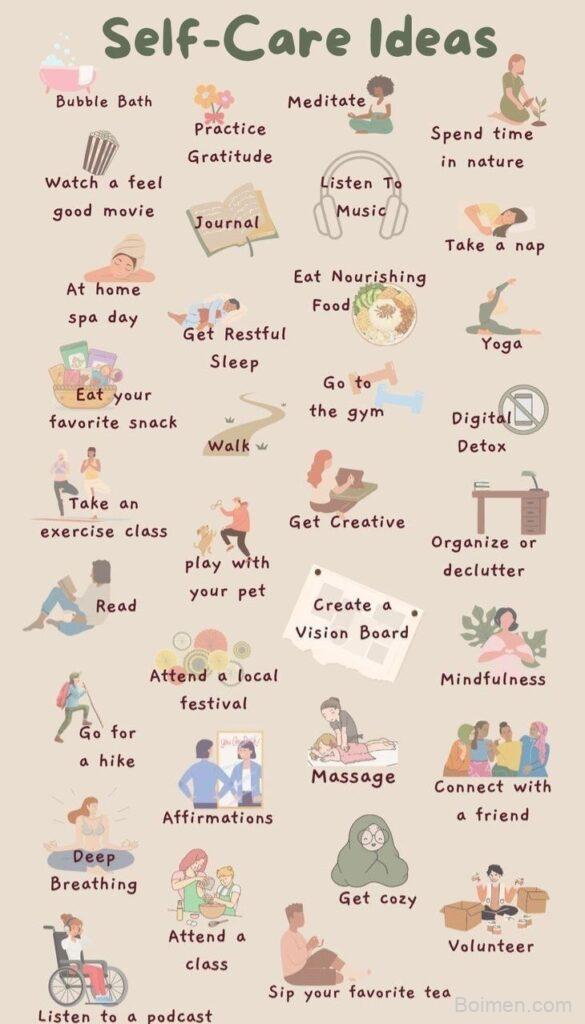
You've seen the bubble baths and face masks, but real self-care is more than a spa day. It's about building small, sustainable habits that recharge your mind and body. Here are 25 concrete ideas, each with the 'why' behind it, so you can pick what fits your life and start feeling better today.
Advertisements1
- Self-care is a personalized practice, not a one-size-fits-all checklist.
- Micro-moments of mindfulness are as effective as long meditations.
- Movement counts if it's joyful, even if it's just 10 minutes.
- Digital boundaries protect your mental space more than you think.
- Learning to say 'no' is a form of self-respect.
- Sleep hygiene is a set of habits, not just a goal.
Start with a Self-Care Audit
Before diving into a list of ideas, take 10 minutes to assess what areas of your life feel most drained. Grab a notebook and rate your energy in four domains: physical, emotional, mental, and social. Use a scale of 1 to 10. For example, if your physical energy is a 3 and your social energy is a 7, you know to focus on sleep and movement, not more parties. This audit turns vague 'self-care' into a targeted plan.
Micro-Moments of Mindfulness
You don't need a meditation cushion for mindfulness. Try a 'one-breath reset': before you grab your phone in the morning, take one deep inhale and exhale, noticing the air filling your lungs. Or use the 'five senses check' during a commute—name 5 things you see, 4 you feel, 3 you hear, 2 you smell, and 1 you taste. These micro-moments lower stress hormones without eating up your schedule.
Move Your Body, Not Just for Aesthetics
Exercise is self-care, but not because it burns calories. It releases endorphins, improves sleep, and boosts confidence. The trick is to find movement you enjoy. If the gym feels like a chore, try a 15-minute dance party in your kitchen to your favorite playlist. Or take a brisk walk after lunch—even 10 minutes counts. The goal is to feel energized, not punished.
Digital Boundaries That Stick
Your phone is a tool, not a lifeline. Set a 'no-scroll' rule for the first 30 minutes after waking and the last 30 before bed. Use your phone's screen time app to see where you actually spend hours—you'll often be shocked. Then, set a timer for social media apps; when it goes off, close the app. This reduces comparison anxiety and frees up mental space for real-life connections.
The Power of a 'No'
Saying yes to everything is a fast track to burnout. Practice a gentle 'no' without over-explaining. For example, 'I can't commit to that this week, but thank you for thinking of me.' This protects your time and energy, which are the raw materials of self-care. You'll feel lighter and more in control.
Sleep Hygiene: More Than Just 'Get More Sleep'
You've heard it before, but here's a concrete routine: set a consistent bedtime and wake time, even on weekends. Keep your bedroom cool (around 65°F) and dark. Avoid screens for an hour before bed—try reading a paper book or listening to a podcast. And if you can't sleep, get up and do a quiet activity until you feel sleepy. This trains your brain to associate bed with sleep, not tossing and turning.
Nourish Yourself, Not Just Your Schedule
Self-care includes what you eat. You don't need a restrictive diet, but try to include a vegetable or fruit in every meal. Keep a water bottle at your desk to stay hydrated—even mild dehydration affects mood and focus. And allow yourself a treat without guilt; a cookie is self-care, not a sin.
How to Do It, Step by Step
- 1Take the Self-Care Audit
Rate your energy in physical, emotional, mental, and social areas from 1–10. Use the lowest scores to choose your next self-care actions. - 2Schedule Self-Care Like a Meeting
Put a 15-minute block in your calendar daily for a micro-moment (e.g., a walk or deep breathing). Treat it as non-negotiable. - 3Set a Digital Sunset
Decide on a time each evening when you put your phone away (e.g., 9 PM). Use an alarm or a physical charging station outside your bedroom. - 4Practice the 'One-Breath Reset'
Whenever you feel overwhelmed, pause and take one deep breath, focusing only on the inhale and exhale. This activates your parasympathetic nervous system. - 5Try the 5-4-3-2-1 Grounding Technique
When anxious, name 5 things you see, 4 you feel, 3 you hear, 2 you smell, and 1 you taste. This brings you back to the present moment. - 6Prepare a 'Self-Care Snack'
Keep a healthy snack (like nuts or fruit) in your bag or desk. When hunger hits, you'll have a nourishing option instead of a vending machine impulse. - 7Write a Gratitude List
Each night, jot down three specific things you're grateful for. This shifts your brain's focus to the positive, improving mood over time. - 8Do a 'No-Screen' Hour
Choose one hour each day to be screen-free—maybe during a meal or before bed. Use it to talk, read, or simply be.
True self-care is not about indulgence; it's about honoring your needs so you can show up fully for your life.
Frequently Asked Questions
What are some quick self-care ideas for busy people?
Quick self-care can be a 5-minute breathing exercise, a short walk, or a healthy snack. Even a minute of deep breathing can lower stress.
How do I start a self-care routine?
Begin by auditing your energy levels and picking one small practice to do daily. Consistency beats intensity.
Is self-care the same as being selfish?
No, self-care is necessary for your well-being and enables you to care for others. It's like putting on your own oxygen mask first.
Can self-care help with anxiety?
Yes, practices like mindfulness, exercise, and adequate sleep can reduce anxiety symptoms. However, if anxiety is severe, seek professional help.
What should I do if I have no time for self-care?
Start with 1-minute practices, like a deep breath or stretching. Integrate self-care into existing routines, like taking the stairs or listening to music while commuting.

Kwame writes about technology and digital privacy for everyday users. He breaks down complex topics like data tracking and encryption into simple, relatable terms.


Leave a Comment