
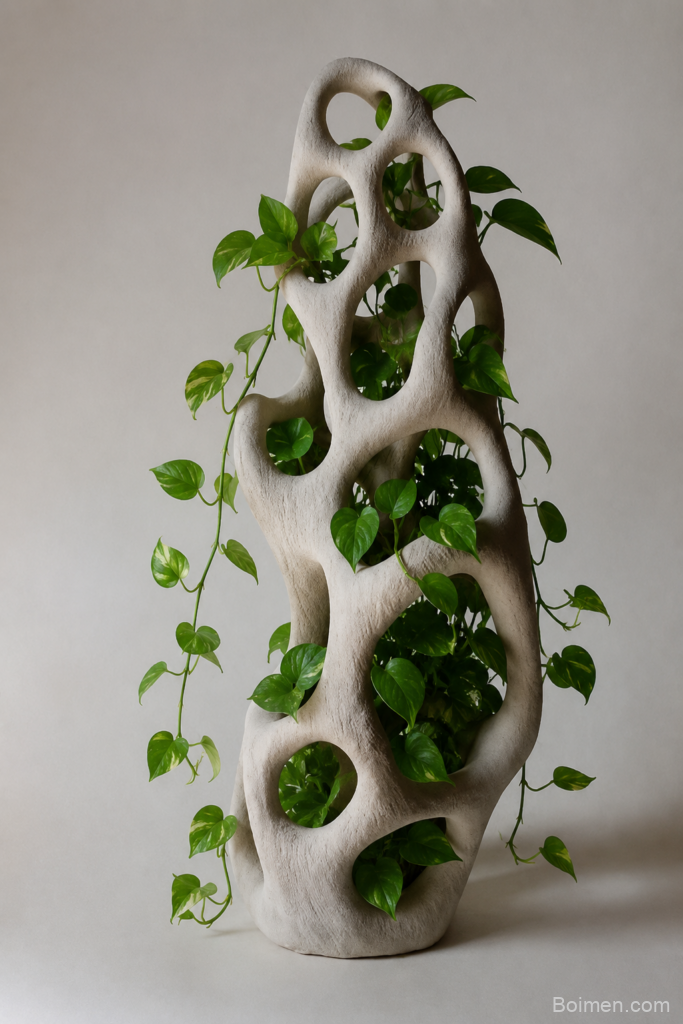
Training Devil's Ivy to climb an organic sculpture transforms both plant and form into a breathing collaboration. These five hacks, drawn from years of shaping moss-covered armatures, will help you create a living sculpture that thrives instead of merely surviving.
Advertisements1
- Porous, organic materials like cork or moss-wrapped wire encourage natural root attachment.
- Damp sphagnum moss anchors stems invisibly and provides essential humidity.
- Pruning above a node every 6 weeks creates a fuller, more sculptural form.
- Gradual rotation prevents lopsided growth without shocking the plant.
- Compost tea feeds both plant and moss gently, avoiding fertilizer burn.
- Water by weight—light means thirsty, heavy means saturated.
Hack 1: Choose a Porous, Organic Armature
Devil's Ivy (Epipremnum aureum) climbs by attaching aerial roots to rough, porous surfaces. An organic sculpture made from cork bark, driftwood, or a moss-covered wire frame offers the perfect grip. I once used a piece of weathered grapevine; within three months, the roots had woven themselves into its crevices, creating a seamless union.
Why it works: The texture mimics tree bark, encouraging natural root attachment. Smooth materials like glass or metal force the plant to rely on ties, which can constrict growth.
Common mistake: Using treated or painted wood. Chemicals can leach and harm the plant. Always opt for untreated, chemical-free materials. If you must use wire, wrap it in sphagnum moss first.
Hack 2: Anchor with Moss, Not String
Instead of tying stems with twine, tuck them into pockets of damp sphagnum moss. The moss holds moisture, and the aerial roots quickly anchor themselves. On a recent commission, I secured a cutting every 10 cm along a curved branch using only moss—no visible ties. The result was a sculpture that looked like it had grown that way.
Why it works: Moss provides consistent humidity, which stimulates root production. It also hides the mechanics, preserving the organic illusion.
Common mistake: Packing moss too tightly. It suffocates roots and fosters rot. Keep it airy, like a cloud, and mist regularly.
Hack 3: Prune to Sculpt, Not Just to Tame
Pruning is your chisel. To encourage branching, pinch off the growing tip just above a node. I do this every six weeks during the growing season, always with sharp, clean shears. Each cut redirects energy, prompting the vine to split and fill empty spaces.
Why it works: Auxin, the hormone that suppresses side shoots, is removed with the tip, allowing lateral buds to wake. The result is a denser, more sculptural form.
Common mistake: Cutting too far from a node, leaving a long stub that dies back. Always snip 5 mm above a leaf node. And never remove more than a third of the plant at once—it needs leaves to photosynthesize.
Hack 4: Rotate for Even Light, Gently
Devil's Ivy leans toward light. On a sculpture, this can create a lopsided look. Every two weeks, I give the entire piece a quarter turn. But I do it slowly—over a few days—by turning it just a few degrees each morning. This mimics the sun's arc and prevents shock.
Why it works: Gradual rotation encourages uniform growth without stressing the plant. Sudden turns can cause leaf drop as the plant reorients its chloroplasts.
Common mistake: Rotating a flowering plant (though Devil's Ivy rarely blooms indoors) or rotating too drastically. Keep it subtle. If leaves start to yellow, you've turned too fast.
Hack 5: Feed with Compost Tea, Not Pellets
Organic sculptures often include living moss, which can burn from synthetic fertilizers. I brew a weak compost tea—one part compost to ten parts water, steeped for 24 hours—and apply it monthly. The liquid gold seeps into the moss and roots, feeding the entire ecosystem.
Why it works: Compost tea introduces beneficial microbes that break down nutrients slowly, matching the plant's uptake. It also keeps the moss vibrant.
Common mistake: Over-fermenting the tea, which creates alcohol and harms roots. Stick to 24 hours, and dilute further if unsure. When in doubt, less is more.
Hack 6: Water by Weight, Not by Schedule
Lift your sculpture. A dry piece feels feather-light; a saturated one is heavy and smells earthy. I water when the moss feels barely damp, usually every 7–10 days in summer, less in winter. This tactile method prevents both drought and drowning.
Why it works: Devil's Ivy stores water in its thick stems and leaves, so it tolerates short dry spells better than soggy roots. Weight is a reliable gauge.
Common mistake: Watering on a fixed schedule. Humidity, temperature, and sculpture size all affect drying time. Trust your hands, not the calendar.
Hack 7: Embrace Imperfection as Design
The most beautiful sculptures I've made have wild, trailing vines that escaped my plan. Let a stem wander off the edge. Allow a leaf to unfurl in an unexpected spot. The plant knows its own architecture.
Why it works: Devil's Ivy is a natural climber; forcing it into rigid shapes fights its nature. By collaborating, you get a living piece that evolves.
Common mistake: Constantly rearranging. Every touch can damage delicate aerial roots. Step back. Observe. Intervene only when necessary. In the end, the sculpture is not yours alone—it's a dialogue.
The Hacks, Step by Step
- 1Select a porous organic armature
Choose cork, driftwood, or moss-wrapped wire. Avoid treated wood. This gives roots something to grip. - 2Anchor with damp sphagnum moss
Tuck stems into moss pockets every 10 cm. Keep moss airy and mist regularly to encourage rooting. - 3Prune above a node to shape
Pinch tips every 6 weeks with clean shears. Cut 5 mm above a leaf node to promote branching. - 4Rotate gradually for even light
Turn the sculpture a few degrees daily over two weeks. Sudden turns cause leaf drop. - 5Feed with diluted compost tea
Brew 1 part compost to 10 parts water for 24 hours. Apply monthly to feed plant and moss. - 6Water by weight, not schedule
Lift the sculpture; water when it feels light. Typically every 7–10 days in summer. - 7Let it grow wild occasionally
Allow some stems to trail freely. Resist over-manipulation to avoid damaging aerial roots.
The sculpture is not yours alone—it's a dialogue between your hands and the plant's quiet intelligence.
Frequently Asked Questions
Can Devil's Ivy grow on a moss-covered sculpture?
Yes, Devil's Ivy thrives on moss-covered sculptures because the moss retains moisture and provides a textured surface for aerial roots to grip. Just ensure the moss stays damp but not soggy.
How often should I water a Devil's Ivy on an organic sculpture?
Water when the sculpture feels light, typically every 7–10 days in summer and less in winter. The weight method is more reliable than a fixed schedule.
What is the best organic material for a Devil's Ivy sculpture?
Cork bark, driftwood, or untreated grapevine work best. They are porous, chemical-free, and mimic the tree bark Devil's Ivy naturally climbs.
How do I prune Devil's Ivy to shape it on a sculpture?
Pinch off the growing tip just above a leaf node every 6 weeks during the growing season. This encourages branching and denser growth without harming the plant.
Why are my Devil's Ivy leaves turning yellow on the sculpture?
Yellow leaves often indicate overwatering or too-rapid rotation. Check the weight of the sculpture and rotate more gradually; also ensure the moss isn't waterlogged.



Leave a Comment