
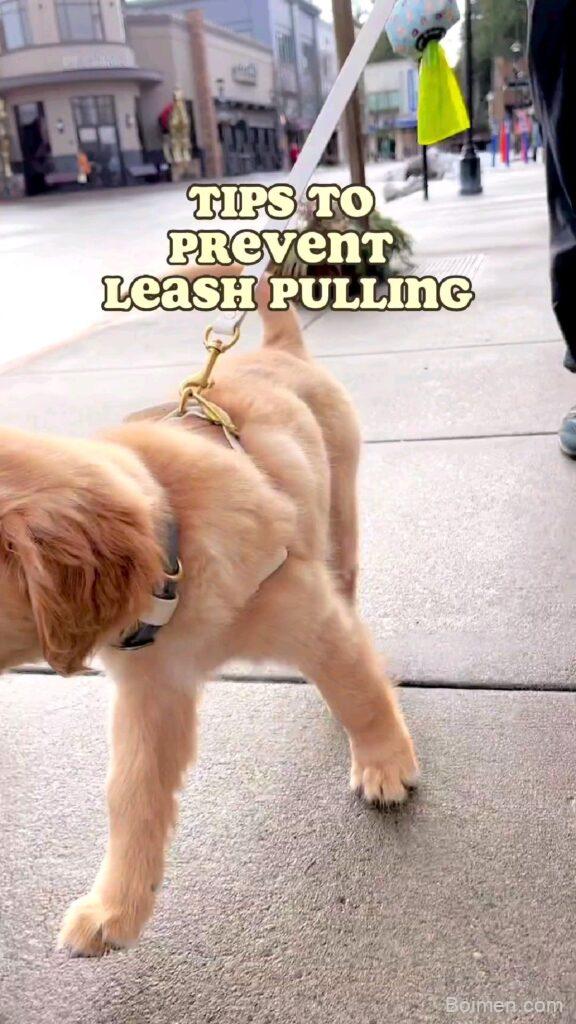
The leash pulls taut, a sudden jerk, and the walk you imagined becomes a tug-of-war. Yet with a few quiet adjustments, you can teach your dog to walk beside you—calmly, without the constant tension.
Advertisements1
- A tight leash should always mean the walk stops—no exceptions.
- Reward the position beside you, not just the absence of pulling.
- Turn before the leash tightens to keep it slack and teach direction.
- Use a front-clip harness and a 6-foot leash; avoid retractable leashes and prong collars.
- Progress slowly through environments; if pulling returns, you've moved too fast.
- Loose-leash walking is a habit built over weeks, not a quick fix.
Why dogs pull and why we accidentally teach them to
Dogs pull because it works. Every time you follow them to the bush, the lamppost, the other dog, the pulling is rewarded. It's not defiance; it's physics. The leash tightens, you move forward, and the lesson is learned: tension equals progress.
But there's another side. We often pull back, creating a counter-force that dogs naturally lean into. Imagine holding a rope with a friend—if they pull, you pull harder. That's opposition reflex, and it's hardwired. So the first shift is mental: stop thinking about stopping the pull, and start thinking about teaching a different way to move through the world.
I remember walking a young border collie named Pip. He'd hit the end of the leash like a kite in a gale. It wasn't until I stood still—completely still, not jerking—that he turned, puzzled, and the leash softened. That moment of stillness was the beginning of everything.
The gear that helps (and the gear that hurts)
A front-clip harness with a martingale loop can gently steer your dog without pressure on the throat. I like the Balance Harness by Blue-9 because it allows full shoulder movement—important for gait and joint health. Avoid retractable leashes: they teach constant tension and offer zero communication. A 6-foot leather or biothane leash gives you clear, quiet feedback.
Prong collars and choke chains rely on pain and fear. They may suppress the behavior momentarily, but they damage trust and can increase anxiety. If you've been told to 'pop' the leash, know that a 2018 study in the Journal of Veterinary Behavior found no difference in pulling between prong-collar and flat-collar groups after training—except the prong group showed more stress signals. Kindness is not a compromise; it's a strategy.
Start with stillness: the power of a slack leash
Before you take a single step, teach your dog that a tight leash means the walk stops. Stand in your driveway or living room. The moment the leash tightens, plant your feet. Wait. No words, no jerks. When the leash goes slack—even for a second—mark it with a soft 'yes' and take a step forward. Repeat.
This is the core of loose-leash walking: tension predicts a stop, slack predicts movement. It's simple but not easy. The first session might take ten minutes to go ten feet. That's fine. You're not trying to cover distance; you're trying to change the conversation.
I once spent twenty minutes on a single block with a rescued greyhound named Sol. He'd never been on a leash without pulling. By the end, he was offering me a loose leash for three, four steps at a time. His eyes softened. The walk became a dance instead of a drag.
Reward the position, not just the lack of pulling
Many people reward when the dog isn't pulling, but that's vague. Instead, reward when your dog is in the position you want—usually beside you or slightly behind. I use a treat at my left seam (where my pant leg meets my hip) and feed there. That way, the reward itself reinforces the position.
Use high-value treats: tiny bits of chicken, cheese, or freeze-dried liver. The reward must be worth more than the environment. If your dog ignores the treat, the environment is too distracting—move further away or increase the value. A 2019 study in Animal Cognition showed that dogs trained with positive reinforcement not only learned faster but also showed more playful behavior during training. Joy is a training tool.
Change direction before the leash tightens
If you wait until the leash is taut, you're already late. Learn to read your dog's body: a slight lean forward, ears pricked, a quickening pace. That's your cue to turn. Say 'this way' in a cheerful tone and pivot 180 degrees. The leash stays loose because you moved before it tightened.
This is not punishment; it's a game. Your dog learns that you are the source of direction and surprise. After a few sessions, they'll start checking in with you, because you've become unpredictable in a good way.
I keep a mental count: if I have to turn more than five times in a minute, I'm asking too much. I'll find a quieter street or simply stand and breathe. The walk is not a race; it's a conversation.
Proof the behavior in real life, slowly
Once your dog can walk on a loose leash in your living room, move to your yard. Then your sidewalk. Then a quiet park. Then a busy street. Each new place is a new test. If the pulling returns, you've moved too fast. Go back one step and practice there.
I use a simple rule: if my dog pulls more than twice in a minute, we're not ready for this level. I'll either increase distance from the trigger or go back to a previous environment. This isn't failure; it's data. You're building a foundation that will hold under pressure.
Remember that dogs generalize poorly. 'Loose leash' in the kitchen doesn't automatically mean 'loose leash' at the farmer's market. You must practice in many places, with many distractions, until the behavior becomes fluent.
The quiet walk: patience, breath, and the long view
There will be days when nothing works. Your dog is wild, the wind is up, the squirrels are everywhere. On those days, I shorten the walk and find a bench. We sit and watch the world. I breathe. The leash hangs loose because we're not going anywhere. Sometimes the best training is not training at all, but simply being together without expectation.
Over weeks and months, the pulling fades. Not because you forced it, but because you taught a different habit. The leash becomes a whisper instead of a shout. And one evening, as the light turns amber and the air cools, you'll notice the leash has been slack for a whole block. You'll look down at your dog, and they'll look up at you. That's the walk you wanted. Less, but better.
How to Do It, Step by Step
- 1Stop when the leash tightens
The instant you feel tension, plant your feet and wait. No jerking, no words. When the leash slackens, mark with 'yes' and take a step. This teaches that pulling never gets you forward—only a loose leash does. - 2Reward at your side
Keep treats in your left hand and feed your dog at your left leg when they're beside you. This reinforces the exact position you want, not just the absence of pulling. - 3Turn before the pull
Watch for a lean or quickening pace. Say 'this way' and turn 180 degrees before the leash goes taut. This keeps the leash loose and makes you the source of direction. - 4Practice in low-distraction zones
Start in your living room, then yard, then quiet street. Only move to busier areas when your dog can walk on a loose leash for at least 5 minutes with no more than 2 pulls. - 5Use a front-clip harness
A front-clip harness with a martingale loop gently steers without choking. Avoid retractable leashes and prong collars—they teach tension or pain. - 6Keep sessions short and sweet
Five to ten minutes of focused loose-leash practice is plenty. End on a success, even if it's just a few steps. Short, positive sessions build lasting habits.
The leash is a conversation, not a command—when it stays slack, you're both listening.
Frequently Asked Questions
How long does it take to stop a dog from pulling on the leash?
It varies, but with consistent daily practice, most dogs show significant improvement in 4–6 weeks. Some need longer, especially if they've practiced pulling for years. The key is consistency: every tight leash must result in a stop.
What is the best collar or harness for a dog that pulls?
A front-clip harness with a martingale loop is the safest and most effective for most dogs. It steers without choking. Avoid prong and choke collars, which can cause pain and increase anxiety.
Should I use treats to stop leash pulling?
Yes, treats are highly effective when used to reward the position you want. Use tiny, high-value treats and feed them at your side. Over time, you can phase them out with praise and life rewards like sniffing.
Why does my dog pull only when we see other dogs?
That's a sign of over-arousal or frustration. You need to practice at a distance where your dog can still think. Reward calm behavior and gradually decrease the distance. Never let them greet on a tight leash.
What if my dog pulls even with a front-clip harness?
The harness is a tool, not a solution. You still need to train the behavior. Go back to basics in a low-distraction area and reward heavily for a loose leash. If your dog is still pulling, the environment is too challenging.

Ingrid explores Scandinavian minimalist design and slow living. She writes about creating calm, functional spaces with fewer, better things.


Leave a Comment