
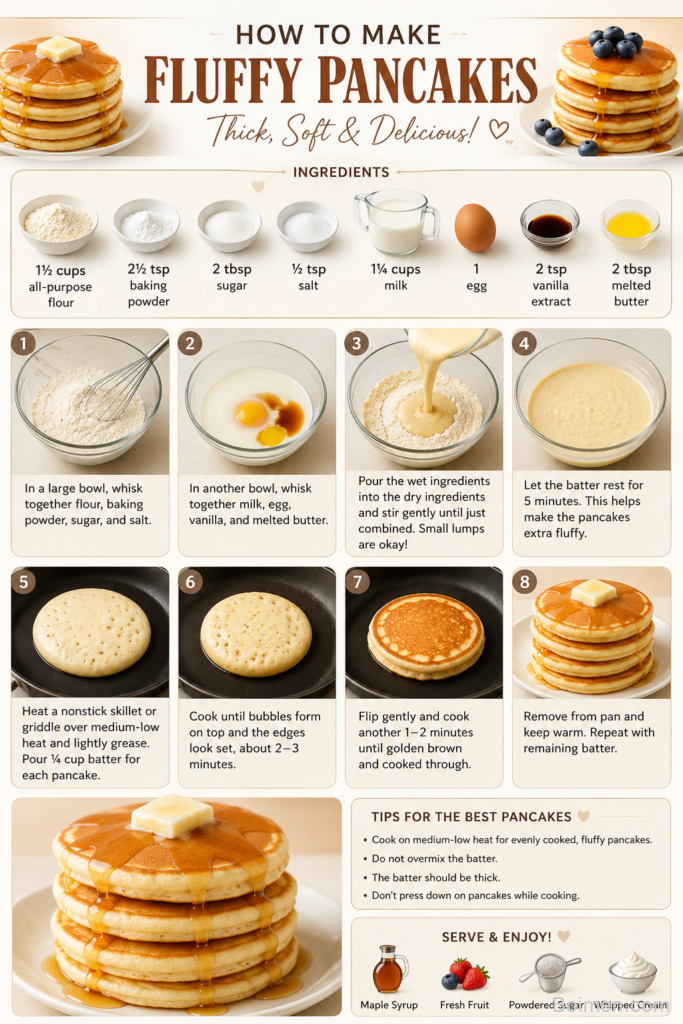
Picture this: it is 7:12 on a Saturday morning, the house still smells like sleep, and you are standing at the stove watching a pale circle of batter puff up like a tiny pillow. That moment, right there, is why fluffy pancakes deserve their own little ceremony.
Advertisements1
Pancakes are basically edible clouds, and clouds do not respond well to being bossed around. The secret is not a fancy pan or a secret ingredient from a specialty shop. It is a light hand, a rested batter, and knowing exactly when to flip.
If your pancakes have been coming out flat and rubbery, you are not cursed. You have probably been overmixing, which develops gluten and turns your cloud into a frisbee. Let's fix that today, together, with a whisk and a little patience.
Why You'll Love This Recipe
About the Ingredients
2 cups (250g) all-purpose flour
Spoon the flour into the cup and level it off, because scooping packs it down and gives you dense pancakes. Swap in white whole wheat flour one-for-one for a slightly nuttier stack.
2 tablespoons (25g) granulated sugar
Sugar sweetens the batter and helps the surface brown, so do not skip it even for savory toppings. Honey or maple syrup works as a substitute, but reduce the buttermilk by 1 tablespoon.
2 teaspoons baking powder
This is your lift, so check the date on the can, because powder older than six months quietly stops working. If yours is stale, use 3/4 teaspoon baking soda plus 1 cup buttermilk instead.
1/2 teaspoon baking soda
The soda reacts with the buttermilk's acid for extra rise and a tender crumb. If you use regular milk, drop the soda and add 1 tablespoon lemon juice to the milk first.
1/2 teaspoon fine sea salt
Salt balances the sweetness and keeps the pancakes from tasting flat. Kosher salt works too, but use a slightly heaping half teaspoon since the crystals are larger.
1 3/4 cups (415ml) buttermilk
Shake the carton well, because buttermilk separates and the watery top will thin your batter. No buttermilk? Stir 1 tablespoon lemon juice into 1 3/4 cups whole milk and rest 5 minutes.
2 large eggs (100g), room temperature
Room temperature eggs blend into the batter more smoothly than cold ones. If you forgot to take them out, set them in a bowl of warm tap water for 5 minutes.
3 tablespoons (42g) unsalted butter, melted and slightly cooled
Cool the butter for a few minutes so it does not cook the eggs. Melted coconut oil or neutral vegetable oil substitutes perfectly at the same amount.
1 teaspoon vanilla extract
A little vanilla rounds out the buttermilk tang without making the pancakes taste like dessert. Maple extract or a pinch of cinnamon is a lovely stand-in.
Butter or neutral oil, for the pan
Use a paper towel to wipe a thin film across the pan rather than pouring oil in. Clarified butter or ghee gives you the best golden color without burning.
Tips & Tricks
Stop Mixing While It's Lumpy
A few flour streaks are your friend, because a smooth batter means you have overworked the gluten and your pancakes will be tough.
Let the Batter Rest 10 Minutes
Resting hydrates the flour and lets the baking powder start working, which is the difference between tall and flat.
Control Your Pan Heat
Medium-low is the sweet spot, since a screaming-hot pan browns the outside before the middle sets.
Test One Pancake First
The first pancake is your calibration, so adjust the heat or thin the batter with a splash of buttermilk before cooking the rest.
Pro Tips
Step-by-Step Instructions
1. Whisk Dry Ingredients
Whisk the flour, sugar, baking powder, baking soda, and salt together in a large bowl for about 30 seconds, until everything is evenly distributed.
2. Combine Wet Ingredients
In a second bowl, whisk the buttermilk, eggs, melted butter, and vanilla until smooth and uniform, about 1 minute.
3. Fold Batter Gently
Pour the wet into the dry and fold with a spatula just until no dry flour remains. The batter should look lumpy like cottage cheese, and that is exactly right.
4. Rest the Batter
Let the bowl sit on the counter for 10 minutes while you heat the pan, so the flour hydrates and the bubbles begin to form.
5. Heat the Griddle
Warm a nonstick skillet or griddle over medium-low heat to 350F (175C) and wipe it with a thin film of butter. A drop of water should sizzle and skitter across the surface before you start.
6. Cook the First Side
Pour 1/4 cup of batter per pancake and cook undisturbed for 2 to 3 minutes, until the edges look dry and matte and bubbles pop on top without refilling.
7. Flip and Finish
Slide a thin spatula under each pancake and flip, then cook 1 to 2 minutes more, until deeply golden brown and the center springs back when pressed.
8. Hold and Serve
Move finished pancakes to a wire rack set over a baking sheet in a 200F (95C) oven while you cook the rest, then serve warm with butter and syrup.
Delicious Variations
Blueberry Cloud Stack
Scatter 1/2 cup fresh blueberries onto each pancake right after you pour the batter, so they do not bleed purple through the whole batch.
Double Chocolate Morning
Fold 1/3 cup mini chocolate chips and 2 tablespoons cocoa powder into the dry mix, then top with a spoonful of whipped cream.
Lemon Ricotta Sunshine
Replace 1/2 cup of the buttermilk with whole-milk ricotta and add the zest of one lemon for a tangy, custardy pancake.
How to Store Fluffy Pancakes
Refrigerator
Store cooled pancakes in an airtight container with parchment between layers for up to 4 days.
Freezer
Freeze in a single layer on a sheet pan, then transfer to a zip-top bag for up to 2 months.
Reheating
Toast straight from frozen in a toaster or 350F (175C) oven for 5 to 8 minutes, which keeps them crisp; the microwave makes them rubbery.
Frequently Asked Questions
Q: Can I make the batter the night before?
You can, but expect slightly less lift because the baking powder loses power overnight. Mix the dry and wet ingredients separately, refrigerate both, and combine them in the morning for the fluffiest results.
So grab your whisk, embrace the lumpy batter, and let your first pancake be gloriously imperfect. Your kitchen is a drafting table and the griddle is your page, so pour, flip, and taste your way to the tallest stack you have ever made. Keep your pen dancing.

Fluffy Pancakes
Fluffy Pancakes made from scratch with buttermilk and a gentle fold give you tall, tender stacks every single morning without any fuss.
🧂 Ingredients
- 2 cups (250g) all-purpose flour
- 2 tablespoons (25g) granulated sugar
- 2 teaspoons baking powder
- 1/2 teaspoon baking soda
- 1/2 teaspoon fine sea salt
- 1 3/4 cups (415ml) buttermilk
- 2 large eggs (100g), room temperature
- 3 tablespoons (42g) unsalted butter, melted and slightly cooled
- 1 teaspoon vanilla extract
- Butter or neutral oil, for the pan
📋 Instructions
- 1Whisk Dry Ingredients — Whisk the flour, sugar, baking powder, baking soda, and salt together in a large bowl for about 30 seconds, until everything is evenly distributed.
- 2Combine Wet Ingredients — In a second bowl, whisk the buttermilk, eggs, melted butter, and vanilla until smooth and uniform, about 1 minute.
- 3Fold Batter Gently — Pour the wet into the dry and fold with a spatula just until no dry flour remains. The batter should look lumpy like cottage cheese, and that is exactly right.
- 4Rest the Batter — Let the bowl sit on the counter for 10 minutes while you heat the pan, so the flour hydrates and the bubbles begin to form.
- 5Heat the Griddle — Warm a nonstick skillet or griddle over medium-low heat to 350F (175C) and wipe it with a thin film of butter. A drop of water should sizzle and skitter across the surface before you start.
- 6Cook the First Side — Pour 1/4 cup of batter per pancake and cook undisturbed for 2 to 3 minutes, until the edges look dry and matte and bubbles pop on top without refilling.
- 7Flip and Finish — Slide a thin spatula under each pancake and flip, then cook 1 to 2 minutes more, until deeply golden brown and the center springs back when pressed.
- 8Hold and Serve — Move finished pancakes to a wire rack set over a baking sheet in a 200F (95C) oven while you cook the rest, then serve warm with butter and syrup.

Priya explores creative writing prompts and storytelling techniques for aspiring authors. She shares exercises to spark imagination and build narrative confidence, drawn from her own writing practice.


Leave a Comment