
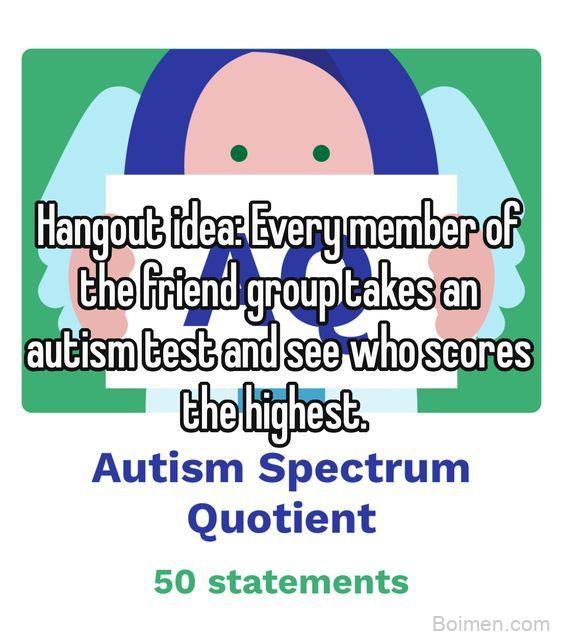
Most group calls die the moment the conversation runs out of things to talk about. The fix is simple: give everyone the same test, set a timer, and compare results out loud. Me and a group of friends did exactly this on a Minecraft call, and the whole thing took about ten minutes for all of us. The tests below are the ones worth running with a group, ranked by how well they hold up when five people are reading their results at the same time.
Advertisements1
Quick win: before you open any of these, agree on one rule — everyone answers honestly and shares the full result, not just the label. Half the fun is the disagreement.
Table of Contents(Click to Toggle)
- Why shared tests make group calls better
- The 20 tests worth comparing
- 1. Autism Spectrum Quotient (AQ)
- 2. RAADS-R
- 3. Aspie Quiz
- 4. Empathy Quotient (EQ)
- 5. Systemizing Quotient (SQ)
- 6. Camouflaging Autistic Traits Questionnaire
- 7. Ritvo Autism Asperger Diagnostic Scale
- 8. Big Five (IPIP-NEO)
- 9. 16Personalities
- 10. Open-Source Psychometrics Project
- 11. VIA Character Strengths
- 12. Emotional Intelligence Test
- 13. Enneagram Institute
- 14. Political Compass
- 15. Moral Foundations Questionnaire
- 16. Attachment Style Quiz
- 17. Love Languages
- 18. Human Benchmark
- 19. Cambridge Face Memory Test
- 20. Autism-Spectrum Quotient for Children
- Bonus Mentions
- The best group-call test night formula
Why shared tests beat small talk on any group call
Small talk asks people to invent something interesting on the spot. A test flips that: it hands everyone the same structured questions, produces a result in minutes, and gives the group a shared object to argue about. That is why the format works so well on a voice call — you can read questions aloud, everyone answers silently, then you reveal results one at a time.
Two practical notes before you start. First, most of these are self-report instruments, not diagnoses; they measure tendencies and are best treated as conversation starters. Second, keep a stopwatch. Tests under 60 questions finish fast enough that nobody drops off the call, which is the real reason the ten-minute format works.
Below are twenty tests that hold up with a group, ordered so the most relevant ones come first.
The 20 tests worth comparing with friends
1. Autism Spectrum Quotient (AQ) : The 50-question test that started the whole idea
What it is: A 50-item self-report questionnaire developed by Simon Baron-Cohen’s team at the Autism Research Centre in Cambridge, scored out of 50.
Category: Autism screening / personality
Why it stands out:
- Free, no account, and short enough to finish on a call
- Gives a single number, which makes comparison between friends instant
- Widely referenced, so results are easy to look up afterward
Best for: The first test of the night, because it sets a clean baseline everyone can react to.
2. RAADS-R : Longer, more detailed autism screening with sub-scores
What it is: The Ritvo Autism Asperger Diagnostic Scale-Revised, an 80-item questionnaire that breaks results into language, social relatedness, sensory-motor, and circumscribed interests.
Category: Autism screening
Why it stands out:
- Sub-scores spark better conversation than one total
- Available free online with an instant result page
- Useful for people who found the AQ too blunt
Best for: Groups who want to compare profiles, not just numbers.
3. Aspie Quiz : Visual radar chart results you can screenshot
What it is: A free quiz built by a neurodiversity researcher that plots results on a spider diagram across several trait areas.
Category: Autism screening
Why it stands out:
- The chart is instantly shareable, which suits group chats
- Frames results as a spectrum rather than a pass/fail line
- Runs in the browser with no signup
Best for: Visual comparison when everyone is posting screenshots.
4. Empathy Quotient (EQ) : Measures how you read other people
What it is: A 40-item self-report scale from the same Cambridge research group, scored out of 80.
Category: Social cognition
Why it stands out:
- Pairs naturally with the AQ for a two-number profile
- Questions are concrete, so answers come quickly
- Often produces the biggest disagreements in a friend group
Best for: Running back-to-back with the AQ for a combined result.
5. Systemizing Quotient (SQ) : How much you want to understand systems
What it is: A companion scale measuring drive to analyze rules, patterns, and mechanics, also from the Autism Research Centre.
Category: Cognitive style
Why it stands out:
- Explains why some friends love spreadsheets and others do not
- Completes the AQ/EQ/SQ trio in about fifteen minutes
- Free and browser-based
Best for: Groups who already ran the AQ and EQ and want the third data point.
6. Camouflaging Autistic Traits Questionnaire : Measures how much you mask in public
What it is: The CAT-Q, a 25-item scale covering compensation, masking, and assimilation strategies.
Category: Social behavior
Why it stands out:
- Short enough to finish in a few minutes
- Produces genuinely surprising results for outgoing people
- Free result page with a total and three sub-scores
Best for: Friend groups where everyone assumes they are the “social one.”
7. Ritvo Autism Asperger Diagnostic Scale : A shorter 14-item version for fast rounds
What it is: The RAADS-14, a condensed screening tool designed for quick administration.
Category: Autism screening
Why it stands out:
- Fourteen items means under three minutes per person
- Good warm-up before the longer instruments
- Same scoring direction as the full RAADS-R, so results are comparable
Best for: Large groups where patience is limited.
8. Big Five (IPIP-NEO) : The personality model researchers actually use
What it is: A public-domain personality inventory measuring openness, conscientiousness, extraversion, agreeableness, and neuroticism.
Category: Personality
Why it stands out:
- Free, long-form version available with facet-level detail
- No type labels, just percentile scores, which makes comparison cleaner
- Has the strongest research backing of anything on this list
Best for: Friends who want numbers instead of four-letter types.
9. 16Personalities : The fastest way to get a shareable type
What it is: A free MBTI-style test that returns a four-letter type with a percentage breakdown.
Category: Personality
Why it stands out:
- About ten minutes, with polished visual results
- Type names are memorable, so group discussion flows easily
- No account required for the basic result
Best for: Groups who want a label they can joke about immediately.
10. Open-Source Psychometrics Project : A library of free, no-signup tests
What it is: A volunteer-run site hosting dozens of validated instruments, from personality to political orientation.
Category: Test library
Why it stands out:
- Every test is free and runs without registration
- Includes detailed statistical notes on each instrument
- One bookmark covers an entire test night
Best for: Anyone who wants options beyond the usual viral quizzes.
11. VIA Character Strengths : Ranks your top strengths out of 24
What it is: A free survey that orders 24 character strengths from most to least dominant.
Category: Positive psychology
Why it stands out:
- Ranked list makes comparison between friends straightforward
- Free version returns the full 24-item order
- Questions are positive in tone, which keeps the call light
Best for: Groups who want a compliment-adjacent test rather than a screening tool.
12. Emotional Intelligence Test : Scores how you handle feelings under pressure
What it is: A self-report measure of emotional perception, regulation, and social handling.
Category: Emotional intelligence
Why it stands out:
- Scenario-based questions are fun to read aloud
- Results often contradict how friends see each other
- Short enough to slot between two longer tests
Best for: Groups who enjoy debating whether self-perception is accurate.
13. Enneagram Institute : Nine types with unusually specific descriptions
What it is: The reference site for the nine-type Enneagram system, with a free sampler test.
Category: Personality
Why it stands out:
- Type descriptions are detailed enough to spark real discussion
- Includes stress and growth directions, not just a label
- Free sampler gives a starting type quickly
Best for: Friends who already burned through MBTI-style tests.
14. Political Compass : Places everyone on a two-axis chart
What it is: A short test that plots economic and social views on a single grid.
Category: Values
Why it stands out:
- One shared chart makes group comparison visual and immediate
- Free and quick, roughly six pages of statements
- Works best when the group agrees to keep it light
Best for: Groups comfortable discussing opinions without turning it into an argument.
15. Moral Foundations Questionnaire : Shows why you disagree with people
What it is: A research instrument measuring care, fairness, loyalty, authority, and purity concerns.
Category: Values
Why it stands out:
- Explains disagreements without anyone needing to be wrong
- Free PDF and online versions are widely available
- Five sub-scores create a rich comparison
Best for: Groups who want a test that produces an actual insight.
16. Attachment Style Quiz : Four styles, quick result
What it is: A short questionnaire sorting results into secure, anxious, avoidant, or disorganized patterns.
Category: Relationships
Why it stands out:
- Fast enough to finish while waiting for others
- Style labels are easy to compare across a group
- Pairs well with the love languages test below
Best for: Close friend groups comfortable with personal questions.
17. Love Languages : Five preferences, one clear winner
What it is: A free quiz that ranks five ways people prefer to give and receive affection.
Category: Relationships
Why it stands out:
- About five minutes, with a clean ranked result
- Works for friendships, not just romantic relationships
- No account needed for the basic quiz
Best for: Wrapping up a test night on a light note.
18. Human Benchmark : Reaction and memory tests with real scores
What it is: A set of browser-based cognitive tasks measuring reaction time, sequence memory, aim, and number memory.
Category: Cognitive performance
Why it stands out:
- Objective scores, so there is nothing to argue about
- Each test takes under a minute
- Percentile rankings add a competitive edge to the call
Best for: Groups who prefer competition over self-reflection.
19. Cambridge Face Memory Test : Measures face recognition ability
What it is: A well-known test of unfamiliar face memory, available through research and open psychology platforms.
Category: Perception
Why it stands out:
- Task-based rather than self-report, so results are harder to game
- Reveals genuine differences between friends
- Runs in a browser in about ten minutes
Best for: Groups who want at least one performance-based test in the mix.
20. Autism-Spectrum Quotient for Children : A parent-report version for family calls
What it is: The AQ-Child, a 50-item parent-report version of the AQ designed for ages 4 to 11.
Category: Autism screening
Why it stands out:
- Same structure as the adult AQ, so results are easy to discuss side by side
- Free from the Autism Research Centre
- Useful for family calls rather than friend groups
Best for: Relatives comparing notes, not a peer group.
Bonus Mentions
Psychology Today Test Directory : A hub of short, free quizzes
What it is: A large index of self-tests covering personality, mood, and relationships.
Best for: Filling gaps when the group finishes early.
IDRlabs : Dozens of niche tests with instant results
What it is: A site offering a wide range of free, browser-based personality and values tests.
Best for: Groups who want something nobody has seen before.
Truity : Clean personality reports with free tiers
What it is: A testing platform with free versions of several popular personality instruments.
Best for: Anyone who wants a polished result page to share.
Understand Myself : A detailed Big Five breakdown
What it is: A paid Big Five assessment that returns facet-level scores.
Best for: Friends who want the deepest version of the Big Five.
16Personalities Type Library : Compare results after the test
What it is: The reference section explaining each of the sixteen types.
Best for: Looking up what everyone’s result actually means.
The best group-call test night formula
Start with the AQ because it is free, short, and produces one number. Run the EQ and SQ next if the group still has energy. Close with something light like Human Benchmark or Love Languages so the call ends on a laugh rather than a score.
Two practical reminders. Keep the total under about twenty minutes, and treat every result as a conversation starter rather than a verdict. These instruments measure tendencies, and they are far more interesting when compared than when taken alone.
Which test gave your group the most unexpected result? Share it in the comments — the best finds usually come from someone else’s call.
Stay focused, stay light.

Kenji covers tech productivity and digital minimalism for remote workers. He writes about streamlining workflows and cutting digital clutter with a focus on mental clarity, not just efficiency.


Leave a Comment