
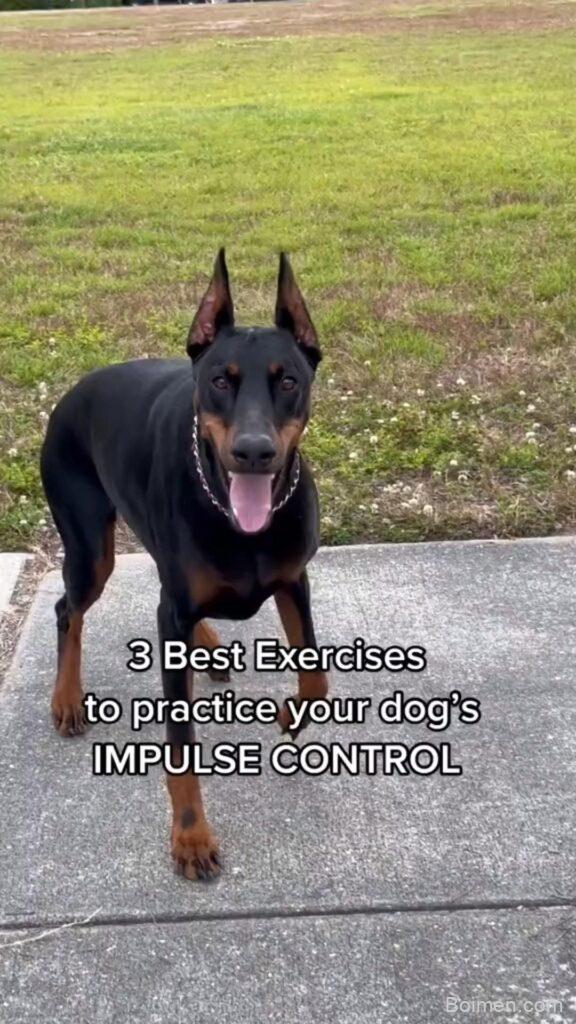
Does your dog turn into a furry rocket the second you reach for the leash? You're not alone—and the fix isn't a firmer 'no,' it's teaching your dog to pause. These three exercises build real impulse control in minutes a day.
Advertisements1
- Impulse control is a teachable skill, not a personality trait—build it in tiny increments.
- The 'It's Yer Choice' game flips the script: calm behavior earns rewards, mugging makes them disappear.
- Door waits are a safety skill that also builds patience—practice every time you leave.
- The 'leave it' cue can save your dog from eating something dangerous; reward the disengage, never the item.
- Short, frequent sessions (under 2 minutes) beat long training blocks—aim for 3 per day.
- Progress over perfection: if your dog succeeds 3 out of 5 times, that's a win. Adjust difficulty to keep them winning.
Why Impulse Control Matters More Than 'Obedience'
When I adopted my terrier mix, Pippin, he'd launch off the couch like a pinball every time the doorbell rang. I thought he needed more obedience drills—sit, down, stay. But obedience is about following cues; impulse control is about making good choices when there's no cue at all. That's the skill that keeps your dog from bolting through an open gate or mugging your dinner plate.
Impulse control is a muscle. Just like you wouldn't expect to bench-press 200 pounds on day one, your dog can't ignore a squirrel on day one either. We build it in tiny increments, with lots of wins. Research from animal behaviorists shows that dogs who practice self-control tasks—like waiting for a treat—show less frustration and more focus in distracting environments. That's the real payoff: a dog who can think before acting.
The three exercises below are my go-tos because they need zero fancy equipment, fit into daily routines, and scale from puppy to senior. I'll give you exact reps, common mistakes, and why each one works. Remember: progress over perfection. If your dog nails it 3 out of 5 times, that's a win.
Exercise 1: The 'It's Yer Choice' Game (Treat in Fist)
This is the foundation. You hold a treat in a closed fist, and your dog learns that mugging your hand makes it disappear—but backing off makes it appear. Start with your dog on a leash (so you can prevent jumping) and a high-value treat like freeze-dried liver. Show the fist, wait. Your dog will lick, paw, nibble. Do nothing. The second they pull back even an inch, say 'yes!' and open your hand to deliver the treat. Timing is everything: mark the moment they disengage, not when they're still pawing.
Why it works: it flips the equation. Most dogs learn that pushing gets them what they want. Here, calm gets the reward. Do 5 reps, then take a break. If your dog gets frustrated, you're asking for too much too soon—make it easier by holding the treat slightly farther away or using a lower-value treat. I keep sessions to 90 seconds max. Pippin picked this up in three days, but my foster, Lola, took two weeks. Both are fine.
Common mistake: opening your fist while your dog is still going nuts. That teaches them that persistence pays off—the opposite of what you want. Wait for that split-second pause. If you need to, tuck the treat hand under your arm for a reset. Once your dog is reliably backing off, move to an open palm. Then to a treat on the floor. Each step is a new level.
Exercise 2: The 'Wait at the Door' Drill
Door darting is dangerous. This exercise teaches your dog that the door only opens when they're calm. Start inside with the door closed. Put your hand on the knob. If your dog rushes forward, remove your hand and wait. The instant they back up or sit, turn the knob. Repeat until you can open the door a crack without them surging. Then open it wider, and finally step through—but only if they stay put. Release them with a cheerful 'free!' once you're on the other side.
Why it works: it uses real-life rewards (going outside) to reinforce patience. It's also a safety skill. I practice this every single time I leave the house, even if I'm just grabbing the mail. Consistency matters more than duration. Five repetitions daily beats one 20-minute session on Sunday.
If your dog is a door-bolter, use a leash and a helper for safety. Have your helper stand outside and block if needed. And don't say 'wait' repeatedly—say it once, then let your actions (the door not opening) do the teaching. When your dog holds a sit while you open the door fully and step out, you've got a rock-solid wait. That's a huge win.
Exercise 3: The 'Leave It' Walk-By
This one teaches your dog to ignore stuff on the ground—chicken bones, discarded pizza, another dog's tennis ball. Start with a low-value treat in your closed hand. Say 'leave it' once, then wait. When your dog stops trying to get it, mark and reward from your other hand. Repeat until they'll ignore the closed hand instantly. Then place a treat on the floor, cover it with your foot if needed, and say 'leave it.' Reward from your pocket, not the floor treat. The floor treat becomes 'poisoned'—never rewarded.
Why it works: it builds a default response to the cue 'leave it' that's stronger than the environment. On walks, you'll use it constantly. I test it with a piece of kibble on the sidewalk. If Pippin glances at it and keeps walking, I pay him handsomely with cheese. That's the deal: ignoring the thing gets you something better. Gradually increase difficulty—from a stationary treat to a dropped one, to a moving squirrel (on leash, of course).
Pro tip: never punish your dog for being interested. If they look at the thing, that's information—they're telling you it's hard. Reward the disengage. If they lunge, you've made it too hard; add distance and try again. Keep sessions short and end on a success. This exercise alone has saved me from many vet bills.
How to Fit These Into Your Day (Without Overwhelm)
You don't need a 30-minute training block. I weave these into routines: 'It's Yer Choice' while I'm making coffee (30 seconds), door waits every time we go out (10 seconds each), and 'leave it' on our morning walk (a few reps). Total time: under 5 minutes. The key is frequency, not duration. Aim for 3 short sessions daily, five days a week.
Track your progress with a simple tally on your phone. For example, note how many times out of 5 your dog waited at the door. When you hit 4/5, make it harder—open the door wider, add a step outside. If you drop to 2/5, make it easier. This is called 'errorless learning,' and it keeps your dog confident. I keep a sticky note on my fridge for each dog. It's low-tech but effective.
And please, don't compare your dog to mine or your neighbor's. Some dogs are wired to be more impulsive—herding breeds, terriers, adolescents. That's not a flaw; it's just their starting point. Celebrate the small stuff. The first time your dog pauses before bolting out the door, throw a party. That pause is the whole game.
How to Do It, Step by Step
- 1Start with 'It's Yer Choice' using a closed fist
Hold a treat in your closed hand and wait for your dog to back off. Mark and reward the instant they disengage. This teaches that calm behavior earns the treat, not mugging. - 2Practice door waits every single time you leave
Put your hand on the knob; if your dog rushes, remove your hand. Only open the door when they're calm. Release them with 'free!' once you're through. Consistency is key. - 3Teach 'leave it' with a treat on the floor
Say 'leave it' once, cover the treat with your foot if needed, and reward from your other hand. The floor treat is never given. Build up to ignoring items on walks. - 4Keep sessions under 2 minutes
Short, frequent sessions beat long ones. Do 5 reps, then take a break. End on a success to keep your dog eager for more. - 5Increase difficulty in small increments
If your dog succeeds 4 out of 5 times, make it slightly harder (e.g., open the door wider). If they fail more than twice, make it easier. This keeps them learning without frustration. - 6Use high-value rewards for hard tasks
When you're working around big distractions, pay with something amazing—cheese, chicken, freeze-dried liver. The reward must match the difficulty.
Impulse control isn't about suppressing your dog's instincts; it's about giving them a better option to choose.
Frequently Asked Questions
How long does it take to teach a dog impulse control?
Most dogs show noticeable improvement in 2-4 weeks with daily 5-minute sessions. Some take longer, especially adolescents or high-drive breeds—focus on small wins.
What if my dog gets frustrated and gives up during training?
That means the exercise is too hard. Make it easier by increasing distance, using lower-value treats, or breaking it into smaller steps. Always end on a success.
Can I use these exercises with a puppy?
Absolutely, but keep sessions ultra-short (30-60 seconds) and use very high-value treats. Puppies have short attention spans; 3-5 reps is plenty.
My dog already knows 'leave it' but ignores it outside. Why?
Because the outside world is more distracting than your living room. You need to practice in progressively more distracting environments, starting at a distance where your dog can succeed.
Do I need a clicker for these exercises?
No, a verbal marker like 'yes!' works fine. The key is timing—mark the exact moment your dog makes the right choice, then reward.

Maya writes about sustainable living and zero-waste swaps for everyday families. She focuses on small, budget-friendly changes that actually stick, tested in her own chaotic kitchen.


Leave a Comment