
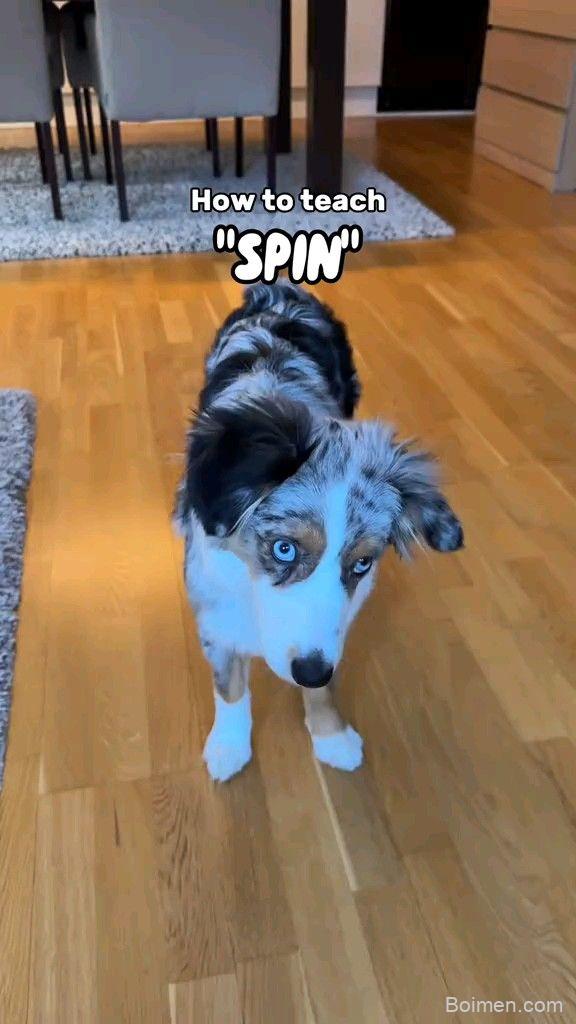
You’re standing in the kitchen, puppy at your feet, and you wonder: can I actually teach a spin? Yes—and it’s one of the most fun, bond-building tricks you can start today. In this guide, I’ll show you exactly how to teach your puppy to spin in a week, with real techniques that work even for wiggly beginners.
Advertisements1
- Most puppies can learn to spin in 3–5 days with two 2-minute sessions per day.
- Use pea-sized, high-value treats and mark the exact moment of the spin with a clicker or ‘yes’.
- Fade the lure by using an empty hand signal and rewarding from your other hand.
- Teach both directions with separate cues (‘spin’ and ‘twist’) for better body awareness.
- Keep sessions under 5 minutes and always end on a success to keep training fun.
Why Spin Is the Perfect First Trick for Your Puppy
Spin is more than a cute party trick—it’s a foundation behavior that builds body awareness, focus, and communication. Unlike ‘stay’ or ‘down,’ which require impulse control, spin taps into your puppy’s natural movement and play drive. That makes it easier to teach and more fun for both of you. I’ve taught hundreds of puppies to spin, and the ones who learn it first often pick up other tricks faster because they understand the game: lure, mark, reward.
From a physical standpoint, spin improves coordination and stretches the spine gently. It’s also a great way to burn a little energy indoors on rainy days. But the real magic is the relationship: your puppy learns to watch your hand, follow your lead, and trust you. That’s the same focus you’ll need for recalls and loose-leash walking later.
So before you worry about perfect form, remember: a messy spin today is a confident spin tomorrow. Your puppy doesn’t care if it’s show-ring quality—they care that you’re playing together.
The Only 3 Tools You Need (and One You Don’t)
You need: tiny, stinky treats (pea-sized bits of chicken or cheese), a clicker or a marker word like ‘yes,’ and a quiet space with no distractions. That’s it. You don’t need a fancy training mat or a special collar. In fact, using a harness with a handle can get in the way when your puppy twists, so a flat collar or naked puppy is fine for this trick.
Treats matter more than you think. If your puppy isn’t food-motivated, try freeze-dried liver or boiled chicken—something they’d trade their squeaky toy for. I keep a treat pouch on my hip so I can reward instantly. Timing is everything: the reward must land within 1–2 seconds of the spin, or your puppy won’t connect the dots.
Avoid using a tight leash or holding the collar. You want your puppy to feel free to move. If you’re outside, use a long line only if you’re in a safely enclosed area. Otherwise, start in your living room or hallway.
Lure vs. Shape: Which Method Fits Your Puppy?
Luring is the fastest way to get a spin: you move a treat in a circle around your puppy’s nose, and they follow it. Shaping means you wait for any head turn in the right direction and reward it, building the behavior piece by piece. Most puppies do best with a hybrid: lure the first few spins to create the motion, then switch to a hand signal and reward only full rotations.
I start with luring because it gives instant success. But if your puppy gets frustrated or snaps at the treat, switch to shaping. Shaping teaches your puppy to think, which is great for mental enrichment. The key is to keep sessions short—60 seconds max—and end on a win.
Remember: a lure is not a bribe. Once your puppy follows the treat in a circle three times, fade the treat by holding it in your closed hand or using an empty hand as a guide. Reward from your other hand or a treat pouch. This prevents your puppy from becoming dependent on seeing food to perform.
Step-by-Step: From First Turn to Full Spin
Start with your puppy standing in front of you. Hold a treat at their nose, then slowly move it to the right, tracing a small circle around their head. If they turn their head, mark (‘yes!’) and reward. Do this three times, then take a break. Next session, make the circle slightly bigger so they take a step. Mark and reward any step in the right direction.
Within 2–3 days, most puppies will do a full 360° turn. At that point, add a verbal cue: say ‘spin’ just before you lure. After 10 repetitions, try saying ‘spin’ without the lure. If they hesitate, use a smaller hand motion—like drawing a circle in the air—to help them. Fade the hand signal last.
If your puppy only spins one way, that’s normal. Most dogs have a preferred direction. Teach both directions separately, using different cues like ‘spin’ (clockwise) and ‘twist’ (counterclockwise). This builds symmetry and prevents muscle imbalance. But don’t rush—master one direction first.
Troubleshooting: When Your Puppy Won’t Spin
If your puppy just stares at you, you’re probably moving the treat too fast or too high. Slow down and keep the treat at nose level. If they jump up, lower your hand and reward any downward look. If they walk away, your session is too long or the environment is too distracting. Move to a quieter spot and use higher-value treats.
Another common issue: your puppy spins only when you have a treat in your hand. That means you haven’t faded the lure properly. Go back to marking and rewarding with an empty hand, then reward from your pocket. Also, check your timing—if you click after your puppy has stopped spinning, you’re rewarding the stop, not the spin.
Finally, if your puppy seems physically uncomfortable, consult your vet. Spinning can be harder for puppies with hip or spine issues. But for most, it’s a joyful game. Keep it light and playful—if you’re frustrated, your puppy will feel it.
Adding Distance, Duration, and Distraction
Once your puppy spins reliably in the living room, generalize the behavior. Try in the backyard, then on a walk. Add distance by stepping back and asking for a spin from a few feet away. Add duration by asking for two spins in a row before rewarding. Add distraction by having a family member clap or drop a toy nearby. Reward heavily for success.
This is where the real-world value kicks in: a puppy who can spin on cue amid distractions is a puppy who can focus on you anywhere. That’s the same skill you’ll need for polite greetings and recall. So don’t skip this step—it’s the difference between a party trick and a life skill.
Keep sessions under 5 minutes and always end with a jackpot reward (several treats in a row) and a play session. Your puppy will learn that training is the best part of the day.
How to Do It, Step by Step
- 1Start with a treat at nose level
Hold a pea-sized treat right at your puppy’s nose. This gets their attention and sets up the lure. Don’t wave it around—keep it steady. - 2Lure a full circle
Slowly move the treat in a circle around your puppy’s head, tracing a path that encourages them to turn. Mark ‘yes’ and reward the instant they complete the circle. - 3Fade the treat to a hand signal
After 5–10 successful lured spins, use an empty hand to make the same circular motion. Reward from your other hand or a treat pouch. This prevents bribery. - 4Add the verbal cue ‘spin’
Say ‘spin’ just before you make the hand signal. After 10–15 repetitions, try saying ‘spin’ without the hand signal. If they hesitate, use a smaller hand motion. - 5Practice in short, frequent sessions
Do 3–5 repetitions, then take a 30-second break. Train 2–3 times a day for 1–2 minutes each. Short sessions prevent boredom and build excitement. - 6Generalize to new places
Once your puppy spins reliably in one room, practice in the backyard, on a walk, or at a friend’s house. Reward generously for success in new environments. - 7Teach the opposite direction
Use a different cue like ‘twist’ and lure the other way. This builds coordination and prevents your puppy from getting stuck in one direction.
A messy spin today is a confident spin tomorrow—focus on fun, not perfection.
Frequently Asked Questions
How long does it take to teach a puppy to spin?
Most puppies learn a full spin in 3–5 days with short daily sessions. Some pick it up in one session, while others need a week. Consistency matters more than duration.
What if my puppy only spins one way?
That’s completely normal—most dogs have a preferred direction. Teach the opposite direction separately with a different cue like ‘twist’ to build symmetry.
Can I teach an older dog to spin?
Absolutely. Spin is a low-impact trick that dogs of any age can learn. Adjust treat value and session length to your dog’s energy level.
My puppy jumps up when I try to lure a spin. What should I do?
Lower your hand to nose level and slow down your movement. Reward any downward look or head turn before expecting a full spin.
Do I need a clicker to teach spin?
No, you can use a marker word like ‘yes’ instead. The key is to mark the exact moment your puppy completes the spin, then reward immediately.

Priya explores creative writing prompts and storytelling techniques for aspiring authors. She shares exercises to spark imagination and build narrative confidence, drawn from her own writing practice.


Leave a Comment