
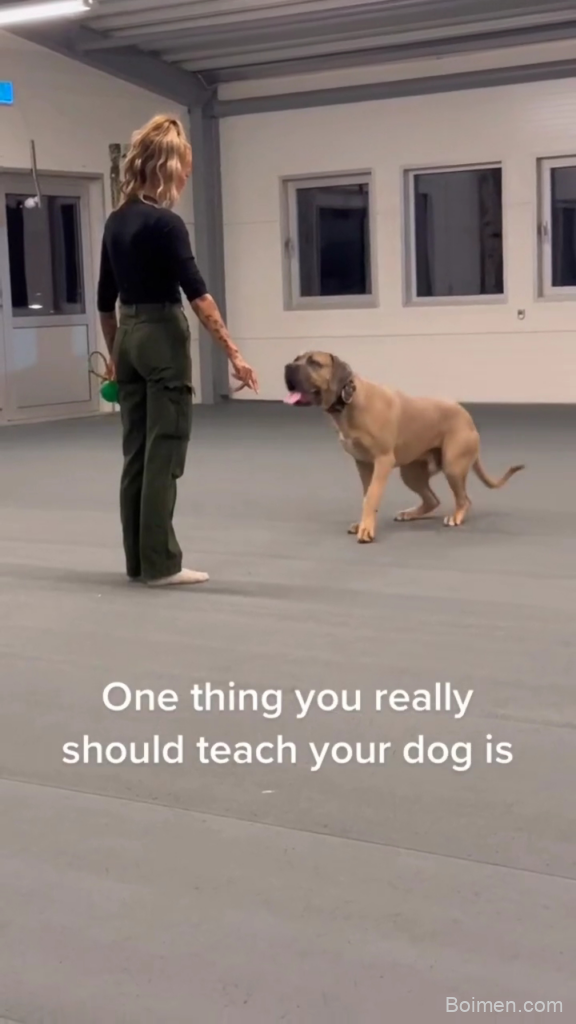
You don't need a louder voice or a stricter hand to bring out the best in your dog. What you need is a handful of well-timed techniques, a pocket full of treats, and the patience to watch what your dog is already telling you. Here are the methods that have worked for me and the dogs who have taught me the most.
Advertisements1
- Timing beats intensity: a reward delivered within one second of the behavior is worth more than ten rewards given late.
- Split behaviors until your dog succeeds 8 out of 10 times before you make them harder.
- Train the pause—eye contact before action—to build off-leash reliability.
- Use the environment as a co-trainer: scatter treats to reset arousal and choose calm, low-glare hours for focus.
- End every session on a win, even if it's just a simple hand touch, to keep your dog's enthusiasm high.
- Let your dog's offered behaviors guide your training; they often know a better path than you do.
Start with the eyes, not the leash
Before you ask for a single behavior, take three slow breaths and watch your dog. Where are the ears? Where is the weight in the body? A dog who is leaning forward is ready to learn; a dog who is lip-licking and turning away is telling you the lesson is already too much. I learned this the hard way with a border collie named Finn, who would shut down the moment I reached for the clicker if he hadn't had a chance to sniff the room first.
So I began every session with two minutes of nothing. No cues, no treats, no expectations. Just presence. The difference was immediate: his shoulders softened, his tail swung low and easy, and when I finally said his name, he turned toward me like a flower toward light.
This isn't mysticism. It's biology. A dog in a relaxed state can access the part of the brain that learns; a dog in a stressed state cannot. You are not wasting time by waiting. You are setting the table.
Mark the moment, not the motion
The single most common mistake I see is rewarding too late. If you want a dog to understand what earned the treat, you have about one second to mark it. A clicker or a quiet word like "yes" works, but only if it lands exactly when the behavior happens. I use a clicker for precision work and a soft "good" for everyday life, and I keep both loaded with meaning by pairing them with food every single time until the association is automatic.
Here's what that looks like in practice. You ask for a sit. Your dog's rear touches the floor. Click. Then treat. Not click-treat-sit. The click ends the behavior; the treat follows as payment. If you fumble the timing, don't worry. Just reset and try again. Dogs are forgiving of our clumsy hands if we are consistent about the order.
I once watched a woman teach her terrier to bow in under three minutes using nothing but a clicker and tiny pieces of cheese. The terrier never once looked confused. That's the power of a well-placed mark.
Break it down until it's almost too easy
Dogs don't generalize well. "Sit" in the kitchen is not "sit" on the sidewalk, and "down" on the carpet is not "down" on the cold tile of the vet's office. The fix is not repetition in the same spot; it's splitting the behavior into pieces so small that your dog can barely fail. I call this "chunking down," and it has rescued more training plans than any other technique I know.
Take loose-leash walking. Instead of expecting a perfect heel for a whole block, I reward for one step of slack leash. Then two. Then a turn. Then a distraction. Each success is a brick; the wall builds itself. If your dog pulls, you've simply made the chunk too big. Shrink it until you find the edge of what they can do, then live there for a while.
This is slow work, but it is not wasted work. A dog who has been reinforced for a thousand tiny successes will offer those behaviors eagerly for the rest of their life.
Use the environment as your co-trainer
You are not the only one teaching your dog. The couch teaches comfort. The front door teaches excitement. The treat jar teaches anticipation. If you want reliable behavior, you have to think about what the space is saying. I rearrange furniture before a training session if I need to reduce distraction, and I use a simple baby gate to create a visual boundary between "work" and "rest."
One of my favorite low-effort techniques is the "treat scatter." When my dog gets over-aroused, I toss a handful of kibble into the grass and let him hunt for it. The act of sniffing lowers his heart rate and brings him back to a thinking state. It's not a bribe; it's a reset. I've used it at parks, on city sidewalks, and once in the waiting room of an emergency vet. It works every time.
Light matters too. In the soft gold of early morning, my dogs are calmer and more attentive. In the harsh glare of midday, they are easily startled. If you can choose your training hours, choose the ones that feel like a deep breath.
Train the pause, not just the action
Everyone wants a dog who comes when called. Few people train the pause that makes it possible. The pause is the moment between your cue and your dog's response, and it is where all the good decisions live. I teach it with a simple game: I say my dog's name, wait for eye contact, and then feed. No cue to come, no cue to sit. Just name, eyes, treat. Over time, the pause stretches, and the dog learns to check in with me before doing anything else.
This is the foundation of off-leash reliability. A dog who checks in is a dog who can be trusted. I once lost a foster dog in a snowstorm, and the only reason I got her back was that we had practiced the pause for weeks. She heard her name, stopped, turned, and waited. That pause saved her life.
So when you train, don't just reward the behavior you asked for. Reward the moment of attention that comes before it. That's the real skill.
End on a win, even if it's a small one
The last thing your dog remembers is how the session ended. If you stop after a failure, that failure lingers. If you stop after a success, that success becomes the story. I always keep one easy, guaranteed behavior in my back pocket, something like a hand touch or a simple sit, and I use it to close every session. It takes five seconds and it changes the emotional tone of the whole day.
I also keep sessions short. Five minutes of focused work is worth more than thirty minutes of drifting attention. Puppies get three minutes. Adolescent dogs get five. Even my most seasoned competition dogs rarely train for more than ten minutes at a stretch. The rest of the day is for being a dog.
This is not laziness. It's respect for how learning actually works. The brain consolidates during rest, not during repetition. When you stop early, you give your dog the gift of integration.
Let the dog be the teacher sometimes
The best trainers I know are the ones who let the dog lead. Not in a permissive way, but in a curious way. If my dog offers a behavior I didn't ask for, I pause and ask myself why. Is he bored? Is he confused? Is he offering something better than what I had in mind? More than once, a dog has shown me a more efficient path to a behavior than the one I was trying to force.
I once spent a week trying to teach a rescue beagle to lie down on cue. He would sit, then stand, then walk away. Finally, I watched him flop onto his side in the sun and realized he was offering a down every time I reached for the leash. I had been missing it because it didn't look like my picture of a down. I marked it, rewarded it, and he was fluent in two days.
The lesson is simple: your dog is always communicating. Your job is to listen more than you speak. Less, but better.
How to Do It, Step by Step
- 1Begin with a body scan
Before you ask for anything, spend 60 seconds observing your dog's posture, ears, and tail. If they are tense or avoidant, delay training and offer a sniff break. This prevents you from accidentally reinforcing stress. - 2Charge your marker
Pick a clicker or a one-syllable word like 'yes'. Pair it with a high-value treat 20 times in a row without asking for any behavior. This builds the association so the marker becomes meaningful the instant it sounds. - 3Split the behavior
Break every new skill into three smaller steps. For example, for 'go to mat', reward looking at the mat, then touching it, then lying on it. Only move to the next step when your dog succeeds 8 out of 10 tries. - 4Mark and treat in order
The instant your dog performs the behavior, click or say 'yes', then deliver the treat within one second. Never treat before you mark. This order tells your dog exactly what earned the reward. - 5Practice the pause
Say your dog's name, wait for eye contact, then treat. Do this 10 times a day in different rooms. Gradually increase the wait to 3 seconds. This builds attention and impulse control. - 6Scatter to reset
When your dog gets over-excited, toss a handful of kibble into grass or across the floor. Let them sniff and hunt. This lowers arousal and brings them back to a learning state without scolding. - 7End on a win
Finish every session with one easy behavior your dog already knows well. Reward generously, then put the treats away. This leaves your dog feeling successful and eager for the next session.
The best training happens in the quiet moments between cues, when your dog is watching you more closely than you are watching them.
Frequently Asked Questions
What is the fastest way to train a dog to come when called?
Reward the check-in, not just the recall. Say your dog's name, mark and treat any turn of the head toward you, and practice in low-distraction settings first. Then add distance and distractions gradually, always paying generously when they arrive.
How long should dog training sessions be?
Keep sessions to 3–5 minutes for puppies and 5–10 minutes for adult dogs. Short, frequent sessions are more effective than long ones because dogs consolidate learning during rest, not during repetition.
Should I use a clicker or a verbal marker?
Both work, but a clicker is more precise for complex behaviors. A verbal marker like 'yes' is more convenient for everyday life. Choose one, charge it with treats, and use it consistently for at least a month before switching.
What if my dog ignores me during training?
Your criteria are probably too high or the environment is too distracting. Shrink the behavior, move to a quieter space, or use a treat scatter to reset. Never repeat a cue more than twice—if your dog doesn't respond, change something instead of getting louder.
How do I stop my dog from pulling on the leash?
Reward slack, not position. Mark and treat every moment the leash is loose, even if it's just one step. If your dog pulls, stop moving until the leash slackens, then reward the slack. This teaches them that pulling stops the walk and slack continues it.

Ingrid explores Scandinavian minimalist design and slow living. She writes about creating calm, functional spaces with fewer, better things.


Leave a Comment