
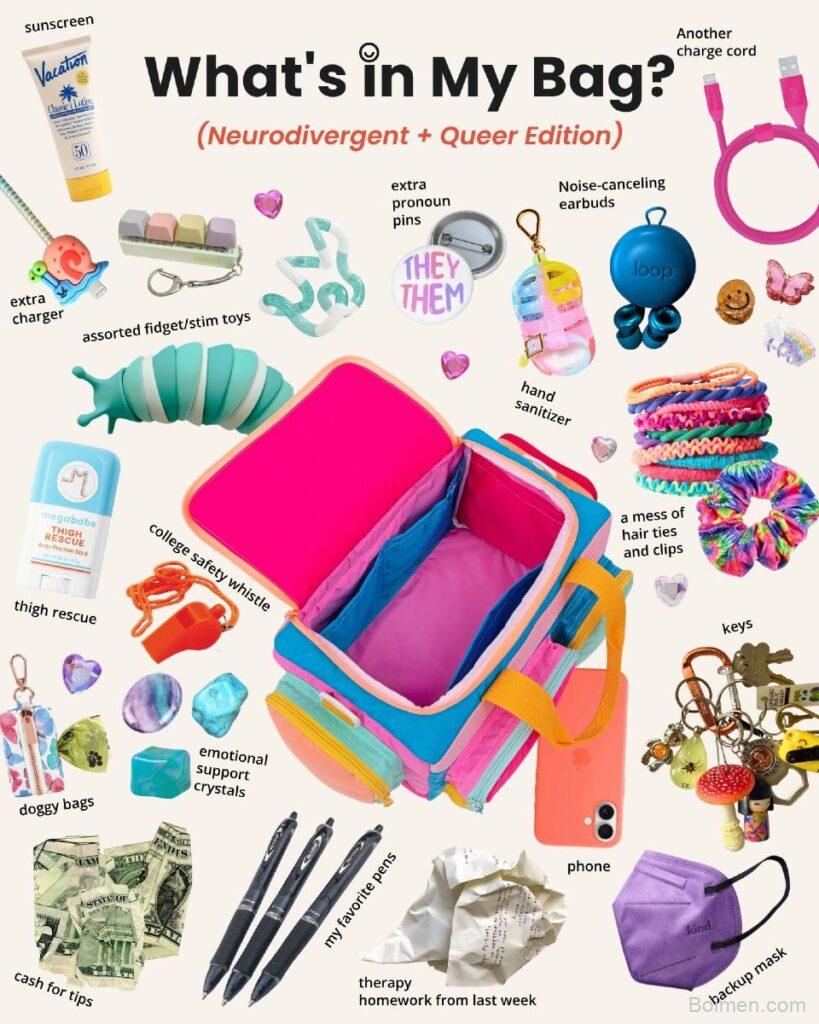
The bag by my door is not a purse. It is a small weather system, packed and repacked each morning, holding everything I might need to move through a world that was not built for the way my mind and body work. A soft loop of ribbon, a pair of earplugs, a snack that will not betray me. Quiet things. Queer things. Neurodivergent things. If you know, you know.
Advertisements1
What follows is a slow walk through the small objects and quiet tools that make a survival bag feel less like armour and more like a friend. Not a checklist to complete. A menu to browse.
Table of Contents(Click to Toggle)
- Why a Queer Neurodivergent Survival Bag Matters
- 21 Essentials for a Queer Neurodivergent Survival Bag
- 1. Loop Earplugs
- 2. Flare Audio Calmer
- 3. Fidgetland Fidgets
- 4. Kaiko Fidgets
- 5. Chewigem
- 6. Stimtastic
- 7. Weighted Lap Pad
- 8. Snuggle Sac
- 9. Sunflower Lanyard
- 10. Hidden Disabilities Card
- 11. Medical ID Bracelet
- 12. Lockable Pouch
- 13. Gender Affirming Pin
- 14. Pronouns Pin
- 15. Safe Space Card
- 16. Tactile Comfort Stone
- 17. Sensory-Friendly Scarf
- 18. Emergency Snack Pouch
- 19. Water Bottle with Straw
- 20. Mini First Aid Pouch
- 21. Comfort Item
- Bonus: Mini Notebook
- Bonus: Reusable Straw
- Bonus: Tiny Spray
- Bonus: Keyring Charm
- Bonus: Soft Pouch
- The Quiet Comfort of a Well-Packed Bag
Why a Queer Neurodivergent Survival Bag Matters
The world asks a lot of small, constant translations. A fluorescent light that hums. A pronoun that lands wrong. A room that is too loud, a conversation that is too fast, a body that is being read by strangers in ways that do not match. For queer and neurodivergent people, the day is often a series of micro-negotiations, and a survival bag is one way to stop negotiating for a moment.
It is not about being fragile. It is about being prepared. The right object, at the right time, can turn a spiralling afternoon into a manageable one. A pair of earplugs. A pin that says who you are. A snack that does not surprise you. These are not indulgences. They are infrastructure.
I started building mine after a long train ride where the lights, the announcements, and the wrong name on a ticket all arrived at once. I had nothing in my bag but a phone and a dying battery. Since then, I have learned to pack for the person I actually am, not the person the world assumes. The twenty-one things below are what I have found along the way. Take what fits. Leave the rest.
21 Essentials for a Queer Neurodivergent Survival Bag
1. Loop Earplugs : Reusable earplugs that soften the world without silencing it
What it is: A small, stylish earplug brand designed to reduce noise while keeping conversations audible.
Category: Sensory regulation
Why it stands out: Unlike foam earplugs that muffle everything, Loop uses a hollow acoustic channel that lowers volume by around 18 to 27 decibels depending on the model. The Quiet version is for sleep and deep focus; the Engage version is for social settings. They come in muted colours and sit flush in the ear, so they are not obvious.
Best for: Crowded trains, supermarkets, and any space where you need to stay present but not overwhelmed.
2. Flare Audio Calmer : Tiny inserts that take the edge off sharp sounds
What it is: Small silicone inserts that sit in the ear canal and gently reshape how sound waves reach the eardrum.
Category: Sensory regulation
Why it stands out: Calmer is not an earplug. It does not block sound. Instead, it reduces the distortion caused by the shape of the ear, which many people experience as a harshness in certain frequencies. The effect is subtle but real for those who find specific sounds physically painful.
Best for: Live music, busy cafés, and any environment where you want to hear everything but feel less attacked by it.
3. Fidgetland Fidgets : Small, quiet fidgets that keep hands busy
What it is: A range of hand-held fidget tools made from bike chains, beads, and metal rings.
Category: Stimming and focus
Why it stands out: Fidgetland’s designs are quiet, durable, and pocket-sized. The Noah, for example, is a short chain of smooth metal links that rolls between the fingers without clicking. They are also easy to clean and do not look like toys, which matters in professional settings.
Best for: Meetings, lectures, and any situation where you need to stay still but your hands need to move.
4. Kaiko Fidgets : Sensory tools with a gentler, softer touch
What it is: A collection of fidgets, chews, and sensory tools made from silicone, metal, and fabric.
Category: Stimming and focus
Why it stands out: Kaiko focuses on tactile variety. Their textured silicone fidgets come in different firmness levels, and many are designed to be squeezed, rolled, or pressed. The brand also makes discreet jewellery-style fidgets that can be worn as a necklace.
Best for: People who need a softer, more varied sensory input than metal fidgets provide.
5. Chewigem : Chewable jewellery for oral sensory needs
What it is: A range of chewable pendants, bracelets, and zipper pulls made from food-grade silicone.
Category: Oral sensory regulation
Why it stands out: Chewigem designs are deliberately subtle. Many look like ordinary jewellery, so they can be worn in public without drawing attention. The silicone is latex-free and comes in different hardness levels, from soft to firm, so you can match the resistance you need.
Best for: Anyone who chews on clothing, pens, or their own lips when concentrating or anxious.
6. Stimtastic : Ethical fidgets and sensory jewellery
What it is: An online shop selling fidgets, chew jewellery, and sensory tools, with a focus on accessibility and community.
Category: Stimming and focus
Why it stands out: Stimtastic was founded by an autistic person and prioritises affordable, durable products. They also offer a range of discreet fidgets, including spinner rings and textured pendants, and they are transparent about materials and sourcing.
Best for: Building a small, curated collection of fidgets without spending a fortune.
7. Weighted Lap Pad : Portable deep pressure for your lap
What it is: A small, weighted blanket designed to rest across your lap, usually filled with glass beads or plastic pellets.
Category: Deep pressure and calm
Why it stands out: A full weighted blanket is too heavy and too large for a bag. A lap pad is the compromise. It typically weighs between two and five pounds, and the pressure can help regulate the nervous system without being obvious to anyone nearby. Some versions are designed to look like a scarf or a cushion.
Best for: Long journeys, waiting rooms, and moments when you need grounding but cannot lie down.
8. Snuggle Sac : A soft, portable sensory retreat
What it is: A wearable blanket or sack that provides gentle, all-over pressure and warmth.
Category: Deep pressure and calm
Why it stands out: The Snuggle Sac is designed to be worn like a sleeping bag with arms, offering a cocoon-like feeling without the weight of a traditional blanket. It is machine washable and comes in calming colours. It is not a bag item, but it is a survival tool for the home base.
Best for: Days when you need to retreat but still want to move around the house.
9. Sunflower Lanyard : A quiet signal that you may need extra time
What it is: A green lanyard with yellow sunflowers, recognised in many public spaces as a sign of hidden disability.
Category: Communication and access
Why it stands out: The sunflower lanyard is now recognised in airports, supermarkets, and transport networks in the UK and beyond. It allows you to signal, without explaining, that you might need patience or assistance. It is not a diagnosis; it is a conversation starter for those who know.
Best for: Airports, busy stations, and any public space where you may need a little more time.
10. Hidden Disabilities Card : A small card that explains without words
What it is: A wallet-sized card that states you have a hidden disability and may need support.
Category: Communication and access
Why it stands out: Speaking can be hard on a difficult day. A card can be handed over instead. Many versions include space for your name and a short message, and some are available in multiple languages. They are discreet and fit in any bag pocket.
Best for: Moments when explaining feels impossible but you still need to be understood.
11. Medical ID Bracelet : Essential information, always with you
What it is: A bracelet or necklace engraved with your medical details, allergies, or emergency contacts.
Category: Safety and access
Why it stands out: For neurodivergent and queer people, a medical ID can carry information that matters in an emergency, including sensory needs, communication preferences, or pronouns. MedicAlert offers a 24/7 emergency hotline that first responders can call for more details.
Best for: Anyone with allergies, chronic conditions, or communication needs that a stranger should know about.
12. Lockable Pouch : A secure place for the things that matter
What it is: A small, lockable bag or pouch designed to keep valuables safe from pickpockets.
Category: Safety and security
Why it stands out: Pacsafe makes pouches with slash-resistant straps and locking zippers. For queer and neurodivergent travellers, the reassurance of knowing your passport, medication, or emergency cash is secure can reduce a significant layer of background anxiety.
Best for: Travel, crowded events, and any situation where you cannot afford to lose what you carry.
13. Gender Affirming Pin : A small, visible declaration of self
What it is: A pin badge, often handmade, displaying pronouns, pride flags, or a short affirming message.
Category: Identity and visibility
Why it stands out: Etsy is full of small makers creating pins that say exactly what you need them to say. A pin can be a boundary, an invitation, or simply a reminder to yourself. It is small enough to live on a bag strap and loud enough to be seen by the people who matter.
Best for: Everyday visibility, and for days when you need to feel seen without speaking.
14. Pronouns Pin : Say it once, without repeating yourself
What it is: A pin or badge that displays your pronouns clearly.
Category: Identity and visibility
Why it stands out: For many neurodivergent people, repeating pronouns or correcting people can be exhausting. A pin removes that labour. It also signals to other queer people that you are safe. Many makers offer custom text and a range of colours.
Best for: Workplaces, social events, and any space where you would rather not have the same conversation again.
15. Safe Space Card : A small card that tells people how to help
What it is: A card, often handmade, that explains you are neurodivergent or queer and lists what you need in a difficult moment.
Category: Communication and access
Why it stands out: Unlike a medical ID, a safe space card is personal and specific. It might say “I am autistic. Please give me time to respond.” or “I am non-binary. Please use they/them.” It can be handed to a friend, a stranger, or a paramedic.
Best for: Anyone who finds verbal explanation difficult under stress.
16. Tactile Comfort Stone : A smooth, quiet anchor in your pocket
What it is: A small, smooth stone, often carved or polished, designed to be held and rubbed.
Category: Grounding and calm
Why it stands out: A comfort stone is almost invisible. It has no moving parts, makes no sound, and requires no explanation. The weight and texture in your hand can be enough to bring you back to the present. Many makers offer engraved stones with a word or symbol that matters to you.
Best for: Moments when you need to ground yourself without anyone noticing.
17. Sensory-Friendly Scarf : Soft texture that doubles as comfort
What it is: A scarf made from a soft, non-itchy fabric, sometimes with a textured edge or hidden fidget.
Category: Sensory regulation
Why it stands out: A scarf is a socially acceptable way to carry comfort. It can be wrapped, pulled, or simply touched. Many makers use bamboo or organic cotton, which are gentle on sensitive skin. Some incorporate a small, detachable fidget for discreet stimming.
Best for: Cold days, anxious moments, and anyone who needs a soft thing to hold.
18. Emergency Snack Pouch : Food that will not surprise you
What it is: A small pouch containing safe, familiar snacks that meet your dietary and sensory needs.
Category: Physical regulation
Why it stands out: Hunger amplifies everything. A snack pouch with a known texture and taste can prevent a meltdown or a shutdown. For neurodivergent people, safe foods are not fussiness; they are a reliable source of energy and comfort. A small pouch with a few sealed snacks is easy to refill and carry.
Best for: Long days, travel, and any time you might not be able to eat when you need to.
19. Water Bottle with Straw : Hydration that is easier to access
What it is: A reusable water bottle with a straw lid, designed for easy sipping.
Category: Physical regulation
Why it stands out: For some neurodivergent people, drinking from an open cup is a sensory challenge. A straw makes hydration simpler and more automatic. Klean Kanteen bottles are durable, come in a range of sizes, and have straw lids that are easy to clean. A familiar bottle also becomes a comforting object in itself.
Best for: Anyone who forgets to drink, or who finds the sensation of drinking from a cup unpleasant.
20. Mini First Aid Pouch : Small care for small emergencies
What it is: A compact pouch containing plasters, antiseptic wipes, pain relief, and any personal medication.
Category: Safety and care
Why it stands out: A first aid pouch is not just for cuts. It can hold sensory-friendly plasters, a spare dose of medication, or a small tube of hand cream for dry skin. Having it in your bag means you do not have to ask for help or leave a safe space to find what you need.
Best for: Everyday preparedness, and for anyone who manages a chronic condition.
21. Comfort Item : The one thing that is just for you
What it is: A small, personal object that brings you comfort, chosen entirely by you.
Category: Emotional regulation
Why it stands out: This is the most important item, and the least definable. It might be a smooth pebble, a photo, a tiny plush, a piece of fabric, or a note in your own handwriting. The only rule is that it works for you. It does not need to be useful to anyone else.
Best for: The moments when nothing else helps, and you need a reminder that you are here.
Bonus: Mini Notebook : A place to put the thoughts that will not settle
What it is: A small notebook, often pocket-sized, for notes, lists, or grounding exercises.
Category: Cognitive regulation
Why it stands out: Writing things down can quiet a looping mind. A mini notebook from Moleskine is slim enough to fit in any bag and sturdy enough to survive daily use. Some people use it for to-do lists; others use it to write down worries so they can be put away.
Best for: Anyone who needs to externalise thoughts to let them go.
Bonus: Reusable Straw : A small tool for sensory comfort
What it is: A metal or silicone straw that can be carried and used anywhere.
Category: Sensory regulation
Why it stands out: A reusable straw means you never have to use a paper straw that disintegrates or a plastic one that tastes wrong. Klean Kanteen makes stainless steel straws that are easy to clean and come with a brush. It is a tiny thing that can make drinking feel manageable.
Best for: Cafés, restaurants, and travel.
Bonus: Tiny Spray : A familiar scent that resets the room
What it is: A small spray bottle of a familiar, comforting scent, such as lavender or citrus.
Category: Sensory regulation
Why it stands out: Smell is a direct route to memory and calm. A tiny spray of a scent you associate with safety can shift your state in seconds. Many makers on Etsy sell small, refillable spray bottles with natural essential oils. Choose a scent that feels like home to you.
Best for: Overwhelming environments and moments when you need to create a small bubble of calm.
Bonus: Keyring Charm : A small, visible reminder of who you are
What it is: A charm or tag attached to your bag or keys, often with a symbol, flag, or word.
Category: Identity and visibility
Why it stands out: A keyring charm is a quiet signal. It might be a rainbow, a neurodiversity symbol, or a word like “gentle.” It is visible to you every time you reach for your keys, and visible to others who know what to look for. It is a small piece of self-expression that travels with you.
Best for: Everyday visibility and personal reassurance.
Bonus: Soft Pouch : A home for all the small things
What it is: A small fabric pouch, often handmade, for organising the loose items in your bag.
Category: Organisation
Why it stands out: A soft pouch keeps earplugs, fidgets, snacks, and cards from disappearing into the void of a larger bag. Many makers on Etsy offer pouches in calming colours and soft fabrics. Having a designated place for each category reduces the cognitive load of searching when you are already stressed.
Best for: Anyone who wants their survival bag to feel less like a junk drawer and more like a toolkit.
The Quiet Comfort of a Well-Packed Bag
There is a particular kind of peace that comes from knowing your bag is ready. Not because the world is dangerous, but because you have decided to take care of yourself in advance. The earplugs. The snack. The pin that says who you are. The small, soft things that make a day possible.
I still repack mine most mornings. It is a small ritual, a few minutes of quiet attention. And on the days when everything feels like too much, I reach into the bag and find that I have already been kind to myself. That is the whole point.
What is the most random thing in your survival bag? I would love to know. Less, but better.

Ingrid explores Scandinavian minimalist design and slow living. She writes about creating calm, functional spaces with fewer, better things.


Leave a Comment