
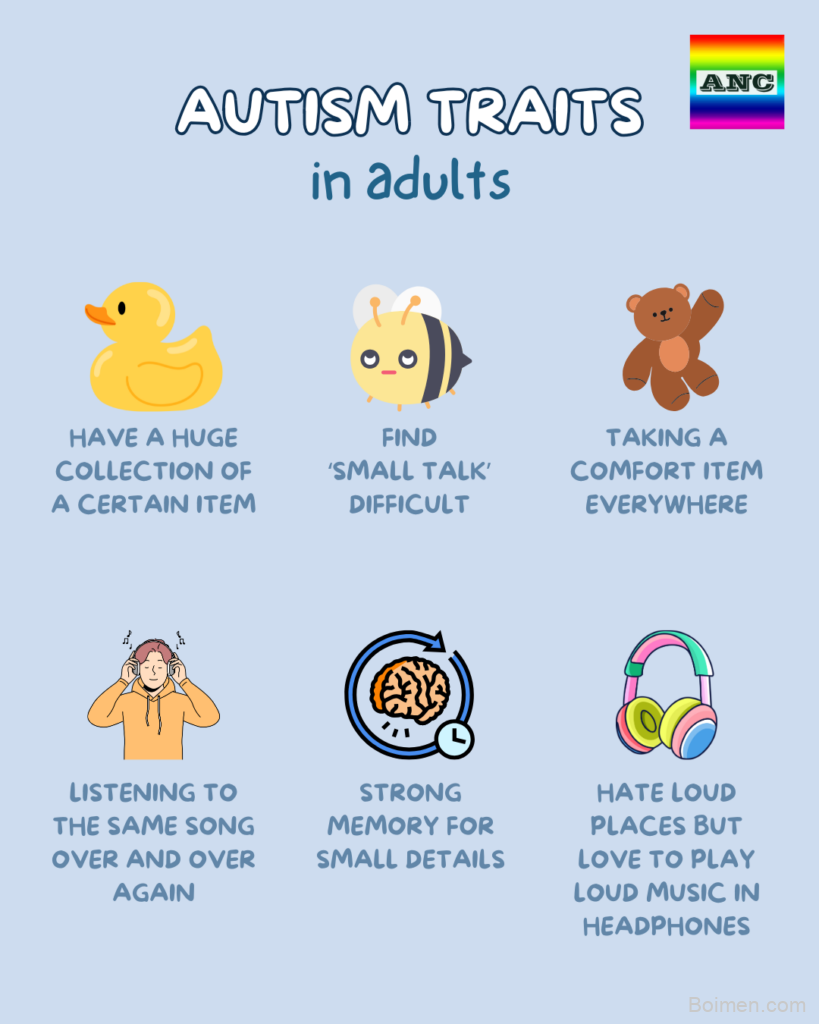
If you have ever felt like everyone else got a manual you never received, this list is for you. Maybe you rehearse phone calls before you make them. Maybe bright lights and busy rooms drain you in minutes. Maybe you have a deep, endless passion for one topic that nobody else quite gets.
Advertisements1
Those are not flaws. They are clues. And they are worth understanding.
Autism in adults often hides in plain sight, especially in people who learned early to mask. Below are 18 common traits, written in plain language, with real examples. Notice which ones make you nod. That recognition is a starting point, not a diagnosis.
Autism shows up differently in every person. There is no single way to be autistic, because every autistic adult is unique.
Table of Contents(Click to Toggle)
- Why These Adult Autism Traits Matter
- 18 Autism Traits in Adults
- 1. Deep, Focused Interests
- 2. Sensory Sensitivities
- 3. Social Exhaustion After Small Talk
- 4. Scripting Conversations in Advance
- 5. Strong Need for Routine
- 6. Difficulty Reading Unspoken Rules
- 7. Taking Things Literally
- 8. Masking in Public
- 9. Meltdowns and Shutdowns
- 10. Trouble with Executive Function
- 11. Heightened Sense of Justice
- 12. Difficulty with Eye Contact
- 13. Feeling Different Since Childhood
- 14. Repeating Words or Phrases
- 15. Overwhelm in Crowds and Noise
- 16. Intense Emotional Empathy
- 17. Preference for One-on-One Friendships
- 18. Late Realization and Self-Discovery
- Bonus Mentions
- Your Next Small Step
Why These Adult Autism Traits Matter
Most autism checklists were written for children. That leaves a huge gap for adults, especially women and people who learned to blend in. You might have spent decades thinking you were “too sensitive” or “too intense” or just not trying hard enough.
Recognizing traits changes that story. It explains why a work lunch can wipe you out for a whole afternoon. It explains why you can remember every detail of a favorite subject but forget to eat. It gives you language for something you have felt your whole life.
This list is not a diagnostic tool, and it is not medical advice. It is a mirror. Read it slowly. Notice what resonates. Then consider talking to a professional who understands adult autism, or finding community with other autistic adults. Understanding yourself is never wasted effort.
18 Autism Traits in Adults
1. National Autistic Society : Deep, Focused Interests
What it is: A topic, hobby, or subject that you return to again and again with genuine joy and unusual depth.
Category: Interest and attention
Why it stands out: These interests are not just hobbies. They can be a source of calm, identity, and even career direction. One adult might memorize every train route in their city. Another might read forty books about mushrooms. The intensity is real, and it is often a strength.
Best for: Anyone who has been told they are “obsessed” when they were simply passionate.
2. Autistic Self Advocacy Network : Sensory Sensitivities
What it is: Your senses react more strongly, or more weakly, than most people’s.
Category: Sensory processing
Why it stands out: A flickering fluorescent light can feel unbearable. A tag on a shirt can ruin your whole day. On the flip side, some textures, songs, or smells bring deep comfort. Many adults only realize this pattern later in life, after years of unexplained headaches or irritability.
Best for: People who keep sunglasses on indoors or cut tags out of every shirt.
3. Spectrum News : Social Exhaustion After Small Talk
What it is: Short conversations leave you more tired than a full workout.
Category: Social energy
Why it stands out: Small talk requires fast processing, reading faces, and choosing words in real time. That is a lot of mental work. You might leave a party feeling fine, then crash two hours later. This delayed exhaustion is common and often mistaken for introversion alone.
Best for: Anyone who needs a quiet room after a family gathering.
4. Psychology Today : Scripting Conversations in Advance
What it is: Rehearsing what you will say before a call, meeting, or date.
Category: Communication
Why it stands out: You might practice a phone script three times in your head. If the other person goes off script, you freeze. This is not a lack of social skill. It is a sign that your brain prefers predictable patterns, and it works hard to keep up.
Best for: People who write bullet points before making a doctor’s appointment.
5. Autism Society : Strong Need for Routine
What it is: You feel calmer and safer when your day follows a familiar order.
Category: Predictability and control
Why it stands out: A surprise schedule change can throw off your entire day. You might eat the same breakfast for years, not out of boredom, but because it removes one decision from a crowded mind. Routines are not rigid quirks. They are energy-saving tools.
Best for: Anyone who plans their week in advance to feel steady.
6. ADDitude Magazine : Difficulty Reading Unspoken Rules
What it is: Social rules that seem obvious to others often feel invisible to you.
Category: Social understanding
Why it stands out: You might not know when a joke has gone too far, or when a coworker is hinting at something. This can lead to awkward moments and hurt feelings on both sides. The good news is that many of these rules can be learned, and kind people will explain them.
Best for: Adults who often hear “you took that the wrong way.”
7. Verywell Mind : Taking Things Literally
What it is: You understand words at face value, not as hints or metaphors.
Category: Language processing
Why it stands out: If someone says “the meeting is at the top of the hour,” you check the clock. Sarcasm and teasing can confuse you, even when you enjoy them. This trait often pairs with honesty and directness, which many people quietly appreciate.
Best for: Anyone who has answered a rhetorical question sincerely.
8. Mayo Clinic : Masking in Public
What it is: Hiding autistic traits to blend in with non-autistic people.
Category: Coping and identity
Why it stands out: Masking can look like forcing eye contact, copying facial expressions, or laughing at jokes you do not understand. It helps you get through the day, but it is exhausting. Many adults only notice how much they mask when they finally spend time with other autistic people and feel relief.
Best for: People who feel like actors on a stage at work.
9. Healthline : Meltdowns and Shutdowns
What it is: Intense reactions when your system becomes overwhelmed.
Category: Emotional regulation
Why it stands out: A meltdown might look like crying, pacing, or raising your voice. A shutdown might look like going silent and unable to move. Both are signs of overload, not bad behavior. Knowing your early warning signs, like a tight chest or ringing ears, can help you step away before things build.
Best for: Adults who feel sudden overwhelm after a long, noisy day.
10. Understood.org : Trouble with Executive Function
What it is: Difficulty starting tasks, organizing steps, or keeping track of time.
Category: Daily functioning
Why it stands out: You might know exactly what needs doing and still feel stuck. A simple task like mailing a package can take a week. This is not laziness. It is a real difference in how the brain plans and prioritizes. Breaking tasks into tiny steps often helps.
Best for: Anyone with a pile of unopened mail and good intentions.
11. TED : Heightened Sense of Justice
What it is: A strong, sometimes overwhelming reaction to unfairness.
Category: Values and emotion
Why it stands out: When someone is treated badly, you feel it deeply, even if it has nothing to do with you. You might speak up when others stay quiet. This trait can be a gift in advocacy and leadership, but it also means you carry other people’s pain. Learning to channel it matters.
Best for: People who cannot let a rude comment slide.
12. NHS : Difficulty with Eye Contact
What it is: Eye contact can feel uncomfortable, distracting, or painful.
Category: Social communication
Why it stands out: You might look at someone’s shoulder, the wall, or their ear instead of their eyes. Some autistic adults can hold eye contact but find it drains their focus. This is not rudeness. Many people listen better when they are not forcing eye contact.
Best for: Anyone who counts seconds during a handshake.
13. Autism Speaks : Feeling Different Since Childhood
What it is: A long-standing sense of not quite fitting in with peers.
Category: Life history
Why it stands out: Maybe you played alongside other kids instead of with them. Maybe you were called “shy” or “gifted” or “quirky.” Looking back, these memories often form a pattern. Many adults describe a moment of reading about autism and thinking, “that was me at eight years old.”
Best for: Adults who always felt like the outsider looking in.
14. American Psychological Association : Repeating Words or Phrases
What it is: Echoing words, humming, or repeating a phrase for comfort.
Category: Self-regulation
Why it stands out: You might repeat a line from a movie under your breath, or say a word because it feels good. This is sometimes called echolalia, and it is often calming. It can also be a way to process language or hold onto a thought.
Best for: People with a favorite phrase that just feels right.
15. CDC : Overwhelm in Crowds and Noise
What it is: Busy places can quickly become too much to handle.
Category: Sensory and environment
Why it stands out: A shopping mall, concert, or busy restaurant can flood your senses. You might feel your heart race, lose track of conversations, or need to leave early. This is not weakness. It is your nervous system asking for less input. Planning quiet breaks can make outings possible.
Best for: Anyone who maps the exits before entering a venue.
16. The Trevor Project : Intense Emotional Empathy
What it is: Feeling other people’s emotions strongly, sometimes as your own.
Category: Emotional experience
Why it stands out: You might cry when a friend is sad, or feel anxious when a stranger is upset. This empathy can be beautiful and heavy at the same time. Many autistic adults describe absorbing the mood of a room within seconds of walking in.
Best for: People who need alone time to reset after helping others.
17. NAMI : Preference for One-on-One Friendships
What it is: Deep, loyal friendships with a few people rather than large groups.
Category: Relationships
Why it stands out: Group settings can be hard to follow, so you may prefer one friend at a time. These friendships often run deep. You remember details, show up consistently, and value honesty. Quality over quantity is not a flaw. It is a valid way to connect.
Best for: Anyone with two close friends and zero interest in networking events.
18. Psychology Today : Late Realization and Self-Discovery
What it is: Realizing you may be autistic as an adult, often after years of confusion.
Category: Identity and understanding
Why it stands out: Many adults discover autism through a child’s diagnosis, a book, or a viral post. The realization can bring relief and grief at the same time. Relief, because there is finally an explanation. Grief, for the years spent feeling broken. Both feelings are valid, and both can be held together.
Best for: Adults who are just starting to connect the dots.
Bonus Mentions
r/AutisticAdults : Community Support and Shared Stories
What it is: A Reddit community where autistic adults talk about daily life.
Category: Community
Why it stands out: Reading other people’s experiences can be the fastest way to feel less alone. You will find posts about work, relationships, sensory struggles, and small wins.
Best for: Anyone who wants to hear from people who get it.
Instagram : Autistic Creators to Follow
What it is: A platform where autistic adults share short, visual explanations.
Category: Social media
Why it stands out: Short videos and carousels make traits easy to recognize. Many creators explain masking, sensory overload, and late diagnosis in a warm, accessible way.
Best for: Visual learners who want quick, relatable content.
YouTube : Long-Form Autistic Voices
What it is: A video platform with personal stories and educational channels.
Category: Video learning
Why it stands out: Longer videos let creators go deep into topics like executive function, meltdowns, and diagnosis journeys. You can hear tone and see body language, which helps many people connect.
Best for: People who learn best by listening and watching.
Goodreads : Books on Adult Autism
What it is: A book tracking and review site with strong autism reading lists.
Category: Reading and research
Why it stands out: Search for adult autism memoirs and you will find hundreds of honest, first-person accounts. Reading a full book often gives more context than a single checklist.
Best for: Readers who want depth over quick tips.
Spotify : Podcasts by Autistic Adults
What it is: A streaming service with podcasts hosted by autistic creators.
Category: Audio learning
Why it stands out: Podcasts are perfect for low-energy days. You can listen while resting, walking, or doing a familiar routine. Many shows mix personal stories with practical advice.
Best for: Anyone who prefers listening over reading.
Your Next Small Step
If you recognized yourself in this list, take a breath. You are not broken, and you are not alone. You are simply learning the shape of your own mind, and that is a brave thing to do.
Start small. Write down the three traits that felt most true for you. Notice when they show up this week. Then consider one gentle action: read a memoir, join an online community, or talk to a professional who understands adult autism. You do not have to figure everything out today.
Autism looks different in every person, and your version is valid exactly as it is. The goal is not to fix yourself. It is to understand yourself, and to build a life that fits.
Which trait on this list surprised you the most? Share it in the comments. Your story might be the one that helps someone else feel seen today.
Here’s to small steps, big impact.

Maya writes about sustainable living and zero-waste swaps for busy families. She focuses on small, actionable changes that fit into real life without judgment or guilt.


Leave a Comment