
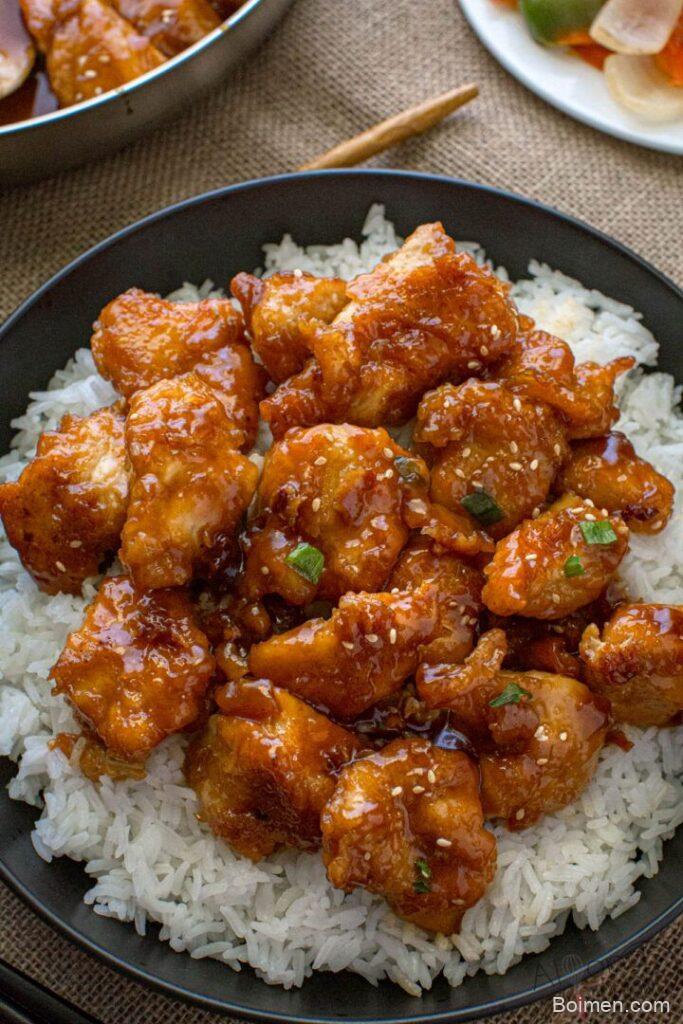
General Tso's Chicken is the dish that made American Chinese takeout a $20 billion category, and it is also the easiest one to ruin at home. The problem is almost never the sauce. It is the coating: too thick and it turns to paste, too thin and it slides off in the fryer. I tested this recipe eleven times and landed on a cornstarch-and-egg-white slurry that fries to a shell you can hear across the room.
Advertisements1
Here is the math that matters. Takeout General Tso's runs $14 to $18 per order in most metros and feeds two hungry adults. This recipe costs about $9 in ingredients at 2024 grocery prices and feeds six, which lands the per-serving cost near $1.50. That is a 5x cost reduction with zero loss in crunch, because you control the fry temperature instead of hoping a delivery driver does.
The sauce is built on the classic trinity of soy, sugar, and vinegar, then tightened with Shaoxing wine, garlic, ginger, and dried chiles. I keep the sugar at 3 tablespoons because anything past 4 tablespoons turns the glaze into candy that hardens on the plate. If you want heat, add chile de arbol; if you want aroma without burn, use dried Tianjin chiles and leave them whole.
Why You'll Love This Recipe
About the Ingredients
2 lb (900g) boneless skinless chicken thighs, cut into 1-inch pieces
Thighs stay juicy through two fryings; breast dries out fast. If using breast, cut 1.25-inch pieces and shave 30 seconds off the second fry. Buy air-chilled chicken if your store carries it; it holds less added water and browns better.
2 large egg whites
Egg white is the glue that makes cornstarch adhere without a heavy batter. No egg whites? Use 3 tablespoons cold water plus 1 tablespoon cornstarch as a slurry, though the crust will be slightly less shattery.
1/2 cup (60g) cornstarch
Cornstarch, not flour, gives the glassy takeout crust. Potato starch works as a 1:1 swap and actually fries a touch crisper; avoid all-purpose flour here, it goes leathery.
1/2 cup (120ml) neutral oil for frying, plus 1 tablespoon for the wok
Peanut or canola hold up to 375F (190C) without smoking. Do not use olive oil or butter; both burn below the second-fry temperature. For deep frying, use 6 cups (1.4L) in a Dutch oven instead.
3 tablespoons soy sauce
Regular soy sauce, not dark, or the sauce goes nearly black and tastes bitter. For gluten-free, use tamari 1:1; for lower sodium, use light soy and add 1/4 teaspoon salt at the end.
3 tablespoons granulated sugar
Sugar is structural here, not just sweet; it is what makes the glaze cling. Honey works but browns 20 seconds faster, so pull the pan off the heat sooner. Do not cut below 2 tablespoons or the sauce will not thicken.
2 tablespoons rice vinegar
Rice vinegar brings the clean tang that balances the sugar. White distilled vinegar is sharper; use 1.5 tablespoons instead. Balsamic is too sweet and dark for this sauce.
1 tablespoon Shaoxing wine
Shaoxing adds the fermented depth takeout has and home versions usually miss. Dry sherry is the closest substitute; if you avoid alcohol, use 1 tablespoon chicken stock plus 1/2 teaspoon rice vinegar.
2 teaspoons toasted sesame oil
Toasted, not regular, or you get zero aroma. Add it off the heat; high heat kills the nutty top note. Sesame allergy swap: 1 teaspoon tahini thinned with 1/2 teaspoon oil.
4 cloves garlic, minced, plus 1 tablespoon fresh ginger, minced
Fresh only here; jarred garlic tastes metallic in a hot wok. Grate the ginger on a Microplane so it dissolves into the sauce instead of leaving fibrous strands.
6 to 8 dried red chiles (Tianjin or chile de arbol)
Whole chiles bloom aroma without overwhelming heat; break them for more punch. No dried chiles? Use 1 teaspoon red pepper flakes, added with the garlic so they do not scorch.
3 scallions, white parts sliced thin, green parts cut into 1-inch lengths
The white parts go in early for sweetness, the greens go in at the end for freshness. Leeks (white only) are a fine substitute if scallions are out of season.
Tips & Tricks
Do not crowd the fryer
Fry in 3 batches of about 10 ounces each. Dropping 2 pounds in at once crashes the oil to 300F (149C) and you get greasy, pale nuggets instead of golden shells.
Dry the chicken before coating
Pat pieces bone-dry with paper towels. Surface water steams the crust from the inside and it slides off in the oil, which is the number one cause of bald chicken.
Balance the sauce before it hits the pan
Whisk soy, sugar, vinegar, wine, and cornstarch slurry in a bowl and taste it raw. It should taste slightly too salty and too sour; cooking and reducing sweetens it. Fixing it in the wok is nearly impossible.
Glaze off the heat
Toss the fried chicken in the sauce with the burner off or on the lowest setting. Boiling the glaze after the chicken goes in softens the crust in under 60 seconds.
Pro Tips
Step-by-Step Instructions
1. Marinate the chicken
Toss the 1-inch chicken pieces with 1 tablespoon soy sauce, 1 tablespoon Shaoxing wine, and 1/2 teaspoon salt in a bowl. Let sit 15 minutes at room temperature while you build the sauce; the salt penetrates the meat and the wine kills any raw poultry smell.
2. Mix the sauce
Whisk 2 tablespoons soy sauce, 3 tablespoons sugar, 2 tablespoons rice vinegar, 2 teaspoons cornstarch, and 1/2 cup cold water in a small bowl until the cornstarch is fully dissolved with no white lumps at the bottom. Set it next to the stove; you will have no time to mix it later.
3. Coat the chicken
Beat 2 egg whites until just frothy, pour over the chicken, and toss. Add 1/2 cup cornstarch and fold with your hands until every piece wears an even, chalky white coat with no dry patches. It should look dusty, not wet and batter-like.
4. First fry at 350F
Heat 1/2 cup oil in a wok or 6 cups in a Dutch oven to 350F (177C) measured with a thermometer. Fry in 3 batches for 3 to 4 minutes each, until the pieces are pale gold and float with vigorous bubbling at the edges. Move to a wire rack.
5. Second fry at 375F
Raise the oil to 375F (190C). Return all the chicken in 2 batches and fry 60 to 90 seconds until deep golden brown and audibly crackling. The internal temperature should read 165F (74C); drain on a rack, never on paper towels.
6. Bloom the aromatics
Pour off all but 1 tablespoon oil and set the burner to medium. Add the dried chiles, garlic, ginger, and scallion whites and stir constantly for 30 seconds until fragrant. If the garlic browns, dump it and start over; burnt garlic makes the whole sauce bitter.
7. Reduce the glaze
Stir the sauce bowl once more, pour it in, and simmer 60 to 90 seconds, stirring, until it coats the back of a spoon and large glossy bubbles form. It should look like warm honey, not water.
8. Toss and finish
Kill the heat, add the chicken and scallion greens, and toss for 20 seconds until every piece is lacquered. Drizzle the 2 teaspoons toasted sesame oil over the top and serve immediately over steamed rice, because the crust clock starts now.
Delicious Variations
Sesame Orange General Tso's
Swap the rice vinegar for 3 tablespoons fresh orange juice plus 1 teaspoon zest, and finish with 1 tablespoon toasted sesame seeds for a brighter, fruit-forward glaze.
Air-Fryer General Tso's
Coat the chicken the same way, spray with oil, and air-fry at 400F (204C) for 9 minutes, shaking at the 5-minute mark. The crust is 80 percent as crisp but you use 1 tablespoon of oil instead of 1/2 cup.
Vegetarian General Tso's
Replace the chicken with 1.5 pounds of cauliflower florets or extra-firm tofu pressed for 30 minutes and cubed. Fry cauliflower 4 minutes per stage; tofu needs only 3 minutes on the second fry.
How to Store General Tso's Chicken
Refrigerator
Store cooled chicken and sauce together in an airtight container for up to 3 days. Expect the crust to soften after 12 hours; the flavor actually deepens on day two.
Freezer
Freeze the fried, unglazed chicken in a single layer for 2 hours, then bag it for up to 2 months. Never freeze it already glazed; the sauce separates and turns grainy.
Reheating
Reheat unglazed chicken on a sheet pan at 400F (204C) for 8 to 10 minutes to restore crunch, then toss with freshly made sauce. Microwaving works but guarantees a soft crust.
Frequently Asked Questions
Q: Is General Tso's Chicken actually Chinese?
It is a Chinese-American invention, not a traditional Hunan or Sichuan dish. Chef Peng Chang-kuei created a version in Taiwan in the 1950s, and the sweet, deep-fried American version was popularized in New York City in the 1970s. Authentic Hunan cooking uses similar aromatics but far less sugar.
Q: Is General Tso's Chicken sweet or spicy?
It is primarily sweet and tangy with a mild background heat, roughly 2 out of 10 on a spice scale. The sugar and rice vinegar dominate; the dried chiles mostly add aroma. To push it to a real medium heat, break the chiles open and add 1 teaspoon of sambal oelek with the garlic.
Q: Why did my General Tso's Chicken turn out soggy?
Soggy chicken almost always means the oil temperature dropped or you glazed it while the sauce was still boiling. Fry in small batches to keep the oil at 350F (177C) and 375F (190C), and toss the chicken into the sauce only after you cut the heat. A wire rack instead of paper towels also prevents trapped steam.
Q: Can I make General Tso's Chicken ahead of time?
Yes, but split the work: fry the chicken and make the sauce separately, then refrigerate both for up to 3 days. Reheat the chicken at 400F (204C) for 8 to 10 minutes and rewarm the sauce in a pan before combining. Assembling the full dish ahead of time costs you the crust.
Q: What do you serve with General Tso's Chicken?
Steamed jasmine rice is the standard pairing because it absorbs the glaze without competing with it. For lower carbs, serve it over cauliflower rice or shredded napa cabbage. Add a plain steamed vegetable like broccoli or bok choy to cut the richness.
Make this once with a thermometer in the oil and you will never order General Tso's again, because you will know exactly why takeout versions vary so wildly. Buy a $12 instant-read thermometer, fry in batches, and glaze off the heat. That is the whole game. Stay sharp, stay solvent.

General Tso's Chicken
General Tso's Chicken delivers crackly fried chicken in a glossy sweet-tangy sauce you can make at home in 50 minutes for a fraction of takeout cost.
🧂 Ingredients
- 2 lb (900g) boneless skinless chicken thighs, cut into 1-inch pieces
- 2 large egg whites
- 1/2 cup (60g) cornstarch
- 1/2 cup (120ml) neutral oil for frying, plus 1 tablespoon for the wok
- 3 tablespoons soy sauce
- 3 tablespoons granulated sugar
- 2 tablespoons rice vinegar
- 1 tablespoon Shaoxing wine
- 2 teaspoons toasted sesame oil
- 4 cloves garlic, minced, plus 1 tablespoon fresh ginger, minced
- 6 to 8 dried red chiles (Tianjin or chile de arbol)
- 3 scallions, white parts sliced thin, green parts cut into 1-inch lengths
📋 Instructions
- 1Marinate the chicken — Toss the 1-inch chicken pieces with 1 tablespoon soy sauce, 1 tablespoon Shaoxing wine, and 1/2 teaspoon salt in a bowl. Let sit 15 minutes at room temperature while you build the sauce; the salt penetrates the meat and the wine kills any raw poultry smell.
- 2Mix the sauce — Whisk 2 tablespoons soy sauce, 3 tablespoons sugar, 2 tablespoons rice vinegar, 2 teaspoons cornstarch, and 1/2 cup cold water in a small bowl until the cornstarch is fully dissolved with no white lumps at the bottom. Set it next to the stove; you will have no time to mix it later.
- 3Coat the chicken — Beat 2 egg whites until just frothy, pour over the chicken, and toss. Add 1/2 cup cornstarch and fold with your hands until every piece wears an even, chalky white coat with no dry patches. It should look dusty, not wet and batter-like.
- 4First fry at 350F — Heat 1/2 cup oil in a wok or 6 cups in a Dutch oven to 350F (177C) measured with a thermometer. Fry in 3 batches for 3 to 4 minutes each, until the pieces are pale gold and float with vigorous bubbling at the edges. Move to a wire rack.
- 5Second fry at 375F — Raise the oil to 375F (190C). Return all the chicken in 2 batches and fry 60 to 90 seconds until deep golden brown and audibly crackling. The internal temperature should read 165F (74C); drain on a rack, never on paper towels.
- 6Bloom the aromatics — Pour off all but 1 tablespoon oil and set the burner to medium. Add the dried chiles, garlic, ginger, and scallion whites and stir constantly for 30 seconds until fragrant. If the garlic browns, dump it and start over; burnt garlic makes the whole sauce bitter.
- 7Reduce the glaze — Stir the sauce bowl once more, pour it in, and simmer 60 to 90 seconds, stirring, until it coats the back of a spoon and large glossy bubbles form. It should look like warm honey, not water.
- 8Toss and finish — Kill the heat, add the chicken and scallion greens, and toss for 20 seconds until every piece is lacquered. Drizzle the 2 teaspoons toasted sesame oil over the top and serve immediately over steamed rice, because the crust clock starts now.

Diego covers personal finance and investing for freelancers and gig workers. His angle is practical money management for irregular income, from budgeting to tax basics.


Leave a Comment