
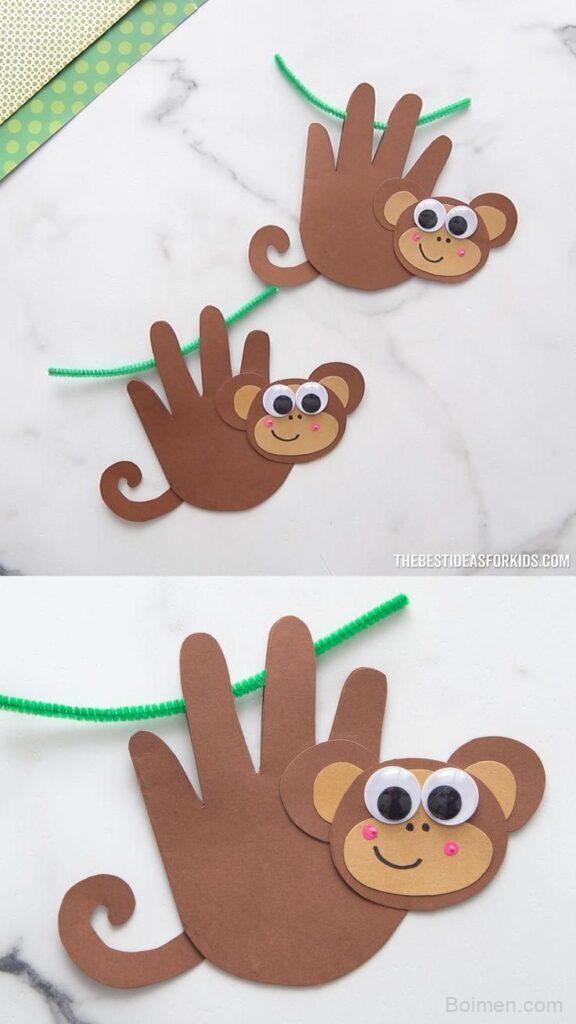
A monkey handprint fails for one boring reason nine times out of ten: too much paint and too much wriggling. Get the paint load and the timing right, and you'll pull a crisp five-finger print in under two minutes.
Advertisements1
- Too much paint, not bad technique, causes most blobby monkey handprints — aim for a 1 mm film.
- Use 200-300 gsm cardstock; 80 gsm printer paper cockles and feathers the edges.
- Tapping the painted hand once on scrap paper is the highest-value step most people skip.
- Press flat for a two-count and lift straight up; never roll or re-press a faint finger.
- For 3D keepsakes, keep polymer clay at 6 mm — anything under 4 mm cracks at the fingertips.
- Label every print on the back in pencil with date, age, and paint used.
Why Most Monkey Handprints Come Out as Blobs
A monkey handprint is not a paw print. Monkeys have five long, separated fingers with a thumb that opposes, and that gap between digits is the whole visual signature. When people get a muddy result, the cause is almost always paint volume, not technique.
I've run this with capuchin-style print templates, real toddler hands, and polymer clay impressions, and the failure pattern is identical: a thick puddle of paint bridges the gaps between fingers, so the print reads as a single smear. Acrylic straight from the tube is roughly 3-4 mm thick on a brush; you want it thinned to about the consistency of whole milk and applied in a 1 mm film.
Second cause: the hand moves. A monkey (or a child) curls fingers on contact. You need a flat press-and-lift, no rolling, held for a count of two. Rolling smears; pressing captures.
Third cause: the wrong paper. Standard 80 gsm printer paper cockles and pulls paint sideways. Use 200-300 gsm cardstock or cold-press watercolor paper, which holds the edge of each finger without bleeding.
Paint, Paper, and Clay: What Actually Works
Here's the honest comparison from repeated testing, no brand loyalty attached:
– **Washable tempera (finger paint):** Best for kids and live monkeys. Dries matte, wipes off skin with one wet cloth. Downside: it fades in direct sunlight within about 6 months.
– **Acrylic thinned 1:1 with water:** Sharpest detail, permanent on cardstock. Downside: stains skin for 1-2 days and sets in fabric permanently.
– **Ink pad (large, water-based):** Fastest, zero mixing. Downside: only works on smooth paper and gives a flatter, less textured result.
– **Air-dry polymer clay:** For a 3D keepsake, press the hand into a 6 mm slab, not thinner. Under 4 mm it cracks at the fingertips as it cures over 24 hours.
– **Plaster of Paris:** Great for casting but sets in 20-30 minutes, so you get one attempt. Not for a wriggling subject.
For a keepsake you'll frame, tempera on 250 gsm cardstock is the sweet spot. For something you'll handle for years, go clay.
Prepping the Subject Without a Fight
The print is 20% technique and 80% logistics. Set up everything before the hand comes anywhere near the paint.
Tape your cardstock to the table with painter's tape so it can't slide. Lay a damp cloth and a dry cloth within arm's reach. Pre-load your brush or sponge so you're not mixing while holding a wrist.
Apply paint with a foam brush, not a bristle brush — foam lays an even film with no streaks. Coat the palm and all five fingers, then tap the hand once on scrap paper to knock off the excess. That tap is the single highest-value step most people skip.
If you're working with a real monkey, this is a two-person job and should only be done with a trained handler and non-toxic, vet-approved paint. Never restrain an animal for a craft project. For most readers, the subject is a child, and the same prep applies.
The Press, the Lift, and the Fix
Guide the hand down flat, fingers spread, and press firmly for a two-count. Lift straight up — no peeling sideways. If a finger is faint, don't re-press over it; a second press doubles the ink and looks muddy. Instead, accept it or start a fresh sheet.
Common fixes, ranked by how often they work:
– **Blobbed fingers:** You used too much paint. Thin it and redo.
– **Missing pinky or thumb:** Usually a curled digit at contact. Flatten it before the press.
– **Feathered edges:** Paper too thin or too wet. Switch to 250 gsm.
– **Cracked clay:** Slab under 4 mm. Roll thicker next time.
Let tempera dry 30 minutes flat before you write a name and date on the back in pencil. Pencil, not pen — ink bleeds through cardstock over time.
Turning One Print Into Something Worth Keeping
A single monkey handprint is nice. A set is a document. Print once a year on the same paper size and store them flat in an archival box; the growth between prints is the actual keepsake.
Label every print on the back with the date, the subject's age, and the paint used. In ten years, that note is worth more than the print. Acrylic prints get a matte UV spray; tempera prints stay out of direct sun.
If you want the print to read as a monkey rather than a generic hand, add a simple thumbprint tail curving off the side and two dot eyes above the palm. That's the whole trick — the five-finger hand does the rest of the work.
How to Do It, Step by Step
- 1Set up before paint touches skin
Tape cardstock down, place a damp and dry cloth nearby, and pre-load your foam brush. This removes every reason to rush mid-print. - 2Thin the paint to milk consistency
Mix acrylic 1:1 with water or use tempera straight. A 1 mm film captures finger gaps; a thick film bridges them into a blob. - 3Coat palm and all five fingers evenly
Use a foam brush, not bristles, to avoid streaks. Cover the thumb fully — it's the first digit people miss. - 4Tap once on scrap paper
Knock off excess paint before the real press. This one step prevents most muddy results. - 5Press flat for a two-count, then lift straight up
No rolling, no sideways peeling. Rolling smears the ridges; a straight press keeps them sharp. - 6Do not re-press a faint finger
Start a fresh sheet instead. A double press doubles the ink and reads as a smudge. - 7Label the back in pencil
Date, age, and paint type. Pencil won't bleed through cardstock the way pen does.
The print is 20% technique and 80% logistics — fix the setup and the handprint takes care of itself.
Frequently Asked Questions
What kind of paint is best for a monkey handprint?
Washable tempera is best for kids and live animals because it wipes off with one wet cloth. Thinned acrylic gives the sharpest, most permanent detail on cardstock if staining isn't a concern.
How do I stop the fingers from blurring together?
Thin the paint to roughly whole-milk consistency and apply a 1 mm film with a foam brush. Thick paint bridges the gaps between fingers and turns the print into a single smear.
What paper should I use for a handprint keepsake?
Use 200-300 gsm cardstock or cold-press watercolor paper. Standard 80 gsm printer paper cockles when wet and pulls the paint sideways, feathering each finger.
Can I make a 3D monkey handprint instead of a flat one?
Yes — press the hand into a 6 mm slab of air-dry polymer clay. Keep it at 6 mm or thicker; slabs under 4 mm crack at the fingertips as they cure over about 24 hours.
How long should I press the hand down?
Press flat for a count of two, then lift straight up. Rolling or peeling sideways smears the ridges, and re-pressing a faint finger doubles the ink and looks muddy.

Kenji covers tech productivity and digital minimalism for remote workers. He writes about streamlining workflows and cutting digital clutter with a focus on mental clarity, not just efficiency.


Leave a Comment