
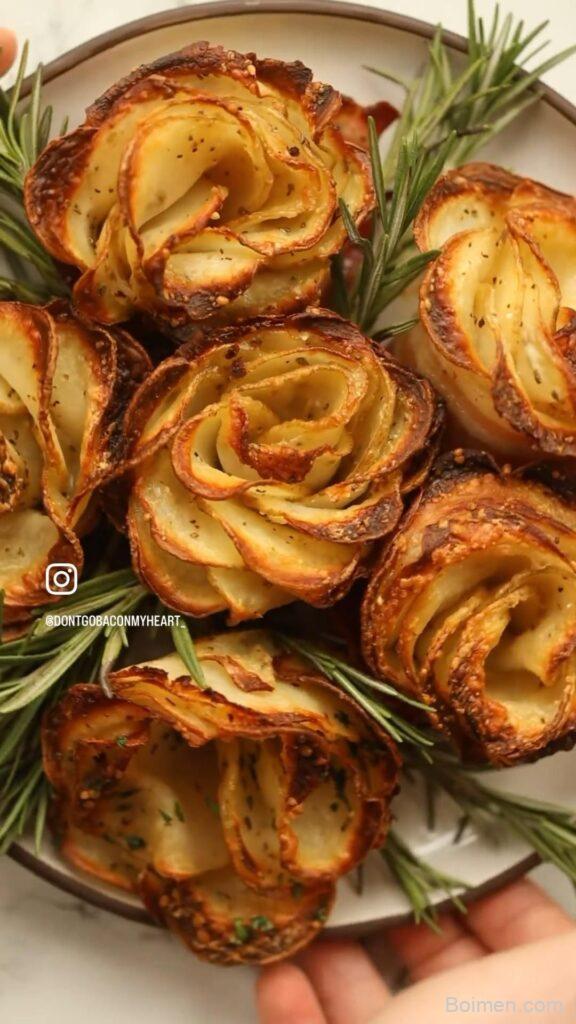
Have you ever looked at a humble potato and thought, what if you could make it bloom? That is exactly the magic of Potato Roses – paper-thin slices fanned into a muffin cup until they open like a flower in the oven, crisp at the edges and tender at the heart.
Advertisements1
Think of it like folding a paper fan, except the paper is potato and the reward is edible. You do not need perfect knife skills or a mandoline with a fancy dial; you need patience, a little butter, and the willingness to let the first rose look a bit lopsided. Messy first drafts taste just as good, I promise.
These little spirals are the side dish that makes people lean over the table and ask who made them. Serve them next to roast chicken, a holiday ham, or a simple fried egg, and watch the plate turn into a garden.
Why You'll Love This Recipe
About the Ingredients
6 medium Yukon Gold potatoes (about 2 lb / 900g), scrubbed
Yukon Golds hold their shape and turn creamy inside; russets work but get starchier, and red potatoes stay firmer. Pick potatoes that are all roughly the same size so the slices match.
1/2 cup (113g) unsalted butter, melted
Melted butter is the glue and the crisp-maker here. For a dairy-free version, swap in 1/2 cup olive oil or melted vegan butter.
3 tbsp olive oil
Olive oil keeps the exposed edges from burning before the centers cook. Avocado oil is a fine neutral substitute.
3 cloves garlic, finely grated
Fresh garlic clings to the slices better than powder. If you only have powder, use 1 tsp and whisk it into the butter.
2 tsp fresh thyme leaves, chopped
Thyme loves potatoes; rosemary or sage are excellent swaps. Dried thyme works too – use 1 tsp.
3/4 cup (75g) finely grated Parmesan
Parmesan adds a salty, nutty crust. Pecorino or aged Gruyere melt beautifully, or use nutritional yeast for a vegan version.
1 1/2 tsp fine sea salt
Salt between the layers seasons from the inside out. Kosher salt works but use a slightly heaped measure.
1/2 tsp freshly ground black pepper
Fresh-cracked pepper blooms in the butter. White pepper gives the same heat with a cleaner look.
2 tbsp chopped fresh parsley, for garnish
Parsley brightens the plate. Chives or a pinch of flaky sea salt also finish these roses nicely.
Tips & Tricks
Slice evenly or not at all
A mandoline at 1/16 inch (1.5mm) gives the most uniform roses, but a sharp knife and slow, steady strokes work – uneven slices are the number one reason roses collapse.
Do not skip the soak
Rinsing the slices in cold water for 10 minutes removes surface starch so the petals separate instead of gluing into a potato puck.
Butter every layer
Tossing the slices so each one is coated keeps them from drying out and helps them fan open as they bake.
Leave a little room at the top
Fill each muffin cup only three-quarters full so the petals have space to crisp and curl.
Pro Tips
Step-by-Step Instructions
1. Heat the oven
Preheat the oven to 400F (200C) and brush a 12-cup standard muffin tin generously with some of the melted butter, getting into every corner.
2. Slice the potatoes
Using a mandoline or sharp knife, slice the potatoes 1/16 inch (1.5mm) thick and drop them into a bowl of cold water as you go.
3. Soak and dry
Let the slices soak for 10 minutes, then drain and pat them completely dry with a clean kitchen towel – wet slices steam instead of crisp.
4. Season the slices
In a large bowl, whisk the remaining melted butter, olive oil, garlic, thyme, salt, and pepper, then toss the dried potato slices until every piece is glossy.
5. Build the roses
Stack 12 to 15 slices in a shingled line, then roll the stack up from one end and press it into a muffin cup; repeat until all 12 cups are filled and sprinkle Parmesan over the tops.
6. Bake covered
Cover the tin loosely with foil and bake at 400F (200C) for 20 minutes so the centers turn tender and the layers steam apart.
7. Bake uncovered
Remove the foil and bake another 15 to 18 minutes, until the edges are deep golden brown and you can see the petals separating; a knife should slide into the center with no resistance.
8. Rest and serve
Let the roses rest in the tin for 5 minutes, then run a knife around each one, lift them out, and shower with parsley before serving warm.
Delicious Variations
Cheesy Bacon Roses
Tuck a small piece of cooked bacon between the layers and finish with sharp cheddar instead of Parmesan.
Herb Butter Roses
Swap the thyme for rosemary and add 1 tsp lemon zest to the butter for a brighter, spring-like version.
Sweet Potato Roses
Use the same method with sweet potatoes, cinnamon butter, and a drizzle of maple syrup for a holiday brunch side.
How to Store Potato Roses
Refrigerator
Store cooled roses in an airtight container in the refrigerator for up to 4 days.
Freezer
Freeze baked roses on a tray until solid, then transfer to a freezer bag for up to 2 months; thaw overnight in the refrigerator.
Reheating
Reheat in a 375F (190C) oven for 8 to 10 minutes to bring back the crisp edges, or air-fry at 350F (175C) for 5 minutes.
Frequently Asked Questions
Q: Can I make potato roses ahead of time?
Yes, you can assemble the entire tray up to 24 hours ahead and keep it covered in the refrigerator. Bake them straight from cold, adding 3 to 5 minutes to the covered baking time.
Q: Do I need a mandoline to make potato roses?
No, a sharp chef's knife works fine as long as you slice as evenly as possible. A mandoline simply saves time and gives you identical petals, which helps the roses fan open more evenly.
Q: Why did my potato roses fall apart?
They usually fall apart because the slices were too thick, uneven, or not coated in enough butter. Keep slices at 1/16 inch (1.5mm), toss every piece in the butter mixture, and pack them snugly into the muffin cups.
Q: What potatoes are best for potato roses?
Yukon Gold potatoes are the best choice because they are waxy enough to hold their shape yet creamy inside. Russets work but crumble more easily, and red potatoes stay the firmest.
Q: Can I make potato roses without a muffin tin?
Yes, you can bake them free-form on a parchment-lined sheet pan, but they will spread and lose some height. A muffin tin is what keeps the spiral standing tall and crisp.
So grab your mandoline, embrace the lopsided first rose, and let your oven do the blooming. Make a tray this week, tag me in your golden spirals, and remember – Keep your pen dancing.

Potato Roses
Potato Roses turn thin potato slices into crispy, golden, rose-shaped spirals baked in a muffin tin for a stunning 50-minute side dish.
🧂 Ingredients
- 6 medium Yukon Gold potatoes (about 2 lb / 900g), scrubbed
- 1/2 cup (113g) unsalted butter, melted
- 3 tbsp olive oil
- 3 cloves garlic, finely grated
- 2 tsp fresh thyme leaves, chopped
- 3/4 cup (75g) finely grated Parmesan
- 1 1/2 tsp fine sea salt
- 1/2 tsp freshly ground black pepper
- 2 tbsp chopped fresh parsley, for garnish
📋 Instructions
- 1Heat the oven — Preheat the oven to 400F (200C) and brush a 12-cup standard muffin tin generously with some of the melted butter, getting into every corner.
- 2Slice the potatoes — Using a mandoline or sharp knife, slice the potatoes 1/16 inch (1.5mm) thick and drop them into a bowl of cold water as you go.
- 3Soak and dry — Let the slices soak for 10 minutes, then drain and pat them completely dry with a clean kitchen towel – wet slices steam instead of crisp.
- 4Season the slices — In a large bowl, whisk the remaining melted butter, olive oil, garlic, thyme, salt, and pepper, then toss the dried potato slices until every piece is glossy.
- 5Build the roses — Stack 12 to 15 slices in a shingled line, then roll the stack up from one end and press it into a muffin cup; repeat until all 12 cups are filled and sprinkle Parmesan over the tops.
- 6Bake covered — Cover the tin loosely with foil and bake at 400F (200C) for 20 minutes so the centers turn tender and the layers steam apart.
- 7Bake uncovered — Remove the foil and bake another 15 to 18 minutes, until the edges are deep golden brown and you can see the petals separating; a knife should slide into the center with no resistance.
- 8Rest and serve — Let the roses rest in the tin for 5 minutes, then run a knife around each one, lift them out, and shower with parsley before serving warm.

Priya explores creative writing prompts and storytelling techniques for aspiring authors. She shares exercises to spark imagination and build narrative confidence, drawn from her own writing practice.


Leave a Comment