
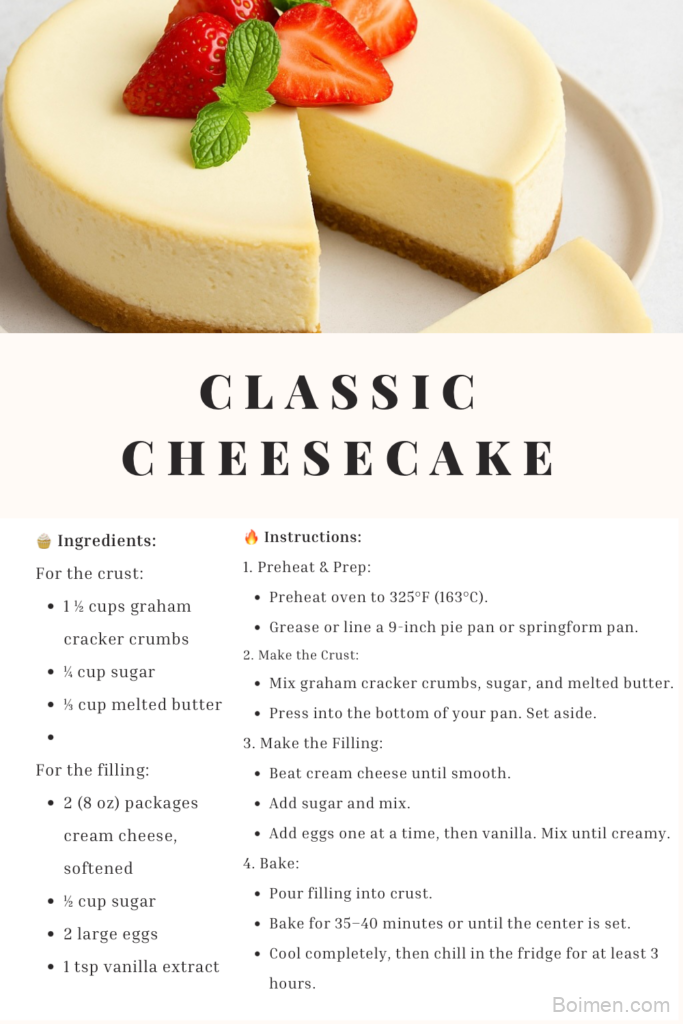
Easy Classic Cheesecake Recipe is the version I hand to anyone who has never baked a custard-style dessert before. It uses one bowl for the crust, one bowl for the filling, and a water bath that does the hard work of keeping the surface smooth. Total active time is about 15 minutes; the oven does the rest.
Advertisements1
The numbers matter here. A 9-inch springform pan holds roughly 6 cups of batter, so this recipe is scaled for 6 generous slices at about 285 calories each. The filling is built on a 2:1 ratio of cream cheese to liquid dairy, which is what separates a dense New York-style slice from a loose, jiggly one.
You will bake at 325°F (163°C) for 35 minutes, then let the cheesecake cool in the oven with the door cracked. That gradual temperature drop is the single biggest crack preventer, and it costs you nothing but patience. Stay sharp, stay solvent.
Why You'll Love This Recipe
About the Ingredients
1 1/2 cups (150g) graham cracker crumbs (about 10 full sheets)
Pulse whole sheets in a food processor for the freshest crumb; pre-ground boxes work but taste stale faster. Substitute digestive biscuits or Biscoff cookies 1:1 for a deeper caramel note.
5 tablespoons (70g) unsalted butter, melted
Melt and cool slightly before mixing so the crust does not turn greasy. Salted butter works if you cut the added salt to a pinch.
2 tablespoons (25g) granulated sugar, for the crust
This small amount helps the crust brown and hold together. Brown sugar substitutes fine but adds moisture, so press the crust a bit firmer.
24 ounces (680g) full-fat cream cheese, room temperature
Full-fat blocks only; tub-style spreadable cream cheese contains added water and will give you a soft, unstable set. Leave blocks on the counter 2 hours before mixing.
3/4 cup (150g) granulated sugar, for the filling
Standard white sugar keeps the crumb clean and white. Do not reduce below 2/3 cup or the custard loses structure.
3 large eggs, room temperature
Room-temperature eggs emulsify into the batter without over-beating. If you forgot to set them out, submerge them in warm tap water for 10 minutes.
1/2 cup (120g) full-fat sour cream, room temperature
Sour cream adds tang and guards against cracking. Plain full-fat Greek yogurt is a direct 1:1 substitute.
1 teaspoon vanilla extract
Real extract, not imitation, if you want the flavor to read through the dairy. Vanilla bean paste works at the same measure.
1 tablespoon (8g) all-purpose flour
A small starch buffer that stabilizes the custard. Cornstarch substitutes 1:1 for a gluten-free version.
1/4 teaspoon fine sea salt
Salt sharpens the vanilla and keeps the slice from tasting flat. Kosher salt works but use a slightly heaped 1/4 teaspoon.
Tips & Tricks
Do not over-beat the batter
Once the eggs go in, mix on low just until each one disappears. Extra air is the number one cause of a cracked top.
Use a water bath every time
Wrap the pan in two layers of foil, set it in a roasting pan, and pour in 1 inch of hot water. Steam equals a creamy, even set.
Cool gradually
After baking, turn the oven off, crack the door 2 inches, and leave the cheesecake inside 1 hour. Sudden cold air causes the surface to contract and split.
Chill overnight if you can
Four hours is the minimum, but 8 to 12 hours firms the center and improves the slice's clean edge dramatically.
Pro Tips
Step-by-Step Instructions
1. Preheat and prep pan
Heat the oven to 325°F (163°C) and line the outside of a 9-inch springform pan with two layers of heavy foil. The foil keeps bath water out of the crust.
2. Make the crust
Mix 1 1/2 cups graham crumbs, 5 tablespoons melted butter, 2 tablespoons sugar, and a pinch of salt, then press firmly into the pan bottom and 1 inch up the sides. Bake 10 minutes at 325°F (163°C) until it smells toasted and looks set, not dark.
3. Beat the cream cheese
Beat 24 ounces room-temperature cream cheese and 3/4 cup sugar on medium 2 minutes until perfectly smooth with no lumps. Scrape the bowl and paddle completely.
4. Add eggs and flavorings
Add the eggs one at a time on low speed, then 1/2 cup sour cream, 1 teaspoon vanilla, 1 tablespoon flour, and 1/4 teaspoon salt. Stop mixing the moment the last streak disappears.
5. Bake in the water bath
Pour the batter over the crust, set the pan in a roasting pan, and add 1 inch of hot water. Bake at 325°F (163°C) for 35 minutes; the edges should look set and slightly puffed while the center jiggles like firm gelatin, and an instant-read thermometer in the middle reads 150°F (66°C).
6. Cool in the oven
Turn the oven off, crack the door 2 inches, and leave the cheesecake inside 1 hour. This slow drop is what keeps the top flat and crack-free.
7. Chill and release
Refrigerate at least 4 hours, ideally overnight. Run a thin knife around the rim before unlocking the springform so the crust does not tear.
Delicious Variations
Lemon Blueberry
Fold 1 tablespoon lemon zest into the batter and swirl in 1/3 cup blueberry jam before baking.
Chocolate Ganache
Add 4 ounces melted dark chocolate to the batter and pour a warm 1/2 cup cream plus 4 ounces chocolate ganache over the chilled top.
Salted Caramel
Swap the graham crust for Biscoff crumbs, then drizzle 1/3 cup salted caramel and finish with flaky salt.
How to Store Easy Classic Cheesecake Recipe – Creamy, Rich & Perfect for Beginners
Refrigerator
Cover tightly with plastic wrap or a dome and refrigerate up to 5 days. Press the wrap to the surface only after the cheesecake is fully chilled.
Freezer
Freeze whole or in slices, wrapped in plastic then foil, up to 2 months. Thaw overnight in the refrigerator to avoid a grainy texture.
Reheating
Do not reheat; cheesecake is served cold. Let slices sit at room temperature 10 minutes before serving for the best flavor release.
Frequently Asked Questions
Q: Why did my cheesecake crack in the middle?
Over-beating the batter or cooling it too fast is almost always the cause. Mix on low after the eggs go in, and cool the cheesecake in the turned-off oven with the door cracked for 1 hour. A water bath also evens out the oven's hot spots.
Q: How do I know when a cheesecake is done baking?
The edges should be set and slightly puffed while the center still wobbles like firm gelatin, and an instant-read thermometer in the middle should read 150°F (66°C). It will firm up fully as it chills, so a jiggly center at 35 minutes is correct, not underbaked.
Q: Can I make this cheesecake without a water bath?
Yes, but expect a higher crack risk and a slightly drier edge. Bake on the middle rack at 300°F (149°C) for 40 to 45 minutes, place a pan of hot water on the rack below, and cool it in the oven the same way.
Q: How long does cheesecake need to chill before serving?
A minimum of 4 hours, but 8 to 12 hours is better for a clean, firm slice. The center continues to set as it cools, so cutting early gives you a soft, smeared edge.
Q: Can I use low-fat or whipped cream cheese?
No, use full-fat block cream cheese for a stable, dense set. Whipped or tub-style cream cheese contains extra water and air, which produces a loose filling that will not slice cleanly.
Bake it once, write down your actual oven time, and you will have a repeatable cheesecake for the next decade. Start with the water bath and the 1-hour oven cool-down, then adjust only one variable at a time. Stay sharp, stay solvent.

Easy Classic Cheesecake Recipe – Creamy, Rich & Perfect for Beginners
Easy Classic Cheesecake Recipe delivers a creamy, rich, crack-free dessert beginners can nail, with a buttery graham crust and silky vanilla filling.
🧂 Ingredients
- 1 1/2 cups (150g) graham cracker crumbs (about 10 full sheets)
- 5 tablespoons (70g) unsalted butter, melted
- 2 tablespoons (25g) granulated sugar, for the crust
- 24 ounces (680g) full-fat cream cheese, room temperature
- 3/4 cup (150g) granulated sugar, for the filling
- 3 large eggs, room temperature
- 1/2 cup (120g) full-fat sour cream, room temperature
- 1 teaspoon vanilla extract
- 1 tablespoon (8g) all-purpose flour
- 1/4 teaspoon fine sea salt
📋 Instructions
- 1Preheat and prep pan — Heat the oven to 325°F (163°C) and line the outside of a 9-inch springform pan with two layers of heavy foil. The foil keeps bath water out of the crust.
- 2Make the crust — Mix 1 1/2 cups graham crumbs, 5 tablespoons melted butter, 2 tablespoons sugar, and a pinch of salt, then press firmly into the pan bottom and 1 inch up the sides. Bake 10 minutes at 325°F (163°C) until it smells toasted and looks set, not dark.
- 3Beat the cream cheese — Beat 24 ounces room-temperature cream cheese and 3/4 cup sugar on medium 2 minutes until perfectly smooth with no lumps. Scrape the bowl and paddle completely.
- 4Add eggs and flavorings — Add the eggs one at a time on low speed, then 1/2 cup sour cream, 1 teaspoon vanilla, 1 tablespoon flour, and 1/4 teaspoon salt. Stop mixing the moment the last streak disappears.
- 5Bake in the water bath — Pour the batter over the crust, set the pan in a roasting pan, and add 1 inch of hot water. Bake at 325°F (163°C) for 35 minutes; the edges should look set and slightly puffed while the center jiggles like firm gelatin, and an instant-read thermometer in the middle reads 150°F (66°C).
- 6Cool in the oven — Turn the oven off, crack the door 2 inches, and leave the cheesecake inside 1 hour. This slow drop is what keeps the top flat and crack-free.
- 7Chill and release — Refrigerate at least 4 hours, ideally overnight. Run a thin knife around the rim before unlocking the springform so the crust does not tear.

Diego covers personal finance and investing for freelancers and gig workers. His angle is practical money management for irregular income, from budgeting to tax basics.


Leave a Comment