
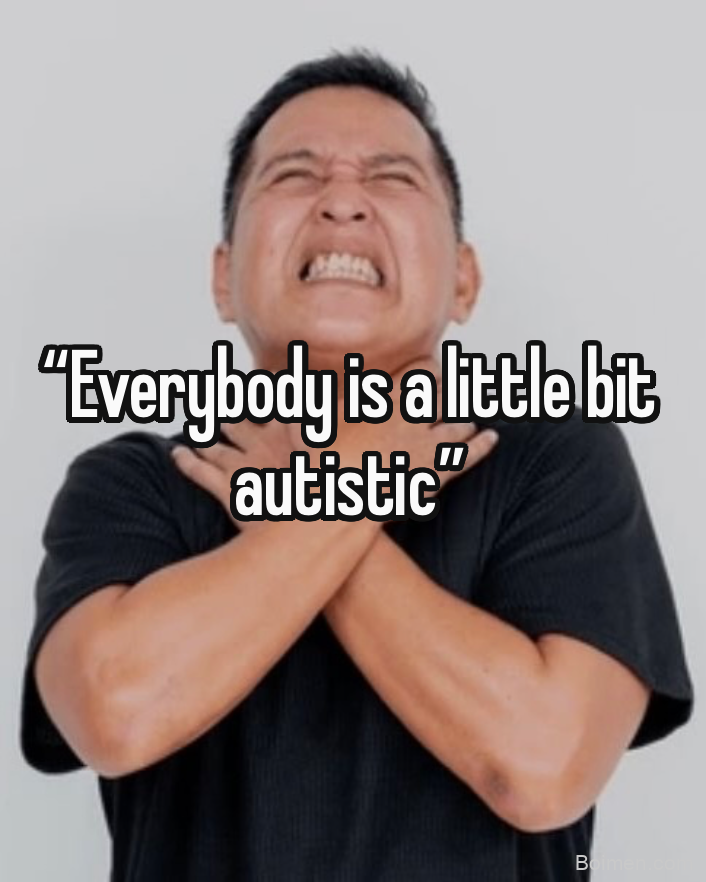
The pin that brought you here made a blunt point: autism spectrum disorder is a disorder, not a personality adjective. That distinction matters because most online content treats autism as a vibe, a quirk, or inspiration fodder. The 21 resources below treat it as what the diagnostic manuals actually say it is: a neurodevelopmental condition with defined criteria, measurable functional impact, and real research behind it.
Advertisements1
I checked each one for primary sourcing, clinical accuracy, and whether it explains the medical model without overselling or fearmongering. No miracle cures, no affiliate junk. Just tools that help you understand the diagnosis on its own terms.
Table of Contents(Click to Toggle)
- Why the Medical Model Matters More Than the Meme
- 21 Autism Spectrum Disorder Resources That Explain It as a Medical Condition
- 1. CDC Autism Spectrum Disorder Portal
- 2. NIH National Institute of Mental Health
- 3. WHO Autism Fact Sheet
- 4. DSM-5 Criteria via APA
- 5. PubMed Autism Research Index
- 6. Cochrane Library Autism Reviews
- 7. Autism Speaks Science Digest
- 8. Simons Foundation SPARK
- 9. Interactive Autism Network Archive
- 10. National Autistic Society UK
- 11. Autistica Research Hub
- 12. MIND Institute UC Davis
- 13. Autism Science Foundation
- 14. Spectrum News
- 15. Autism Research Institute
- 16. ASAN
- 17. National Database for Autism Research
- 18. Brain & Behavior Research Foundation
- 19. AAP HealthyChildren.org
- 20. Cleveland Clinic Autism Overview
- 21. Mayo Clinic Autism Spectrum Disorder
- Bonus Mentions
- Reading the Research Without Getting Lost
Why the Medical Model Matters More Than the Meme
Roughly 1 in 36 children in the United States is diagnosed with autism spectrum disorder, according to CDC tracking data from 2020 surveillance. That is about 2.8% of 8-year-olds. When a condition affects millions, precision stops being pedantic.
The DSM-5-TR requires deficits in social communication plus restricted or repetitive behaviors, with symptoms present in early development and causing clinically significant impairment. That last clause is the one social media strips out. Without functional impact, there is no diagnosis.
Here is the practical problem. If you search “autism” you get a mix of self-diagnosis quizzes, supplement sellers, and inspirational content. If you search the resources below, you get prevalence data, diagnostic criteria, peer-reviewed studies, and clinical guidance. The gap between those two search results is the entire point of this list.
Key takeaways before you scroll:
- Prevalence estimates come from active surveillance, not surveys. The CDC’s ADDM Network reviews health and education records across 11 sites.
- Diagnosis requires impairment, not just difference. A person can have autistic traits without meeting the threshold.
- Co-occurring conditions are the rule, not the exception. Roughly 70% of autistic children have at least one additional diagnosis, per a 2023 study in Pediatrics.
21 Autism Spectrum Disorder Resources That Explain It as a Medical Condition
1. CDC Autism Spectrum Disorder Portal : The baseline data source
What it is: The US Centers for Disease Control and Prevention’s autism section, including ADDM Network prevalence reports and developmental milestone checklists.
Category: Government health data
Why it stands out:
- Publishes prevalence by site, sex, and race, updated every two years
- Free milestone checklists for ages 2 months to 5 years
- No commercial content, no supplement ads
Best for: Parents and journalists who need a citable number instead of a blog claim.
2. NIH National Institute of Mental Health : Clinical explanation without jargon overload
What it is: NIMH’s topic page on autism spectrum disorder, covering signs, diagnosis, risk factors, and current treatment research.
Category: Federal research institute
Why it stands out:
- Explains the difference between screening and diagnostic evaluation
- Links directly to clinical trials you can search by location
- States clearly that there is no cure and no evidence for chelation or hyperbaric oxygen
Best for: Anyone who wants the medical framing in plain English.
3. WHO Autism Fact Sheet : Global context in one page
What it is: The World Health Organization’s fact sheet, updated with global prevalence estimates and health-system guidance.
Category: International health authority
Why it stands out:
- Notes that global prevalence is about 1 in 100 children
- Addresses stigma and access gaps in low-income countries
- Short enough to read in five minutes
Best for: Readers outside the US who want numbers that are not America-centric.
4. DSM-5 Criteria via APA : The actual diagnostic rulebook
What it is: The American Psychiatric Association’s hub for the Diagnostic and Statistical Manual, which contains the formal autism spectrum disorder criteria.
Category: Diagnostic standard
Why it stands out:
- Defines the three social communication deficits and four restricted behavior domains
- Specifies severity levels 1 through 3 based on support needs
- Clarifies that ASD replaced the older separate diagnoses in 2013
Best for: People who keep hearing “the spectrum” and want the literal definition.
5. PubMed Autism Research Index : Primary literature, searchable
What it is: The National Library of Medicine’s database of biomedical citations, filterable by autism mesh terms.
Category: Research database
Why it stands out:
- Over 40,000 autism-related citations and counting
- Free abstracts; many full texts open access
- Filters for publication type, date, and species
Best for: Anyone tired of citing news articles that cite studies they never read.
6. Cochrane Library Autism Reviews : Evidence quality, graded
What it is: Systematic reviews of interventions, including several dedicated to autism therapies.
Category: Evidence synthesis
Why it stands out:
- Reviews pool multiple trials instead of cherry-picking one
- Flags low-certainty evidence rather than burying it
- Plain language summaries for non-researchers
Best for: Evaluating whether a therapy actually works or just has loud advocates.
7. Autism Speaks Science Digest : Research news with citations
What it is: A regularly updated feed summarizing new autism studies, linking to the original papers.
Category: Advocacy science news
Why it stands out:
- Each summary links to the DOI so you can verify the claim
- Covers genetics, biomarkers, and adult outcomes
- Note: the organization is controversial in autistic communities; read critically
Best for: Skimming new research without reading 30 abstracts a week.
8. Simons Foundation SPARK : The largest autism genetics study
What it is: A US research cohort with over 100,000 participants that returns genetic findings to families.
Category: Research registry
Why it stands out:
- Free genetic testing and return of results
- Data shared with qualified researchers, accelerating replication
- Published findings on de novo mutations and copy number variants
Best for: Families who want to contribute to research and get something back.
9. Interactive Autism Network Archive : Historical family data
What it is: A now-archived but still accessible registry that collected longitudinal family-reported data for over a decade.
Category: Research archive
Why it stands out:
- Published studies on regression, siblings, and adult outcomes
- Demonstrates how registry data shapes hypotheses
- Shows the limits of parent-report methodology honestly
Best for: Understanding how autism research data gets built over time.
10. National Autistic Society UK : Practical guidance with a UK lens
What it is: The UK’s leading autism charity, offering diagnosis pathways, education rights, and adult support information.
Category: Charity and advocacy
Why it stands out:
- Explains NHS diagnosis wait times, often over a year
- Practical templates for school and workplace accommodations
- Balances medical information with lived-experience input
Best for: UK readers navigating the system, or anyone comparing health systems.
11. Autistica Research Hub : Funding priorities made public
What it is: A UK charity that publishes its research strategy and funds studies on mental health, epilepsy, and mortality in autism.
Category: Research charity
Why it stands out:
- Highlights that autistic adults face a mortality gap, with epilepsy and suicide as leading contributors
- Publishes plain-language research summaries
- Focuses on underfunded areas rather than trending topics
Best for: Seeing where research money should go, not just where it goes.
12. MIND Institute UC Davis : Clinical research with depth
What it is: A University of California research center studying neurodevelopmental conditions, including fragile X and autism.
Category: Academic medical center
Why it stands out:
- Runs longitudinal studies from infancy through adulthood
- Publishes on early behavioral intervention outcomes
- Hosts public lectures and family events
Best for: Readers who want university-grade research without a paywall.
13. Autism Science Foundation : Funding early-career scientists
What it is: A nonprofit that funds pilot research and runs a science news blog countering misinformation.
Category: Research funding nonprofit
Why it stands out:
- Explicitly debunks vaccine and detox claims with citations
- Funds projects that leverage larger datasets
- Publishes an annual research summary
Best for: Anyone who keeps encountering pseudoscience and wants a rebuttal arsenal.
14. Spectrum News : Investigative autism journalism
What it is: An editorially independent news outlet covering autism science, policy, and community debates.
Category: Science journalism
Why it stands out:
- Reports on replication failures and conflicts of interest
- Deep dives into topics like minimally verbal autism and adult services
- Does not accept industry advertising
Best for: Readers who want the story behind the study.
15. Autism Research Institute : Historical and alternative-leaning archive
What it is: A nonprofit founded in 1967 that publishes the Autism Research Review International newsletter.
Category: Research nonprofit
Why it stands out:
- Hosts decades of conference archives
- Note: it has historically given platform to non-evidence-based treatments; read with skepticism
- Useful for tracing how autism theories evolved
Best for: Researchers studying the history of autism science, not current treatment guidance.
16. ASAN : Policy and rights from autistic adults
What it is: The Autistic Self Advocacy Network, run by and for autistic people, focused on policy and civil rights.
Category: Advocacy organization
Why it stands out:
- Publishes accessible policy briefs on Medicaid, education, and employment
- Pushes back on cure-focused framing while accepting the diagnosis exists
- Offers plain-language toolkits
Best for: Understanding the neurodiversity perspective alongside the medical one.
17. National Database for Autism Research : Shared raw data
What it is: An NIH-funded data repository that pools autism study datasets for secondary analysis.
Category: Data repository
Why it stands out:
- Lets researchers reanalyze existing data instead of recruiting new participants
- Includes imaging, genomic, and clinical measures
- Requires credentialing, so data stays controlled
Best for: Researchers and data scientists, not casual readers.
18. Brain & Behavior Research Foundation : Grants across psychiatric conditions
What it is: A nonprofit that funds brain and behavior research, including autism projects, and publishes lay summaries.
Category: Research funding nonprofit
Why it stands out:
- Funds high-risk pilot studies that larger agencies avoid
- Publishes a searchable grant database
- Free monthly webinars with researchers
Best for: Following where early-stage autism science is heading.
19. AAP HealthyChildren.org : Pediatrician-reviewed guidance
What it is: The American Academy of Pediatrics’ parent-facing site, with autism screening and intervention articles.
Category: Clinical guidance
Why it stands out:
- Recommends universal screening at 18 and 24 months
- Explains the difference between screening tools like M-CHAT and full evaluation
- Written and reviewed by pediatricians
Best for: Parents who want advice aligned with their pediatrician’s approach.
20. Cleveland Clinic Autism Overview : Clear, structured, no fluff
What it is: A health-system overview covering symptoms, causes, diagnosis, and management.
Category: Hospital health library
Why it stands out:
- Uses a consistent format with clear sections and bullet points
- States that autism is not caused by parenting
- Lists co-occurring conditions like ADHD, anxiety, and GI issues
Best for: A fast, reliable primer before a doctor’s appointment.
21. Mayo Clinic Autism Spectrum Disorder : Symptom detail and next steps
What it is: Mayo Clinic’s condition page with symptom breakdowns by age and guidance on when to see a doctor.
Category: Hospital health library
Why it stands out:
- Separates symptoms in young children from symptoms in older children and adults
- Explains that regression can occur, typically between 12 and 24 months
- No advertising inside the medical content
Best for: Adults wondering whether an evaluation is worth pursuing.
Bonus Mentions
NHS Autism Guide : Free UK clinical pathway
What it is: The National Health Service’s autism pages covering signs, diagnosis, and support.
Category: Public health system
Why it stands out: Explains what to expect at each stage of an NHS referral, including realistic wait times.
Best for: UK readers who need the official process, not a private clinic pitch.
Autism.org : Curated resource directory
What it is: A directory-style site linking to research, support, and educational resources.
Category: Resource directory
Why it stands out: Useful as a jumping-off point, though quality varies by linked page.
Best for: Finding local and national organizations quickly.
M-CHAT Screening Tool : The actual 20-question screener
What it is: The Modified Checklist for Autism in Toddlers, free for parents and clinicians.
Category: Screening instrument
Why it stands out: It is a screening tool, not a diagnosis, and the site says so clearly.
Best for: Parents preparing for a pediatric visit.
AANE : Adult and family support
What it is: The Asperger/Autism Network, offering support groups and clinical referrals.
Category: Support organization
Why it stands out: Focuses on adults and teens, an underserved slice of the autism population.
Best for: Adults seeking community and practical help.
Autism Parenting Magazine : Parent-focused articles
What it is: A digital magazine covering daily living, therapies, and family stories.
Category: Consumer publication
Why it stands out: Practical tone, though it mixes evidence-based and anecdotal content.
Best for: Parents who want day-to-day tips, read with a critical eye.
Reading the Research Without Getting Lost
The medical model of autism spectrum disorder is not cold or dismissive. It is the framework that unlocks services, insurance coverage, school accommodations, and research funding. Roughly 1 in 36 children meet the criteria, and each of those diagnoses rests on documented impairment, not a personality quiz.
Use the first tier of this list, the CDC, NIH, WHO, and DSM, for definitions and prevalence. Use the second tier, PubMed, Cochrane, and SPARK, when you want to check whether a treatment claim holds up. Use the advocacy and support resources to understand what daily life actually looks like for diagnosed people and their families.
The risk here is not information scarcity. It is information noise. A single unverified blog post can outweigh a dozen systematic reviews in a search ranking. Verify the source, check the date, and look for a citation before you share.
Which resource on this list surprised you the most, or which one do you already use?
Stay sharp, stay solvent.

Diego covers personal finance and investing for freelancers and gig workers. His angle is practical money management for irregular income, from budgeting to tax basics.


Leave a Comment