
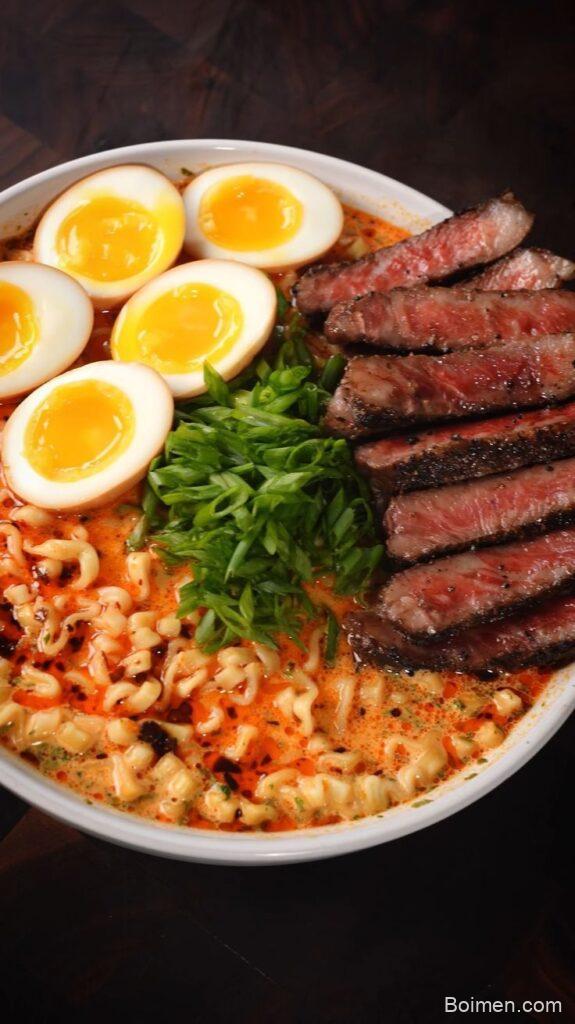
Picture this: it is 7 p.m., your phone is propped against the rice cooker, and you are finally making the ramen bowl that has been hijacking your feed for weeks. The steam fogs your glasses, the soy-marinated eggs glow like amber jewels, and the wagyu slices curl into silky ribbons the second they hit the hot broth. This is not takeout. This is you, in your own kitchen, winning.
Advertisements1
I know a bowl like this can feel intimidating, the way a blank page feels intimidating before you write the first messy sentence. But here is the secret: the marinated eggs do the heavy lifting overnight, the broth comes together in one pot, and the wagyu needs less than two minutes of actual heat. You are basically assembling a delicious collage, and collage is very forgiving.
Think of the broth as your draft, the noodles as your structure, and the toppings as your favorite metaphors sprinkled on top. Nobody is grading the swirl of your chili oil. Slurp loudly, adjust the seasoning, and let the bowl be gloriously yours.
Why You'll Love This Recipe
About the Ingredients
6 large eggs, at room temperature
Room-temperature eggs peel far more cleanly than cold ones. If yours are fridge-cold, drop them in warm tap water for 10 minutes first.
1/2 cup (120 ml) soy sauce
Use regular soy sauce, not dark, or the marinade turns bitter and inky. Tamari works beautifully if you need it gluten-free.
1/4 cup (60 ml) mirin
Mirin adds sweetness and gloss. If you do not have it, mix 3 tablespoons rice vinegar with 1 tablespoon sugar as a stand-in.
2 cups (480 ml) low-sodium chicken broth
Low-sodium matters because the soy and miso concentrate as the broth reduces. Vegetable broth makes a fine vegetarian swap.
2 tablespoons white miso paste
White miso is mellow and sweet; red miso is sharper and saltier. Whisk it into a little warm broth first so it does not clump.
1 tablespoon toasted sesame oil
Toasted, not untoasted, or you lose that nutty aroma entirely. Chili sesame oil is a spicy, delicious substitute.
12 oz (340 g) fresh ramen noodles
Fresh noodles cook in 2 minutes and have a springy chew. Dried ramen or fresh udon both work; just add 1 extra minute.
12 oz (340 g) wagyu steak, about 1 inch thick
Look for ribeye or sirloin with fine, lacy marbling. If wagyu is out of budget, a well-marbled ribeye is the closest stand-in.
4 scallions, thinly sliced
Slice on a sharp diagonal for pretty curls. Chives or thinly sliced shallot are good substitutes.
1 tablespoon chili crisp, plus more for serving
Any brand works; crisp with peanuts or shallots adds extra crunch. Skip it for a milder bowl and add toasted sesame instead.
1 teaspoon toasted sesame seeds
Toast them yourself in a dry pan for 60 seconds if they look pale; the flavor difference is genuinely noticeable.
2 cups (60 g) baby spinach
Baby spinach wilts instantly in hot broth. Bok choy or shredded napa cabbage are heartier swaps that need 1 extra minute.
Tips & Tricks
Do not boil the eggs hard
Start them in boiling water for exactly 6 minutes 30 seconds, then plunge into ice water. That is your jammy, custardy yolk window.
Slice wagyu against the grain and thin
Chill the steak 15 minutes before slicing so it firms up, then cut 1/4-inch slices against the grain for maximum tenderness.
- Marinate the eggs at least 4 hours, ideally overnight: Two hours gives a pale soy ring, eight hours gives that gorgeous amber edge you see in the videos.
- Season the broth at the end, not the start: Miso and soy get saltier as liquid evaporates, so taste after simmering and adjust before serving.
Pro Tips
Step-by-Step Instructions
1. Boil the eggs
Bring a medium saucepan of water to a rolling boil at 212 F (100 C). Lower in the eggs and boil for exactly 6 minutes 30 seconds, then transfer straight to an ice bath for 5 minutes. The yolks should be custardy and just barely set at the center.
2. Whisk the marinade
Stir together the soy sauce, mirin, and 1/2 cup (120 ml) water in a small container. Peel the cooled eggs, submerge them, and refrigerate at least 4 hours or overnight. They should look lacquered amber when you cut them.
3. Sear the wagyu
Pat the steak bone dry and season lightly with salt. Heat a cast-iron skillet over high heat until it just begins to smoke, about 450 F (230 C), then sear 90 seconds per side for medium-rare, 130 F (54 C) internal. Rest 5 minutes, then slice thin against the grain.
4. Build the broth
In the same pan off the heat, whisk the miso into 1/2 cup warm chicken broth until smooth. Add the remaining broth and bring to a gentle simmer at 200 F (93 C) for 5 minutes, until the surface shimmers and the aroma turns nutty and savory. Stir in the sesame oil.
5. Cook the noodles
Boil the ramen noodles in a separate pot according to the package, usually 2 to 3 minutes, until they are springy but still firm at the bite. Drain and divide between warmed bowls.
6. Wilt the greens
Drop the spinach into the simmering broth for 30 seconds, just until it collapses and turns deep green. Fish it out with tongs and divide it among the bowls.
7. Assemble the bowls
Ladle the hot broth over the noodles, then fan the wagyu slices on top. Halve the marinated eggs and nestle two halves into each bowl so the jammy yolks face up.
8. Finish and serve
Scatter scallions and sesame seeds over everything, then spoon chili crisp across the top. Serve immediately, while the broth is still steaming and the steak is warm.
Delicious Variations
Spicy Miso Version
Add 1 tablespoon gochujang or doubanjiang to the broth and finish with a drizzle of chili oil for a burn that builds slowly.
Vegetarian Mushroom Bowl
Swap the wagyu for 8 oz (225 g) seared king oyster mushrooms and use vegetable broth plus an extra teaspoon of miso.
Cold Ramen Salad
Chill the broth, toss noodles with sesame dressing, and serve the eggs and sliced steak cold over greens for a summer twist.
How to Store Viral Ramen Noodle Bowl With Wagyu Steak and Marinated Ramen Eggs Recipe
Refrigerator
Store broth, noodles, steak, and eggs in separate airtight containers for up to 3 days. Keep the eggs in their marinade and they will deepen in flavor.
Freezer
Freeze the broth alone for up to 2 months in a freezer-safe container, leaving 1 inch of headspace. Do not freeze the noodles, eggs, or sliced steak; they turn mushy or rubbery.
Reheating
Reheat the broth on the stovetop at 200 F (93 C) until steaming, about 4 minutes. Add fresh noodles and warm the steak for 20 seconds in the hot broth so it does not overcook.
Frequently Asked Questions
Q: Can I use regular steak instead of wagyu?
Yes, a well-marbled ribeye or New York strip works beautifully as a substitute. Look for fine, even marbling and slice it thin against the grain so it stays tender in the hot broth.
Q: How long should I marinate ramen eggs?
Marinate them at least 4 hours and up to 24 hours for the best flavor and color. Past 24 hours the whites turn rubbery and overly salty, so pull them out and store them in a little fresh soy mixture.
Q: Why are my ramen eggs hard to peel?
Cold or very fresh eggs cling to their shells, so use room-temperature eggs and plunge them into ice water right after boiling. Tapping the egg all over and peeling under running water also helps the shell release cleanly.
Q: Can I make this ramen bowl ahead of time?
Yes, make the marinated eggs and broth up to 2 days ahead and refrigerate them separately. Sear the steak and boil the noodles fresh the day you serve so nothing turns soggy.
Q: Is this ramen bowl spicy?
Only as spicy as you make it, since the chili crisp goes on at the table. Leave it out entirely and add extra toasted sesame oil for a mild, nutty bowl the whole family can eat.
Now it is your turn: boil those eggs, whisk that marinade, and let the bowl sit overnight while you dream about it. Tag me in your steamy, yolk-dripping photos, and tell me whether you went mild or full chili crisp. Keep your pen dancing.

Viral Ramen Noodle Bowl With Wagyu Steak and Marinated Ramen Eggs Recipe
Viral Ramen Noodle Bowl With Wagyu Steak and Marinated Ramen Eggs delivers buttery steak, jammy soy eggs, and rich broth in one cozy bowl.
🧂 Ingredients
- 6 large eggs, at room temperature
- 1/2 cup (120 ml) soy sauce
- 1/4 cup (60 ml) mirin
- 2 cups (480 ml) low-sodium chicken broth
- 2 tablespoons white miso paste
- 1 tablespoon toasted sesame oil
- 12 oz (340 g) fresh ramen noodles
- 12 oz (340 g) wagyu steak, about 1 inch thick
- 4 scallions, thinly sliced
- 1 tablespoon chili crisp, plus more for serving
- 1 teaspoon toasted sesame seeds
- 2 cups (60 g) baby spinach
📋 Instructions
- 1Boil the eggs — Bring a medium saucepan of water to a rolling boil at 212 F (100 C). Lower in the eggs and boil for exactly 6 minutes 30 seconds, then transfer straight to an ice bath for 5 minutes. The yolks should be custardy and just barely set at the center.
- 2Whisk the marinade — Stir together the soy sauce, mirin, and 1/2 cup (120 ml) water in a small container. Peel the cooled eggs, submerge them, and refrigerate at least 4 hours or overnight. They should look lacquered amber when you cut them.
- 3Sear the wagyu — Pat the steak bone dry and season lightly with salt. Heat a cast-iron skillet over high heat until it just begins to smoke, about 450 F (230 C), then sear 90 seconds per side for medium-rare, 130 F (54 C) internal. Rest 5 minutes, then slice thin against the grain.
- 4Build the broth — In the same pan off the heat, whisk the miso into 1/2 cup warm chicken broth until smooth. Add the remaining broth and bring to a gentle simmer at 200 F (93 C) for 5 minutes, until the surface shimmers and the aroma turns nutty and savory. Stir in the sesame oil.
- 5Cook the noodles — Boil the ramen noodles in a separate pot according to the package, usually 2 to 3 minutes, until they are springy but still firm at the bite. Drain and divide between warmed bowls.
- 6Wilt the greens — Drop the spinach into the simmering broth for 30 seconds, just until it collapses and turns deep green. Fish it out with tongs and divide it among the bowls.
- 7Assemble the bowls — Ladle the hot broth over the noodles, then fan the wagyu slices on top. Halve the marinated eggs and nestle two halves into each bowl so the jammy yolks face up.
- 8Finish and serve — Scatter scallions and sesame seeds over everything, then spoon chili crisp across the top. Serve immediately, while the broth is still steaming and the steak is warm.

Priya explores creative writing prompts and storytelling techniques for aspiring authors. She shares exercises to spark imagination and build narrative confidence, drawn from her own writing practice.


Leave a Comment